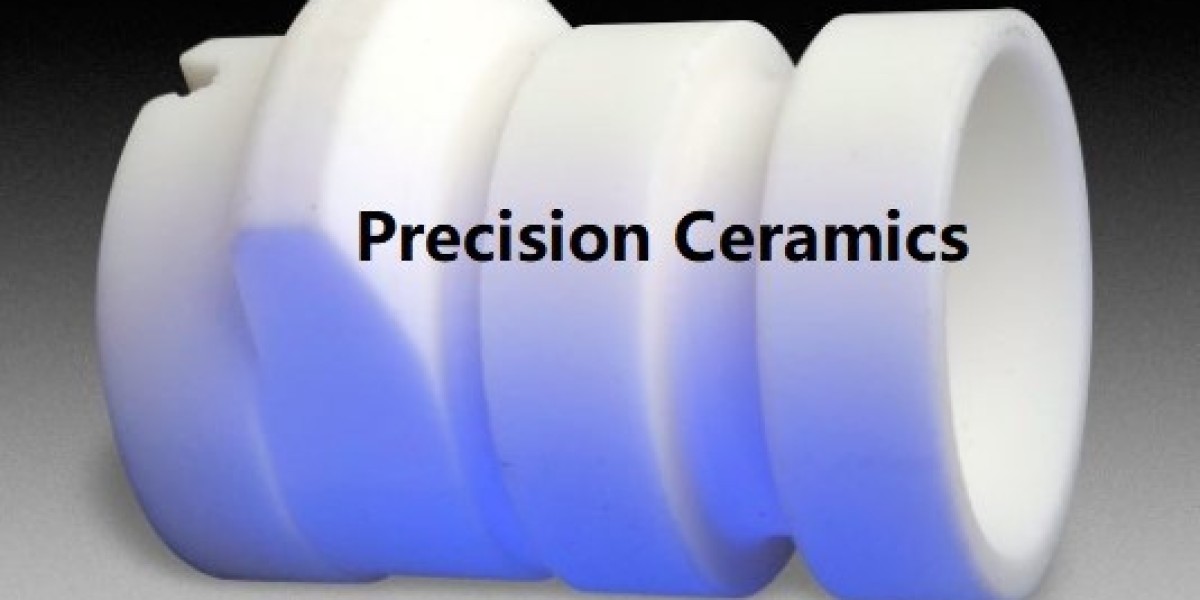

In precision manufacturing, Alumina Ceramics offer a practical material option for components requiring electrical insulation, hardness, and resistance to wear. Engineers selecting Alumina Ceramics often evaluate purity levels, component geometry, surface finish, and operating conditions to determine whether the material suits a particular application. Produced primarily from aluminum oxide, alumina ceramic materials are used in electrical assemblies, industrial machinery, laboratory equipment, and specialized manufacturing systems. Their performance characteristics make them useful in applications where dimensional stability and consistent material behavior are important. By understanding the relationship between material grade and component requirements, manufacturers can make informed decisions that support equipment reliability, manufacturing efficiency, and long-term product development.
Understanding Alumina Grades and Material Properties
Alumina ceramics are available in different purity grades, with composition influencing several important characteristics. Higher-purity formulations are often considered when electrical insulation, chemical stability, or demanding operating conditions are priorities. Other grades may offer a practical balance between performance, manufacturing requirements, and cost.
When comparing material options, engineers should examine hardness, thermal conductivity, electrical resistivity, thermal expansion, and resistance to chemical exposure. These properties influence how a component behaves under actual working conditions. For example, an insulating support used in electrical equipment may require different characteristics from a wear-resistant component installed in production machinery.
Material selection should therefore begin with a clear understanding of the application. Reviewing the operating temperature, mechanical loading, surrounding substances, and expected service conditions helps engineers identify a suitable grade. This approach also reduces the likelihood of selecting a material based on a single property that does not reflect the complete design requirement.
Designing Components for Accurate Assembly
Alumina ceramic parts can be manufactured in various shapes, including tubes, plates, rings, spacers, bushings, and customized structural components. The appropriate geometry depends on the component's role within the final assembly and the physical limitations of the equipment.
Dimensional accuracy is particularly important when ceramic parts must connect with metal housings or other precision components. Differences in thermal expansion between materials may affect clearances as operating temperatures change. Engineers should consider these relationships during the design stage instead of relying solely on room-temperature measurements.
Technical drawings should identify critical dimensions, tolerances, surface finishes, and connection features. Designers should also consider the stresses created by fastening, contact pressure, and installation. Because alumina is hard but relatively brittle, excessive localized loading or impact can lead to cracking. Practical geometry and suitable mounting methods can help reduce these risks.
Manufacturing Quality and Surface Finishing
Producing alumina ceramic components involves specialized processes that may include powder preparation, forming, sintering, grinding, and precision finishing. The selected process depends on the required shape, material grade, dimensional tolerance, and production volume.
Sintering develops the ceramic's final structure, while subsequent machining may be needed to achieve accurate dimensions or specific surface characteristics. Since ceramic materials are hard, precision grinding and finishing require appropriate equipment and process control. Complex shapes and narrow tolerances may also influence manufacturing time and cost.
Quality inspection helps confirm that finished parts meet their technical specifications. Common checks may include dimensional measurement, visual examination, surface inspection, and verification of relevant material characteristics. Buyers should define acceptance criteria before production begins, especially for components used in critical assemblies. Evaluating samples can provide additional confidence before proceeding with larger orders.
ZFCera Alumina Ceramic Solutions for Industry
Industrial buyers often need components tailored to specific installation and performance requirements. Standard shapes may be suitable for straightforward applications, while specialized machinery can require customized dimensions, holes, grooves, or other geometric features.
When discussing a project with a supplier, buyers should provide drawings, material requirements, estimated quantities, and details about the operating environment. Information about temperature exposure, mechanical loading, electrical requirements, and chemical contact can help clarify the intended application.
Supplier evaluation should include manufacturing capabilities, technical communication, quality procedures, and delivery arrangements. For customized components, prototype assessment may help identify fitting problems or design adjustments before mass production. Clear documentation also supports repeat purchasing by ensuring that future orders follow the same agreed specifications.
Applications Across Modern Manufacturing Systems
Alumina ceramics can serve different functions across electronics, automation, industrial processing, and laboratory equipment. Their electrical insulation properties make them useful for selected insulating components, while their hardness and wear resistance can support applications involving contact or abrasion.
In manufacturing equipment, ceramic guides, supports, and bushings may be considered where friction and dimensional stability are important. In electrical systems, alumina components can help separate conductive elements when the material and design meet the relevant requirements. Some laboratory and processing applications may also benefit from alumina's resistance to particular chemicals, although compatibility should always be verified for the actual environment.
Successful implementation depends on matching material properties with the complete operating situation. For companies seeking alumina ceramic components and related technical material options, visit https://www.zfcera.com/ to explore available products and discuss requirements for industrial projects.