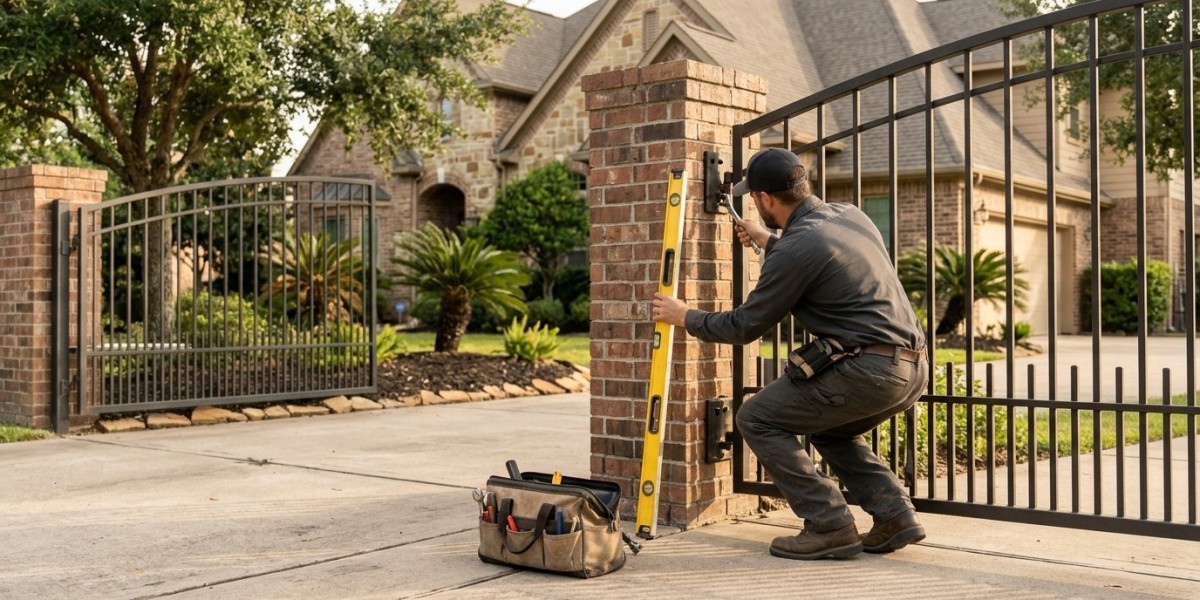

When a gate starts to sag, stick, or ignore the remote, the instinct is often to tighten something, spray something, or wait it out. Sometimes that works. More often it buys a few weeks before the same problem returns, usually with company. A gate sits at the front line of a property's security and safety, so how it's repaired matters as much as whether it's repaired. That's where professional residential gate repair earns its place: not as an upsell, but as a way to fix the real cause, protect the people who use the gate, and avoid paying for the same repair twice.
This guide is written for homeowners in League City and the surrounding area. It explains what professional repair actually protects, how it differs from quick fixes, what a good visit looks like, and how to decide when to call.
What a Home Gate Protects
A residential gate does several jobs at once:
Security: it controls access to the driveway and, indirectly, to the house
Safety: it keeps children and pets contained and keeps vehicles from rolling into the street
Privacy: it screens the property from view
Property value and curb appeal: it shapes the first impression of the home
Convenience: an automatic gate lets you arrive and leave without getting out of the car
When a gate fails, each of those protections weakens. A gate that doesn't latch isn't a barrier. A gate with failed sensors isn't safe. A gate that sags and scrapes doesn't look cared for. Professional repair aims to restore all of them, not just get the gate moving again.
Why Gates Fail Faster Than Most People Expect
Gates are heavy, exposed, and used daily. In League City and across the Gulf Coast region, a few local factors add stress:
Humidity and moisture encourage rust on hinges, tracks, fasteners, and frames
Heat stresses electronics, motors, and lubricants
Storm season brings wind, heavy rain, surges, and outages
Soil movement can shift posts and footings over time
Daily cycling adds wear to rollers, hinges, and operators
None of this means a gate is doomed. It does mean that small problems progress, and the earlier they're handled correctly, the better.
Quick Fixes vs. Professional Repair
Not every problem needs a technician, but it helps to understand what each approach actually accomplishes.
Approach | What It Often Does | Where It Falls Short |
Tightening a loose bolt | Temporarily steadies a hinge or bracket | Doesn't address worn pins, a leaning post, or a sagging frame |
Spraying lubricant | Quiets squeaks | Doesn't fix worn rollers, bent tracks, or misalignment |
Resetting the operator | May clear a one-time fault | Doesn't find the cause of recurring faults |
Bypassing a sensor | Stops nuisance stops | Removes a safety feature and hides the real problem |
Replacing a part by guess | Sometimes works | Can waste money if the cause lies elsewhere |
Professional diagnosis and repair | Finds and fixes the root cause, tests safety, documents the work | Costs more upfront than a quick fix, but usually less than repeating one |
Quick fixes have their place, especially for simple issues. The trouble comes when they mask a problem that keeps getting worse.
How Professional Repair Protects Your Home
1. It Fixes the Cause, Not Just the Symptom
A gate that drags might need a new hinge, but it might also need a reset post, a straightened frame, or a re-hung leaf. A technician inspects the whole system to find out which, so the repair addresses the cause.
2. It Restores Safety Systems Properly
Automatic gates rely on sensors and reversal features to protect people and vehicles. Professionals test these directly and restore them, instead of bypassing them. That matters most in homes with children, pets, and frequent foot traffic near the driveway.
3. It Reduces Security Gaps
Gates that don't latch, close slowly, or stay open leave openings. A professional can realign latches, adjust limits, repair operators, and verify the gate closes and secures reliably.
4. It Prevents Secondary Damage
A binding gate strains the operator. A leaning post strains the hinges. Rust spreads. Fixing the first problem correctly keeps it from damaging the next part.
5. It Handles Hazards You Shouldn't
Gates can be heavy, and operators involve electricity. Re-hanging a gate, welding a frame, or opening a control box carries real injury risks. Trained technicians have the equipment and procedures to do it safely.
6. It Provides Documentation and Warranty
A written estimate, a summary of what was done, and warranty terms give you a record you can rely on if the problem returns, if you sell the home, or if you file an insurance claim.
7. It Often Saves Money Over Time
Repeated quick fixes, parts replaced by guess, and emergency calls add up. A correct repair, even if it costs more at first, tends to hold.
What a Good Professional Visit Looks Like
Knowing what to expect helps you spot quality.
A conversation about symptoms and history, including when problems started and what's been tried
A full-system inspection: gate, hinges or rollers, posts, latch, operator, sensors, wiring, and access devices
Testing: movement, alignment, limits, and safety reversal
A plain-language diagnosis: what's wrong, why, and what happens if it's left alone
A written estimate before additional work begins
The repair: which might include re-hanging, hinge replacement, post resetting, welding, roller or track work, or operator repair
Recalibration and final testing
A summary of what was done and what to monitor
If a visit skips the testing or explanation, it's reasonable to ask why.
Problems Where Professional Help Matters Most
Some issues are especially worth handing to a technician:
Sagging or dragging gates, where structure and hinges are involved
Leaning posts or cracked footings
Operators that run but don't move the gate, where drive parts may be worn
Erratic or self-starting gates, which can signal control board or wiring faults
Sensors that don't work reliably
Burning smells, sparks, or an overheated operator
Gates damaged by vehicle impact or storms
Latches that won't secure the gate
Recurring problems that return after DIY fixes
What You Can Safely Do Yourself
Homeowners can handle a number of basics:
Replace remote and keypad batteries
Clean sensor lenses and check alignment
Clear debris from tracks and around posts
Lubricate hinges and rollers with an outdoor-suitable product
Tighten visible loose hardware, if the gate isn't under unusual stress
Test the latch and watch a full open-and-close cycle regularly
Trim vegetation away from the gate and sensors
These steps complement professional care. They don't replace it.
Repair or Replace?
An honest professional should discuss both.
Repair often makes sense when:
The issue is isolated, like a hinge, latch, sensor, or operator part
The frame and posts are sound
The gate is otherwise reliable
Replacement may be worth considering when:
Rust or rot has spread through the frame
Repairs are frequent and costly
Posts and footings are failing
Parts for an older operator are hard to find
The gate no longer meets your needs for security, privacy, or appearance
If you're weighing a major repair against a fresh start, it's reasonable to ask a provider about gate installation services too, so you can compare the long-term cost of each path.
Keeping Your Gate Protected Between Visits
Spring: inspect for storm and winter damage, check posts, clean sensors
Summer: watch for heat-related wear, trim vegetation, check operator performance
Fall: tighten hardware, test batteries, make sure the manual release works
Winter: watch for rust and moisture, clear tracks
After storms or impacts: check for bent frames, shifted posts, loose hinges, and moisture in control boxes
Annually: schedule a professional inspection, especially for automatic gates
Choosing a Provider
Look for someone who explains what they find and why. Useful questions include:
Are you licensed and insured?
Do you work on my gate material and operator type?
Will you inspect posts, hinges, latch, sensors, and operator, not just the visible symptom?
Is your estimate written and itemized?
What warranty covers parts and labor?
A local company such as Level Up Garage Door Pros is an example of the kind of provider homeowners in League City can compare. If you'd like to see how a focused provider approaches the work, reading about Residential Gate Repair can help you judge whether their process covers the full-system inspection and safety testing described above.
Frequently Asked Questions
Is professional repair worth it for a minor problem? Often yes, if the problem is recurring or involves safety or structure. For simple things like batteries or sensor cleaning, DIY is usually fine.
Can a professional fix a gate without replacing it? In many cases, yes. Re-hanging, hinge replacement, post resetting, and operator repair can restore a gate that seems beyond saving.
How often should a home gate be inspected? A personal check every few months and a professional look once a year is a sensible baseline, with extra checks after storms.
Why does my gate keep having the same problem? It usually means the root cause hasn't been addressed. A full-system diagnosis can find it.
Does a working gate need professional attention? A professional inspection can catch wear before it becomes a failure, which is often cheaper and less disruptive than repairing after a breakdown.
Will insurance cover gate repairs? It depends on your policy and the cause. Photos, written estimates, and a repair summary help if you file a claim.
Final Thoughts
A gate protects your home only when it's working correctly, and working correctly means more than opening and closing. Professional repair finds the real cause, restores safety systems, closes security gaps, and leaves you with documentation and a warranty. Pair that with a few simple habits at home, and your gate is far more likely to stay safe, secure, and dependable.




