
Managing suppliers effectively is essential for controlling costs, maintaining consistent quality and keeping business operations running smoothly. However, when supplier contacts, invoices, delivery updates and agreements are spread across spreadsheets, emails and separate applications, important information can easily be overlooked.
Supplier management software helps businesses centralise supplier information, organise communication and improve visibility across supplier-related workflows. The right solution can reduce administrative work, support better purchasing decisions and help teams identify potential issues before they disrupt operations.
For small and medium-sized businesses, the goal is not simply to digitise paperwork. It is to create reliable, repeatable processes that make working with suppliers easier and more accountable.
What Is Supplier Management Software?
Supplier management software is a digital tool that helps businesses organise and manage their relationships with the companies and individuals supplying their goods or services.
Depending on the platform, it may support supplier onboarding, contact management, documentation, performance tracking, purchase orders, invoice coordination and compliance records. More advanced systems may also provide supplier risk assessments, approval workflows and procurement analytics.
A typical workflow begins when a business registers a new supplier. The team records contact details, verifies relevant documents, establishes purchasing terms and assigns responsibilities. As the relationship develops, staff can maintain records of orders, delivery issues, costs and performance.
The level of functionality varies considerably. Some platforms focus on supplier directories and operational coordination, while specialist procurement systems offer more extensive controls.
Common Supplier Management Challenges
Businesses often experience supplier-related problems as their operations grow.
Scattered information: Contact details, pricing agreements and invoices are stored in different places, making information difficult to retrieve.
Inconsistent communication: Staff send repeated emails or miss important updates because conversations lack a central record.
Limited performance visibility: Businesses struggle to compare suppliers based on delivery reliability, quality, responsiveness and cost.
Documentation gaps: Expired certificates, missing agreements or incomplete onboarding records can create operational and compliance risks.
Manual administration: Re-entering information and chasing approvals consumes time that could be spent on planning and negotiation.
These issues can lead to avoidable delays, unexpected expenses and poor purchasing decisions. A centralised system helps address them by establishing clearer processes and a more consistent record of supplier activity.
Key Features and Benefits of Supplier Management Software
The most useful features depend on the complexity of a business's supply chain. However, several capabilities are worth evaluating.
1. Centralised Supplier Records
A single supplier database gives authorised employees access to essential information, including contact details, payment terms, agreed pricing and relevant documents.
This reduces duplicate records and helps employees work from consistent information. Access controls are also important when supplier contracts or financial details should only be available to specific team members.
2. Supplier Onboarding and Documentation
Structured onboarding helps businesses collect the information needed before working with a new supplier. Depending on the industry, this may include contracts, insurance certificates, licences, tax information and bank details.
Automated reminders and approval steps can help staff identify missing or expiring documents. However, software only improves compliance when responsibilities are clearly assigned and records are kept accurate.
3. Performance Monitoring
Supplier performance can be assessed using practical indicators such as on-time delivery, defect rates, order accuracy, response times and total purchasing costs.
A supplier management system can make these measures easier to review over time. Businesses can use the information to discuss recurring problems, negotiate improvements or identify alternative suppliers.
4. Purchasing and Workflow Coordination
Where supported, integration with purchase orders, inventory, accounting and invoicing systems can reduce duplicate data entry and improve financial visibility.
For example, comparing an order with the goods received and the corresponding invoice can help employees identify discrepancies before payment approval.
Not every supplier management platform includes these functions natively, so businesses should verify whether they require integrations or a separate procurement solution.
How a Supplier Management System Improves Daily Workflows
A well-configured supplier management system connects routine activities to clear responsibilities and deadlines.
For example, when a project requires materials from an external supplier, employees should be able to identify the approved supplier, review agreed pricing, record the order and track the expected delivery. Once materials arrive, the relevant team can update the record and notify finance if an invoice requires review.
This creates a clearer process from purchasing to payment. It also helps managers understand which orders are outstanding, where delays are occurring and whether supplier costs are affecting project profitability.
The benefits depend on implementation. Businesses should define approval limits, assign process owners and establish consistent data-entry practices before automating workflows.
Supplier Relationship Management and the Supplier Lifecycle
Supplier management involves more than maintaining a contact list. Two related concepts help businesses develop a more structured approach.
Supplier relationship management software focuses on how businesses communicate with suppliers, evaluate performance, resolve problems and develop productive long-term partnerships. It can support regular reviews, shared objectives and discussions about improving quality or reducing costs.
Supplier lifecycle management covers the stages of a supplier relationship, from identification and onboarding through ongoing monitoring, renewal and eventual offboarding.
A practical lifecycle might include:
Selection: Assess supplier suitability, pricing, capacity and relevant risks.
Onboarding: Collect required information, verify documents and approve the relationship.
Ongoing management: Track orders, communication, costs and service quality.
Performance review: Compare results against agreed standards and address recurring issues.
Renewal or offboarding: Review whether the relationship remains suitable and retain records according to business requirements.
Not every business needs specialist software for every stage. Smaller organisations may manage straightforward relationships using a simpler operational platform, provided they maintain appropriate controls.
How to Choose and Implement the Right Software
Before comparing providers, identify the problems you want to solve. A business struggling with supplier records may need a different solution from a manufacturer managing complex purchasing approvals and supply-chain risks.
Use these criteria to guide your evaluation:
Required functionality: Confirm support for supplier records, onboarding, performance tracking, documents and approvals as needed.
Integration: Check compatibility with accounting, inventory, purchasing and existing business systems.
Security and permissions: Review access controls, data protection, backup arrangements and audit history.
Reporting: Ensure the software provides useful information about delivery reliability, costs and supplier performance.
Ease of use: Consider whether employees and suppliers can adopt the workflows without excessive training.
Scalability and cost: Compare subscription fees, implementation costs, integration expenses and future requirements.
Start implementation with a defined supplier category or a small group of suppliers. Clean existing records, assign responsibilities, train employees and establish baseline performance measures. Review the results before expanding the system across the business.
Software will not automatically resolve poor supplier relationships or unreliable processes. Regular reviews, clear expectations and timely communication remain essential.
A Practical Example: Improving Supplier Coordination
Consider a hypothetical maintenance business that purchases materials from several suppliers. Its employees currently track orders through spreadsheets and email, while managers discover delivery delays only when a job is about to begin.
By centralising supplier contacts, recording expected delivery dates and assigning responsibility for order updates, the business can identify potential delays earlier. Linking supplier expenses to individual jobs can also help managers understand how material costs affect project budgets.
The example illustrates a possible operational improvement, not a guaranteed financial result. The actual benefits depend on supplier reliability, staff adoption and the quality of the information recorded.
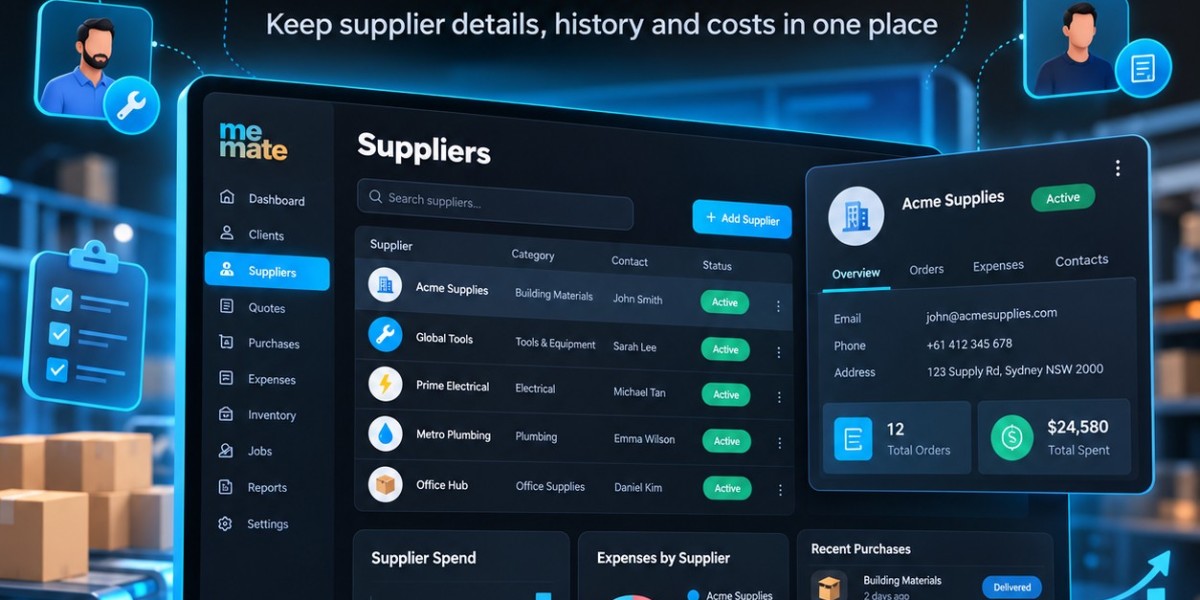
For businesses seeking broader operational visibility, MeMate offers supplier records and expense history alongside project management, contractor coordination and profitability tracking. Its official features describe these business management capabilities; businesses requiring advanced procurement controls, supplier compliance automation or dedicated lifecycle management should confirm whether additional tools are necessary.
Frequently Asked Questions
1. What does supplier management software do?
It centralises supplier information and helps businesses organise activities such as onboarding, communication, document management and performance monitoring. Available functions vary by provider.
2. Is supplier management software suitable for small businesses?
Yes. Small businesses can benefit from centralised supplier records, clearer responsibilities and fewer manual processes. A straightforward platform may be sufficient if purchasing requirements are relatively simple.
3. How can businesses measure supplier performance?
Track relevant indicators such as on-time delivery, order accuracy, product quality, response times and cost consistency. Review results regularly and agree on corrective actions when performance falls below expectations.
4. What is the difference between supplier management and procurement software?
Supplier management focuses on supplier information, relationships, risk and performance. Procurement software typically covers purchasing activities such as requisitions, sourcing, purchase orders and approvals. Some platforms combine both capabilities.
5. How long does supplier management software implementation take?
The timeline depends on the number of suppliers, data quality, integration requirements and workflow complexity. A basic setup may take days, while enterprise implementations can require considerably longer.
6. What should businesses check before choosing a supplier management platform?
Evaluate essential features, integration options, security, reporting, usability and total cost. Confirm whether the platform supports your specific supplier workflows rather than assuming every advertised feature is included.
Conclusion
Effective supplier management helps businesses maintain reliable relationships, control costs and reduce avoidable operational problems. The right software can bring supplier information together, standardise onboarding, improve performance visibility and make everyday coordination more consistent.
Start by identifying your biggest supplier-related challenges, defining measurable objectives and selecting technology that fits your existing workflows. Whether you need a simple supplier database or a comprehensive procurement platform, prioritise accurate records, clear accountability and ongoing performance reviews. These foundations help turn supplier management from a reactive administrative task into a more organised business process.