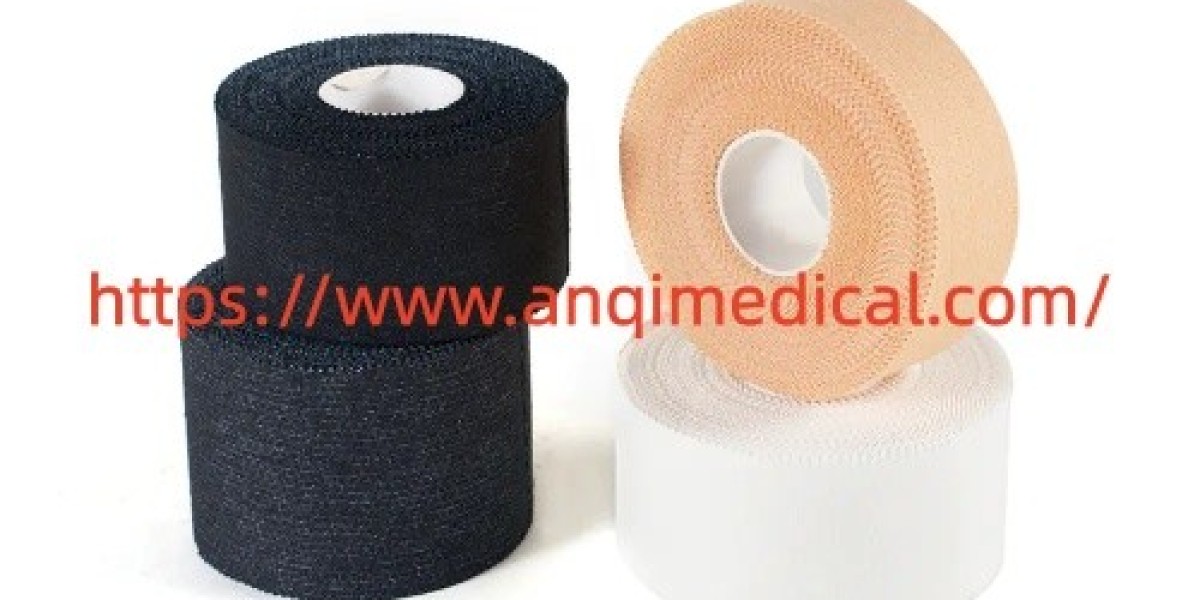

Athletic Sports Tape is widely used in sports settings where athletes and practitioners want temporary external support around areas such as the ankle, wrist, knee, thumb, or fingers. Different joints move in different ways, and sports place varying demands on them. A basketball player may need support around an ankle during repeated jumping and landing, while a weight training user may focus more on the wrist or thumb. Recent discussions also distinguish between rigid and elastic formats because they provide different levels of movement control and flexibility.
The ankle is one of the clearest examples of why product selection matters. Running, football, basketball, volleyball, and tennis involve repeated changes in direction, jumping, stopping, and landing. These movements can place considerable demands on the joint. A non elastic construction may be considered when limiting particular movements is part of the intended application. The product width also matters because a wider roll can cover a larger area, while a narrower format may be easier to position around smaller sections.
The wrist presents a different situation. Tennis players, weightlifters, gym users, and racket sport participants may repeatedly bend and rotate the wrist during training. Depending on the intended application, some users may prefer a firm material that limits selected movement, while others may need a flexible option that follows normal activity. This difference between movement restriction and movement accommodation is an important factor when comparing products.
Fingers and thumbs also require careful consideration. Contact sports can place repeated stress on small joints, while weight training can create friction and pressure around the thumb. A narrow width can provide greater control when working around these smaller areas. Buyers may also examine how easily the material can be torn or cut, since precise application is particularly important when covering a small joint.
Knees and shoulders introduce larger movement ranges. A runner, volleyball player, or fitness enthusiast may need a product that follows repeated motion rather than creating unnecessary restriction. Elastic constructions are commonly considered in situations where movement needs to remain relatively free. The backing material and degree of stretch can influence how the product follows body contours during activity.
For manufacturers, this creates a strong reason to develop different specifications instead of treating every application as the same. Cotton backing, elastic textile construction, adhesive formulation, width, length, and liner design can all be adjusted according to the intended market. A product designed for a professional sports environment may have different requirements from one intended for general fitness retail.
Adhesion is another purchasing consideration. A product needs to remain positioned during its intended use, but skin contact also needs to be considered carefully. Sweat, body movement, hair, moisture, and skin preparation can all influence the application experience. Clean and dry skin is generally recommended before application, while users should follow the instructions supplied with the specific product.
The choice of material should also reflect the activity. Rigid constructions are commonly associated with applications where movement restriction is desired. Elastic formats can be more suitable when users want a product that follows movement. A systematic review published in JOSPT Open found that both rigid and elastic adhesive products have been studied across sports and musculoskeletal conditions, while also noting variation between studies and applications. This is why manufacturers should avoid presenting one format as suitable for every situation.
Packaging can influence purchasing decisions as well. Individual rolls may work well for personal users, while multipacks can be useful for sports clubs, training facilities, retailers, and clinics. Different roll lengths can also help buyers manage inventory according to their expected usage. Private label packaging may be relevant for distributors that want their own presentation while keeping the underlying product specification consistent.
Anqimedical develops products with attention to material selection, adhesive characteristics, dimensions, packaging, and customization requirements. For professional buyers, this approach can make it easier to compare different configurations according to their intended sporting market. A distributor serving several sports may benefit from having access to multiple formats rather than relying on one specification.
Another factor is the experience of application. A product that tears cleanly, handles easily, and follows the intended wrapping pattern can make preparation more convenient. This can matter before training sessions, competitions, rehabilitation appointments, or fitness activities when users have limited time. Clear packaging information and practical instructions can also help retailers communicate appropriate usage to their customers.
Buyers should consider the body area, activity type, desired movement range, material structure, adhesive characteristics, product dimensions, and expected wearing conditions before making a purchasing decision. These factors provide a more useful basis for comparison than simply looking at appearance or packaging. Professional users may also consider whether the supplier can provide technical documentation, customization, and consistent production specifications.
For manufacturers, understanding the relationship between joint movement and product construction can support more focused product development. An ankle used during jumping may have different requirements from a thumb used during weight training. A wrist involved in repetitive racket movements can present different considerations from a knee used during long distance running. Matching the product to these real applications creates a clearer path for product positioning without relying on exaggerated claims.
Anqimedical provides product information for buyers looking at different specifications, packaging formats, and manufacturing options. Customers evaluating products for sports retailers, distributors, training facilities, or professional channels can review available solutions at https://www.anqimedical.com/product/