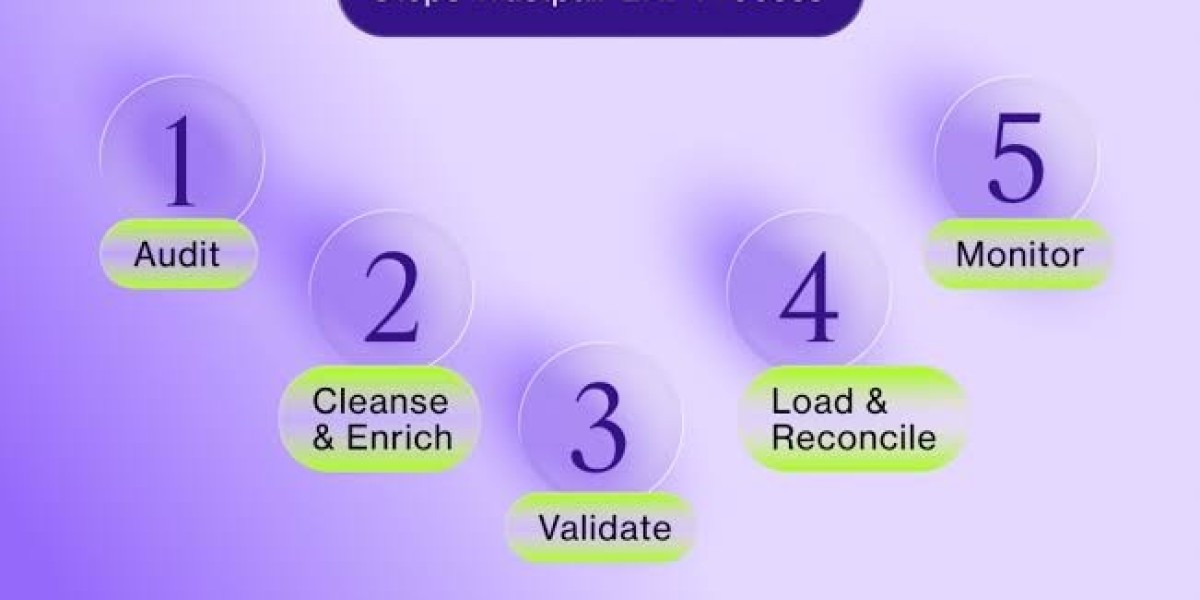

Enterprise Resource Planning (ERP) systems store important business information related to finance, purchasing, inventory, sales, suppliers, and customers. When an organization moves from an outdated ERP platform to a modern solution, preserving historical transaction data is a major challenge.
Historical records support financial reporting, internal audits, operational analysis, and business decision-making. If transaction history is incomplete or inaccurate after migration, employees may struggle to reconcile accounts, investigate previous orders, or verify customer balances.
Understanding how to preserve transaction history during ERP migration helps businesses protect data integrity while transitioning to a new system.
Why Transaction History Matters
Transaction history provides a record of business activities over time. Examples include invoices, purchase orders, payments, journal entries, inventory movements, credit notes, and sales receipts.
These records help finance teams investigate discrepancies, verify outstanding balances, and prepare reports. Operations teams may use historical information to understand stock movements, purchasing patterns, and supplier performance.
In some industries, organizations must retain specific records for legally defined periods. Consequently, migration planning should consider both operational requirements and applicable retention obligations.
Conduct a Detailed Data Assessment
Before migration begins, organizations should identify the historical information stored in the existing ERP system.
This assessment should cover transaction types, record volumes, attachments, document relationships, custom fields, and historical reporting requirements. Teams should also identify duplicate records, incomplete entries, and obsolete information.
A data inventory helps stakeholders decide which records should be migrated into the new ERP, which can remain accessible through a read-only archive, and which may be removed under an approved retention policy.
These decisions should be documented before extraction begins.
Define a Historical Data Migration Strategy
Not every organization needs to migrate every historical record into the new ERP database. The appropriate strategy depends on business requirements, system capabilities, reporting needs, and compliance obligations.
A full historical migration transfers the required transaction records into the target system. This can provide convenient access but may require significant mapping, testing, and transformation work.
A selective migration transfers recent or operationally important records while keeping older transactions in an accessible archive.
A hybrid approach combines both methods. For example, a business might migrate open transactions and several years of frequently accessed history while preserving older records in a controlled legacy environment.
The chosen strategy should maintain reliable access to information required for audits and business operations.
Preserve Transaction Relationships
Transaction records often depend on relationships with other records. A customer invoice may reference a sales order, shipment, payment, tax entry, and general ledger posting.
If these relationships are lost during migration, users may see incomplete transaction histories even when the individual records have been transferred successfully.
Migration teams should map the relationships between source and target entities. They should also preserve original document numbers or maintain a reliable cross-reference between legacy identifiers and new system identifiers.
Where the target ERP uses a different data structure, teams must determine how historical relationships will be represented without changing the meaning of the original transaction.
Validate Data Accuracy and Completeness
Data validation is one of the most important stages of ERP migration. Organizations should compare source and target records using several methods.
Record counts can identify missing or duplicated transactions. Financial totals can reveal differences in balances, debit and credit amounts, or outstanding invoices. Date-range checks can identify missing periods.
More detailed checks should examine individual transactions, tax values, currencies, document statuses, and relationships between records.
For financial data, reconciliation should be performed at appropriate levels, including account balances and relevant subledger totals. Any differences should be investigated and documented rather than simply adjusted to make reports match.
Maintain Auditability and Traceability
A reliable migration process should preserve enough information to explain where historical records originated and how they were transformed.
Useful metadata may include the original transaction identifier, migration batch, source system, migration timestamp, and relevant mapping information.
Organizations should retain approved migration specifications, reconciliation reports, exception logs, and sign-offs from responsible business owners.
Access controls should also be applied to historical data, particularly where records contain confidential financial or personal information.
Perform Testing Before Final Cutover
Migration should be tested in a controlled environment before the production transition. Test runs help identify mapping errors, missing records, incorrect date conversions, and reporting inconsistencies.
Business users should verify that representative historical transactions can be located and understood in the target system. Finance teams should test reconciliation reports, while operational teams should check order and inventory histories.
A final migration plan should include a defined cutover window, data freeze or change-capture strategy, validation procedures, and contingency arrangements.
Conclusion
Knowing how to preserve transaction history during ERP migration helps businesses protect the accuracy, accessibility, and auditability of their records. A structured data assessment, clear migration strategy, relationship mapping, detailed reconciliation, and thorough testing reduce the risk of historical data loss.
By treating transaction history as a business-critical asset rather than simply a collection of database records, organizations can move to a modern ERP system without losing the information needed to understand and verify past operations.