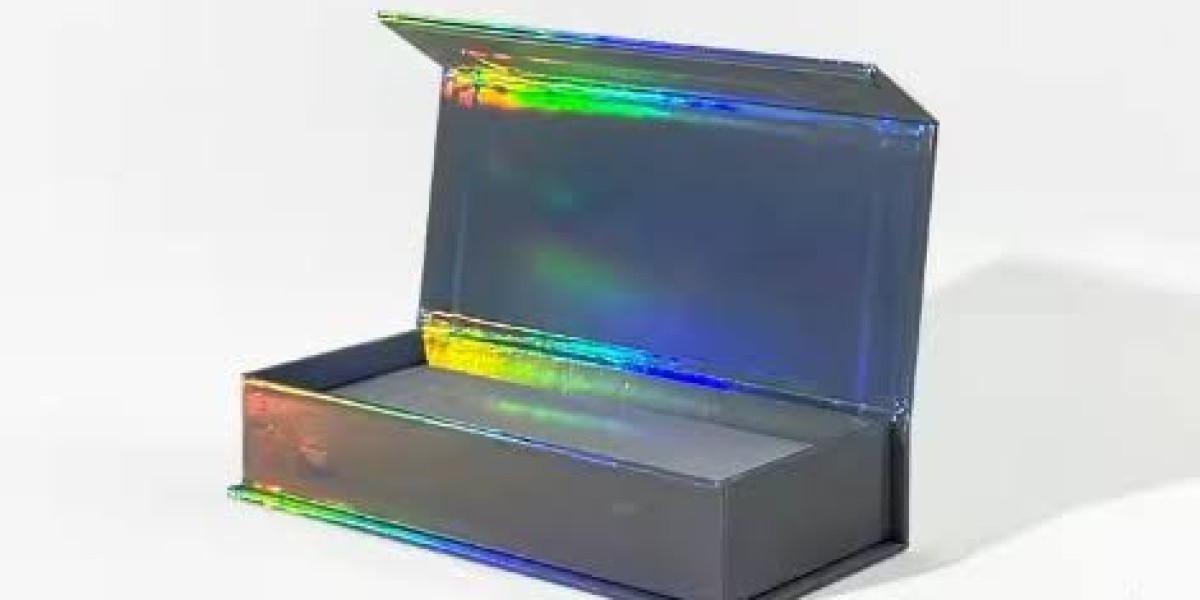

In a competitive retail market, packaging must do more than contain a product. It should attract attention, communicate brand personality, and create a memorable impression. Holographic boxes offer a distinctive solution through reflective surfaces that produce changing colors and visual effects when viewed from different angles.
These boxes are popular for cosmetics, beauty products, gift items, electronics accessories, promotional merchandise, and selected premium retail products. Their striking appearance can help brands create packaging that feels modern, innovative, and visually distinctive.
What Are Holographic Boxes?
Holographic boxes are packaging containers that incorporate holographic or iridescent materials to create shifting colors, reflective patterns, or light-dependent visual effects.
They are often manufactured using paperboard or rigid board combined with a holographic film, specialty paper, or suitable decorative finish. The final appearance depends on the material, lighting conditions, printing method, and surface treatment.
Some designs use a full holographic exterior, while others apply the effect to specific areas such as logos, borders, product names, or decorative patterns.
Benefits of Holographic Packaging
1. Strong Visual Appeal
The reflective surface of holographic packaging naturally attracts attention. As light changes, the packaging may display different colors or patterns, creating a dynamic visual effect.
This can be particularly useful for products that compete for attention on retail shelves or in promotional displays.
2. Premium Brand Presentation
Holographic finishes can give packaging a modern and sophisticated appearance. When combined with a clean layout and suitable typography, the finish can help position a product as fashionable or premium.
However, the effect should match the product and target audience rather than overwhelm the overall design.
3. Product Differentiation
Many retail packages use similar shapes and color schemes. A distinctive holographic finish can help a product stand apart from competing items.
Brands can apply the effect selectively to maintain consistency across a collection while highlighting special editions or limited releases.
4. Creative Customization
Holographic boxes support various design possibilities. Businesses can combine reflective surfaces with printed graphics, matte areas, foil accents, embossing, or cutout windows.
A selective finish can draw attention to important design elements without covering the entire box in reflective material.
5. Marketing and Unboxing Appeal
Attractive packaging may encourage customers to photograph products and share their purchases online. This is not guaranteed, but visually distinctive packaging can contribute to a memorable unboxing experience.
For gift products, the reflective finish may also reduce the need for additional decorative wrapping.
Applications of Holographic Boxes
Cosmetic and skincare brands may use holographic packaging for makeup palettes, beauty accessories, gift sets, and selected product launches.
Electronic accessory brands can apply holographic effects to packaging for headphones, phone accessories, gaming products, and other small consumer goods.
Gift and promotional businesses may use holographic boxes for special events, seasonal collections, and limited-edition merchandise.
Retailers should choose the finish carefully to ensure it complements the product's visual identity and does not make essential information difficult to read.
Design and Printing Options
A successful holographic box begins with a suitable structural design. The board must be strong enough for the product, and the reflective material should adhere properly to the packaging surface.
Printing can be applied over selected areas of the holographic substrate to create contrasting graphics. Depending on the materials and production process, designers may use opaque inks, transparent inks, or other specialized techniques.
Matte finishes can create contrast against reflective areas, while embossing or debossing adds texture. Window cutouts and custom inserts may be incorporated where suitable.
Designers should test color accuracy and readability because reflective surfaces can change how printed elements appear under different lighting conditions.
Sustainability Considerations
Holographic packaging may use laminated films, coatings, adhesives, or mixed materials that complicate recycling. The exact impact depends on the material construction and local recycling infrastructure.
Businesses interested in more recyclable packaging should discuss substrate options with their packaging supplier and verify whether the final structure can be processed locally.
Using holographic effects selectively may help reduce decorative material use, although the environmental outcome depends on the complete packaging design.
How to Choose Holographic Boxes
Consider the product's weight, dimensions, fragility, and presentation requirements. Select a suitable board grade and verify that the holographic finish is durable enough for storage, handling, and shipping.
Choose colors and graphics that remain readable against the reflective background. Request printed samples before approving a large production run.
Conclusion
Custom Holographic Boxes offer brands a creative way to capture attention and strengthen product presentation. Their reflective surfaces can make packaging distinctive, support premium positioning, and create memorable visual experiences.