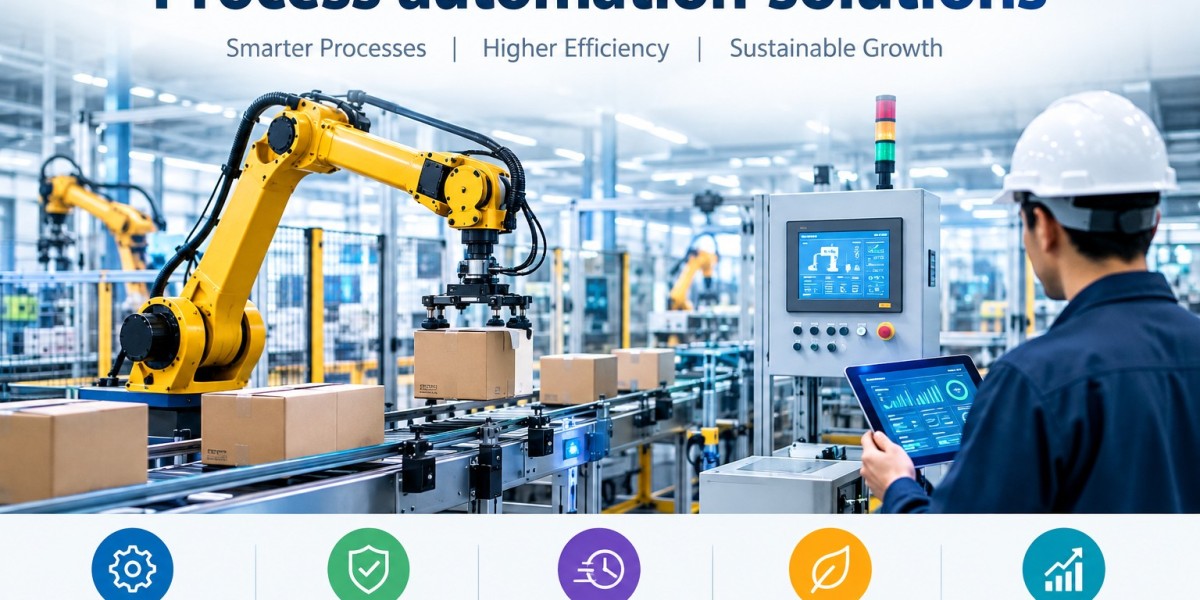

Process automation solutions help organizations achieve this by reducing repetitive manual activities and creating more consistent workflows. When implemented strategically, automation can improve operational visibility, support better resource management, and help businesses build a more connected working environment.
Understanding Automation in Digital Transformation
Digital transformation involves using technology to improve existing business operations and develop better ways of working. Automation is an important part of this process because it allows organizations to complete specific activities with less manual intervention.
For example, a business might automate invoice processing, customer request routing, inventory updates, or production monitoring. Instead of relying entirely on employees to perform every step, automated workflows follow predefined rules and transfer information between connected systems.
The purpose is not simply to make individual tasks faster. Effective automation can help eliminate unnecessary steps, reduce delays, and improve coordination across departments.
The Importance of Connected Business Workflows
Many organizations use different applications to manage customer information, financial records, inventory, and internal communication. When these systems operate independently, employees may need to enter the same information multiple times or manually transfer data between platforms.
Integrating suitable systems can reduce these difficulties. For example, an automated order-processing workflow might transfer customer order information to inventory management and notify the relevant team when an action is required.
Such workflows can improve information consistency and reduce avoidable administrative work. However, integration must be planned carefully to maintain data accuracy, security, and compatibility between applications.
Major Benefits of Process Automation Solutions
1. Improved Workflow Coordination
Automation can connect related activities and establish clear sequences for completing tasks. This helps teams understand what needs to happen next and reduces delays caused by manual coordination.
2. Greater Information Accuracy
Automated data transfers and validation rules can reduce certain errors associated with repeated manual entry. Businesses can also establish consistent procedures for handling information across departments.
3. Better Operational Visibility
Monitoring tools and automated reports can provide timely information about ongoing activities. Managers can use these insights to identify delays, evaluate performance, and determine where improvements may be needed.
4. Increased Employee Productivity
When routine administrative work is simplified, employees can devote more attention to customer service, planning, analysis, and other tasks requiring human judgment.
5. Support for Business Expansion
As workloads increase, manual processes can become difficult to manage. Well-designed automation can help businesses handle additional transactions and operational responsibilities without introducing unnecessary complexity.
The actual benefits depend on the process being automated, the quality of implementation, and the organization's existing infrastructure.
Industries That Can Benefit From Workflow Automation
Automation can support a wide range of business activities, with applications varying according to industry requirements.
Manufacturing: Automated control systems help coordinate machinery, monitor production conditions, and support consistent operating procedures.
Retail and E-commerce: Businesses can automate order notifications, inventory updates, and selected customer communication workflows.
Banking and Finance: Suitable workflows can support document verification, transaction reporting, and administrative processes, subject to regulatory and security requirements.
Healthcare Administration: Appointment reminders, record-routing workflows, and administrative notifications can reduce repetitive work while maintaining appropriate privacy protections.
Information Technology: Automated monitoring, incident notifications, software deployment workflows, and routine system checks can improve operational coordination.
Choosing the right application requires an understanding of industry regulations, workflow requirements, and the risks associated with automating particular tasks.
Steps to Implement Automation Successfully
A structured implementation strategy helps businesses avoid unnecessary costs and technical difficulties.
Step 1: Evaluate Existing Processes
Identify repetitive activities, unnecessary approvals, communication gaps, and recurring delays. Understanding the current workflow helps determine where automation may deliver meaningful improvements.
Step 2: Establish Clear Objectives
Define the intended results, such as reducing processing time, improving data accuracy, or increasing operational visibility. Measurable objectives make it easier to evaluate performance.
Step 3: Select Appropriate Technologies
Compare potential solutions based on functionality, integration capabilities, security, scalability, and maintenance requirements. The selected technology should address the actual business problem.
Step 4: Test Before Expanding
Start with a manageable workflow and evaluate its performance. Testing can reveal integration issues, unexpected exceptions, and training requirements before the solution is deployed more widely.
Step 5: Monitor and Improve
Review performance indicators regularly and gather feedback from employees. Automation should be adjusted when business processes, customer needs, or technical requirements change.
Challenges Businesses Should Consider
Although automation offers important opportunities, implementation can present several challenges. Older systems may not integrate easily with newer applications, while poorly designed workflows can reproduce existing inefficiencies.
Data security is another important consideration. Businesses should establish suitable permissions, protect sensitive information, and monitor access to connected systems.
Employee involvement is equally valuable. Explaining the purpose of automation and providing practical training can help teams adapt to new workflows.
Organizations should also maintain appropriate human oversight. Tasks involving complex decisions, exceptional circumstances, or sensitive customer issues may require human review rather than complete automation.
The Future of Connected and Automated Operations
Advances in artificial intelligence, cloud computing, data analytics, and connected devices are creating new possibilities for business automation. Organizations can use these technologies to analyze operational information, identify patterns, and improve selected decision-making processes.
For example, predictive analytics may help identify potential equipment problems, while intelligent document processing can extract information from suitable business documents. Connected industrial systems can also provide improved visibility into equipment performance.
Nevertheless, technology should be adopted according to measurable business needs. Reliable data, appropriate security controls, system compatibility, and effective implementation remain essential for achieving useful results.
Conclusion
Digital transformation becomes more valuable when businesses improve the processes behind their technology. Process automation solutions can help organizations connect workflows, reduce repetitive activities, improve information consistency, and manage operations more effectively.
By evaluating existing challenges, selecting suitable technologies, and measuring results over time, businesses can create more adaptable and reliable working environments. A thoughtful automation strategy supports continuous improvement while allowing employees to focus on activities that contribute greater value to the organization.