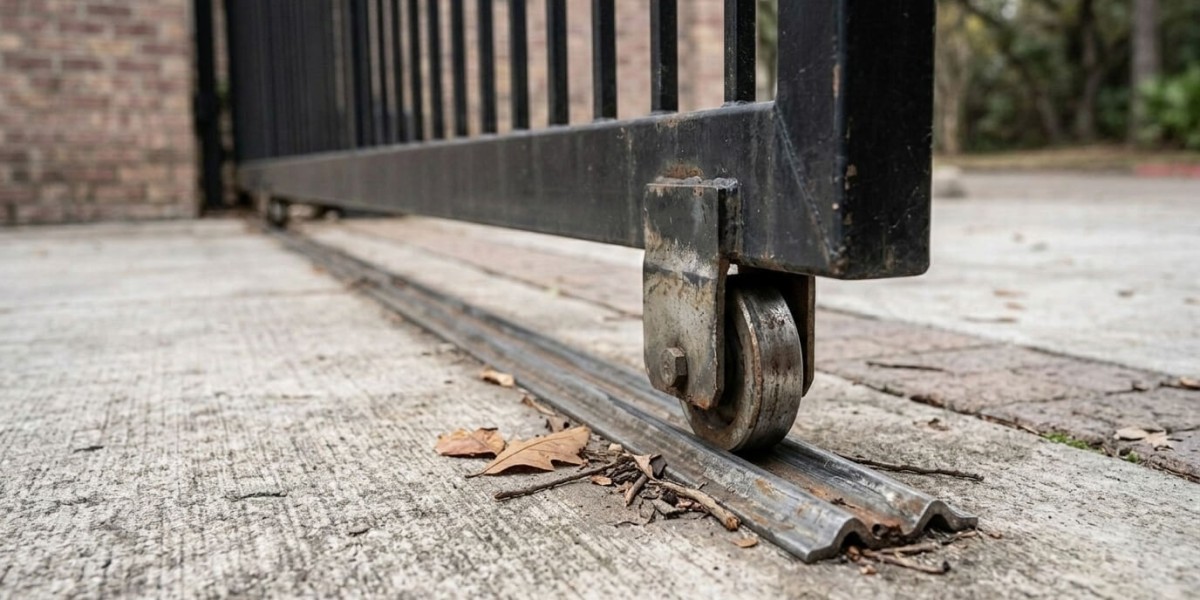

A sliding gate is a simple idea carried out with heavy hardware. A panel of steel or aluminum rolls sideways along a track, guided by wheels, driven by a motor, and stopped by limit settings. When everything lines up, it glides. When something drifts, it grinds, jumps, sticks, or stops halfway, and the motor often takes the blame for problems that actually start in the tracks, rollers, or alignment. If you're dealing with a gate that has started to bind or jump, understanding these mechanics will help you decide what to check and when to call for sliding gate repair.
This guide is written for homeowners, property managers, and business owners in The Woodlands. It covers the main types of sliding gates, the most common problems with tracks, rollers, and alignment, what's safe to check yourself, and what a professional fix looks like.
Know Your Sliding Gate Type
Not all sliding gates work the same way, and the weak points differ.
Type | How It Works | Common Weak Points |
Track-mounted (roller) gate | Wheels roll along a track set into or on top of the ground | Debris in the track, bent or sunken track, worn wheels |
Cantilever gate | The gate hangs from rollers mounted on posts and slides without a ground track | Roller carriage wear, sag at the free end, post movement |
Overhead or suspended gate | The gate hangs from an overhead rail | Rail alignment, hanger wear, structural support |
Many residential driveways use track-mounted gates, while commercial properties often use cantilever designs to avoid ground-level debris. If you're not sure which you have, a technician can identify it quickly.
How a Sliding Gate Is Supposed to Move
For a sliding gate to travel smoothly, several conditions must hold together:
The track (or rollers) must be straight, clean, and level
The wheels or rollers must be round, intact, and well-aligned
The gate must be square and not sagging
Guide wheels or posts must keep the gate in line
The drive system must match the gate's weight
Limit settings must stop the gate at the right points
When one of those conditions slips, the others compensate until something gives. That's why small symptoms are worth noticing early.
Problem 1: Debris and Dirt in the Track
Track-mounted gates are especially vulnerable here. Leaves, gravel, dirt, mulch, and trash settle into the groove and block the wheels.
What it looks like:
The gate sticks, jerks, or stops at the same spot
The motor strains or trips its overload
Scraping or crunching noises
The gate jumps slightly as it rolls
What you can do: Clear loose debris from the track with a brush, broom, or a gentle blast of air or water, with the operator powered off. Avoid forcing the gate and avoid reaching into pinch points.
When to call: If debris returns constantly, the track may be sunken, poorly drained, or damaged, which a technician can address.
Problem 2: Worn or Damaged Rollers and Wheels
Rollers carry the gate's full weight. Over time, bearings wear, wheels flatten, and grooves wear down.
What it looks like:
Grinding, squealing, or rumbling as the gate moves
Uneven or jerky travel
A visibly flattened, cracked, or wobbly wheel
The gate sitting lower on one end
Typical causes:
Age and cycle count
Rust or lack of lubrication
Dirt in the bearings
Overloaded or misaligned wheels
Professional solution: Replacing worn rollers or carriages, checking that new parts match the gate's weight, and aligning them properly. For heavy gates, lifting and supporting the panel safely is a job for trained technicians.
Problem 3: Bent, Sunken, or Damaged Tracks
A track that's no longer straight or level makes the wheels climb, drop, or bind.
What it looks like:
The gate rides up or drops at certain points
Wheels jump out of the groove
Visible bends, cracks, or gaps in the track
Water pooling in the track path
Typical causes:
Vehicle impact
Ground settling or erosion
Frost heave or soil movement
Corrosion
Poor original installation
Professional solution: Straightening, re-setting, or replacing track sections, correcting drainage, and re-leveling the foundation if needed.
Problem 4: Gate Misalignment
Even with good rollers and a clean track, a gate that's out of alignment will bind.
What it looks like:
The gate rubs against posts, the latch, or the fence
Gaps that aren't even
The gate doesn't line up with the receiver post when closing
The operator reaches its limit before the gate is fully closed, or overshoots
Typical causes:
Shifted posts or foundations
Sagging at the free end (especially on cantilever gates)
Loose or worn mounting hardware
Impact damage
Incorrect limit settings
Professional solution: Re-squaring the gate, stabilizing posts, tightening or replacing hardware, and resetting limit travel and force.
Problem 5: Drive System Trouble
Sliding gates are commonly driven by a rack-and-pinion or chain system, and the gate's mechanical condition affects how hard the operator works.
What it looks like:
The motor runs, but the gate barely moves
Chain slack or rack teeth that look worn or misaligned
The operator overheats or trips on overload
The gate stops in the middle of its travel
Typical causes:
A binding gate that overloads the motor
Worn or misaligned drive parts
Loose operator mounting
Limit or force settings that have drifted
Professional solution: Correcting the mechanical binding first, then adjusting or replacing drive parts and recalibrating the operator.
Problem 6: Rust and Environmental Wear
Humidity and rain encourage rust on tracks, wheels, brackets, and fasteners. Over time, rust roughens surfaces, seizes bearings, and weakens structural parts.
What it looks like:
Orange staining or flaking on metal
Stiff or seized wheels
Fasteners that are hard to move or crumble
What you can do: Wipe away dirt and moisture, and watch for spreading rust.
Professional solution: Cleaning and treating rust, replacing damaged hardware, and recommending protective coatings or materials suited to humid conditions.
Quick Reference: Symptom to Likely Cause
Symptom | Likely Cause | Typical Solution |
Gate sticks at the same spot | Debris or a bent track section | Clear debris; repair track |
Grinding or rumbling | Worn rollers or dirty bearings | Clean and lubricate; replace rollers |
Gate jumps or rides up | Track damage or sunken foundation | Re-set or replace track |
Gate rubs posts | Misalignment or shifted posts | Re-square; stabilize posts |
Gate wobbles | Worn guide wheels | Adjust or replace guide wheels |
Motor strains or overheats | Binding gate or drive wear | Fix the mechanics first; service the drive |
Gate stops partway | Obstruction, limit drift, or binding | Inspect and recalibrate |
Gate won't close fully | Alignment or limit settings | Re-square; reset limits |
What You Can Safely Check Yourself
A few simple steps are usually reasonable:
Power off the operator before touching anything near the gate's path
Clear visible debris from the track and around the wheels
Look for obvious damage: bent track, flattened or cracked wheels, loose hardware
Check that the gate's path is clear of vegetation, objects, or ice
Lubricate according to the manufacturer's guidance, since the right approach differs by gate and hardware
Tighten visible loose bolts, if you're comfortable doing so
Take notes and photos of what you see and when problems occur
Avoid forcing the gate, standing in pinch points, or opening the operator housing.
When to Call a Professional
Bring in a technician when:
The gate won't move, or moves only with a struggle
Wheels are damaged, seized, or the gate is off its track
The track is bent, sunken, or cracked
The gate sags, rubs, or no longer lines up
The motor overheats or trips repeatedly
Safety sensors or limits aren't working reliably
Problems recur after cleaning and lubrication
Sliding gates are heavy, and lifting or supporting them without the right equipment can cause serious injury.
What a Professional Visit Involves
Symptom review and history
Inspection of the track, rollers, guide wheels, posts, drive system, and operator
Testing of travel, limits, sensors, and safety reversal
Diagnosis with a clear explanation of the cause
A written estimate before additional work
Repair: track correction, roller replacement, re-aligning, post stabilizing, or drive adjustment
Recalibration and final testing
A summary of what was done and what to monitor
If an old gate has multiple worn parts, a technician may discuss replacement options. If you're weighing a new system, it's reasonable to ask about professional gate installation as well, so you can compare the cost of continued repairs with equipment better matched to your traffic and site conditions.
Preventing Repeat Problems
Keep tracks clean, especially after storms or landscaping work
Trim vegetation away from the gate's path and sensors
Lubricate rollers and moving parts as recommended
Inspect for rust and wear twice a year
Check alignment and clearances after any impact
Test safety reversal and sensors periodically
Address drainage problems so water doesn't pool in or near the track
Schedule an annual professional inspection, especially for busy or commercial gates
Choosing a Provider
Because sliding gates are heavy and often motorized, look for a provider who diagnoses mechanics before blaming the operator. Useful questions include:
Are you licensed and insured?
Do you work on my gate type and operator brand?
Will you inspect the track, rollers, guide wheels, and posts, not just the motor?
Is your estimate written and itemized?
What warranty covers parts and labor?
A local company such as 2Quick Garage Doors is an example of the kind of provider property owners in The Woodlands can compare. If you'd like to see how a focused provider approaches the work, reading about Sliding Gate Repair can help you judge whether their process covers the track-to-operator diagnosis described above.
Frequently Asked Questions
Why does my sliding gate stop in the same place every time? Common causes include debris, a bent or sunken track section, or a limit setting that's drifted. A close inspection of that spot often reveals the culprit.
Can I lubricate the track? It depends on the gate and manufacturer's guidance. Some tracks should be kept clean and dry, while rollers and bearings may need lubrication. Check your manual or ask a technician.
Is it okay to push the gate open by hand? Only using the manual release as the manufacturer directs, and only if the gate moves freely. Forcing a binding gate can cause damage or injury.
Why does my gate sag at the free end? Cantilever gates in particular can sag from worn rollers, shifted posts, or fatigue in the frame. It's best to have it inspected before it worsens.
How often should a sliding gate be inspected? Once a year is a reasonable baseline, with more frequent checks for heavy use or commercial sites.
Final Thoughts
Most sliding gate trouble starts with the track, the rollers, or the alignment, not the motor. Keep the track clean, watch for early signs like grinding, sticking, or rubbing, and have a professional deal with anything involving heavy lifting, damaged tracks, or electrical components. Catch the small stuff early, and you'll get far more smooth, quiet years from the gate.




