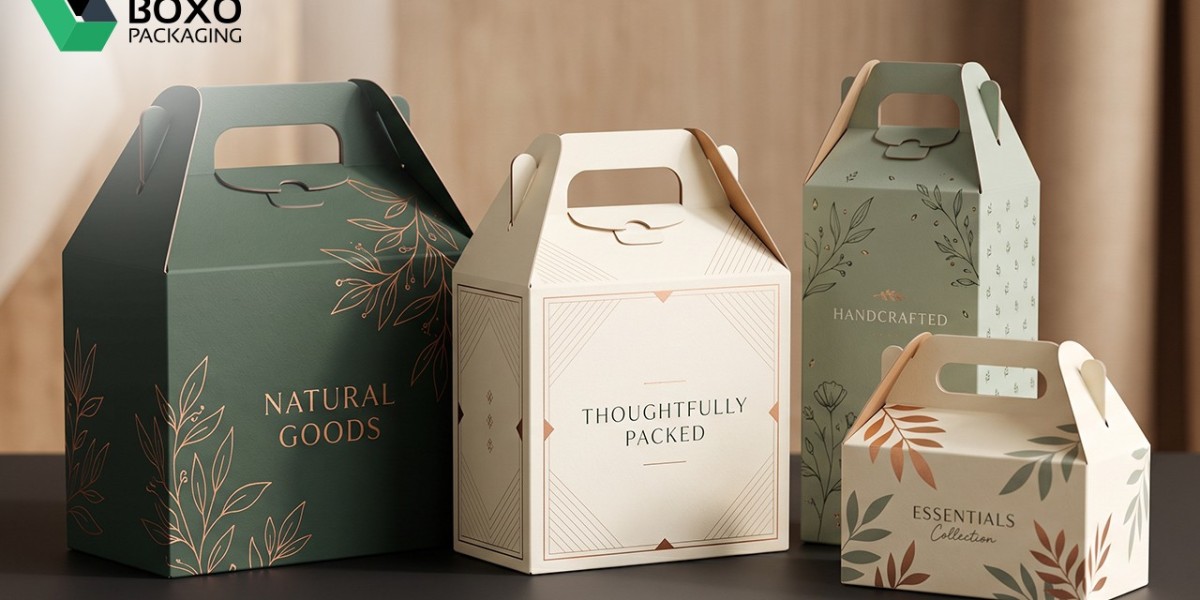

A shaped carton with a peaked top and an integrated handle gives customers one package to hold, carry, and present. For small gift sets, bakery assortments, event favors, and product samples, Custom Gable Packaging combines the role of a container with the convenience of a carry pack, provided the handle and base are designed for the loaded weight.
Fit the structure to the packed product
The gable shape is created by folding the upper panels toward one another, where they form a handle or locking peak. That construction leaves a broad front panel for artwork and side panels for instructions or product details. The usable interior, however, is determined by the lower body rather than the peak. Measure the packed item, including tissue, inserts, and any protective wrap, before setting the dimensions.
Material and handle choices
Lightweight favors may suit folding carton board or kraft paperboard. Heavier sets might need a thicker grade, reinforced handle area, or corrugated construction. The handle should be tested with the actual load because a box that stands neatly on a counter may behave differently when lifted and carried. A locking base, secure top closure, and balanced contents matter as much as the printed surface.
Design details that survive folding
Artwork should be laid out on the approved dieline, with key text kept clear of creases, tabs, and the handle opening. A seasonal illustration can wrap across the panels, while a logo or product name remains on the most visible face. Matte coating, gloss accents, foil, or embossing may suit gift packaging, but each finish should be checked for compatibility with the board and intended use.
Useful options to specify
Before ordering, decide which features serve the actual product rather than adding decoration by default. Consider these practical points:
An insert or divider for bottles, samples, or small objects that could shift during carrying.
A die-cut window when seeing the contents is part of the product presentation.
A reinforced handle and stronger base for a heavier assortment or longer carry distance.
Food-contact-suitable board or a separate liner when the package will hold unpackaged food.
Where gable cartons work best
Custom Gable Packaging is often used for bakery takeaways, welcome kits, trade-show samples, party favors, and compact retail gift bundles. It is less suitable as the only shipping protection for fragile goods or for very heavy items that place excessive strain on the handle. An outer shipper may still be needed for courier delivery.
Review a sample before production
A physical sample reveals whether the top closes easily, the handle feels comfortable, and the contents remain in position. Pack it exactly as it will be sold and lift it several times. Teams such as Boxo Packaging may be asked to align the dieline, material, print layout, and intended use before a production run is approved.
Custom Tuck Boxes for Neat Retail Cartons
A folding carton with flaps that tuck into the body creates a compact enclosure for many lightweight retail items. Custom Tuck Boxes provide printable panels and a flat-packed format that can be assembled when needed, making them useful for cosmetics, soap, accessories, cards, and selected small consumer products.
Choose the closure around the filling process
Straight-tuck cartons have top and bottom flaps that close in the same direction, while reverse-tuck cartons close from opposite ends. The choice affects the visible panels, dieline layout, and how the carton is assembled. For heavier products, an auto-lock or snap-lock base can offer more support than a simple tuck closure. The box should be sized to the item, not just to a familiar standard dimension.
Board, finish, and printed information
White coated paperboard supports sharp color and small text; kraft board gives the package a more natural surface. Recycled-content board may be appropriate where the supply specification supports it. Matte or gloss coatings, foil accents, embossing, and spot gloss can emphasize a logo, though too many effects can compete with useful information. Leave enough clear space around folds and cuts so text does not break across a crease.
Features worth considering
The right additions depend on what is inside and how it will be sold. A tuck carton might need:
A fitted paperboard insert for a bottle, small device, or delicate accessory.
A hang tab for peg displays where shelf space is limited.
A window cutout when shoppers need to inspect the product before purchase.
An auto-lock bottom when packing speed or added base support is important.
A practical fit for retail and sampling
Custom Tuck Boxes suit products that benefit from a tidy outer carton but do not require a heavy shipping structure. They can hold skincare tubes, lip balm, craft items, small electronics accessories, tea sachets, or promotional samples. Items shipped directly to customers should normally sit inside a suitable mailer or corrugated shipper because a retail carton alone may not withstand distribution handling.
Check the artwork on the flat dieline
A 3D mock-up shows the finished appearance, but the flat dieline reveals where panels, glue seams, dust flaps, and closures will land. Confirm the inside dimensions, product clearance, barcode position, and required label information before approving print. A test assembly can catch a flap that catches, a product that rattles, or a logo hidden by the final fold.




