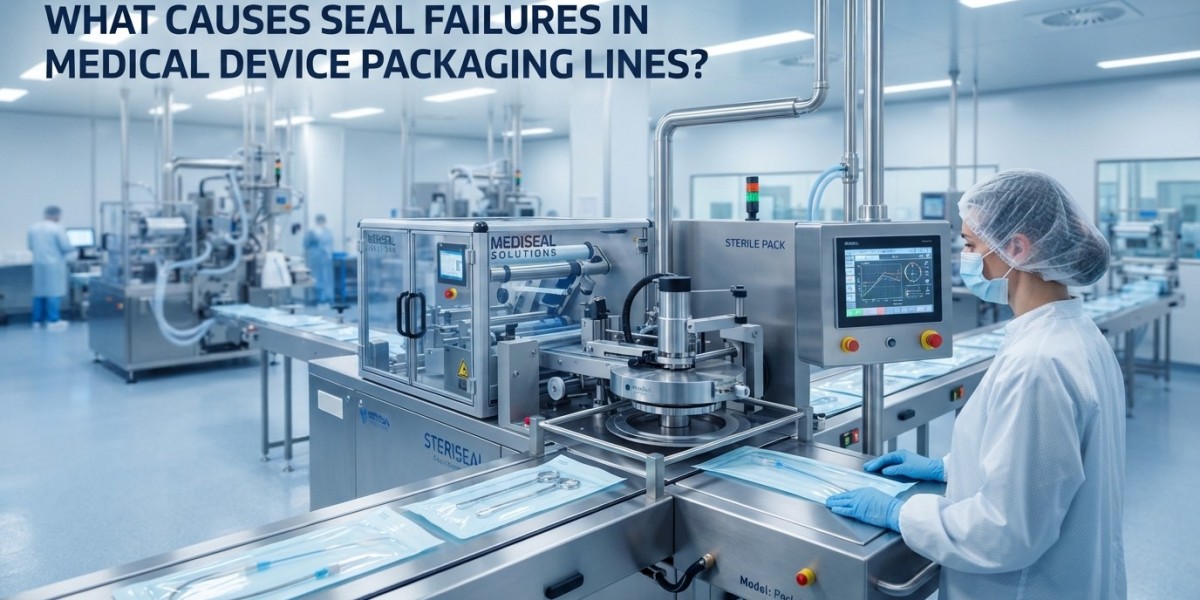

Medical device packaging must do more than hold a product in place. For devices that require sterile packaging, the seal must help maintain the sterile barrier throughout storage, handling, transportation, and use. Even a small defect, such as a wrinkle across the seal area or a weak bond between packaging layers, can compromise package integrity.
Manufacturers often face seal failures because of incorrect temperature settings, uneven sealing pressure, inconsistent dwell time, contaminated sealing surfaces, or unsuitable packaging materials. These problems can lead to rejected pouches, production delays, material waste, and additional quality checks.
Medical Device Packaging Machines play an important role in controlling these variables. When equipment settings, packaging materials, maintenance routines, and inspection procedures work together, manufacturers can produce more consistent seals and reduce recurring packaging defects.
This article explains the common causes of seal failures, how manufacturers can troubleshoot them, and how an Automatic Packaging Machine can support consistent medical device packaging.
Why Is Seal Integrity Important in Medical Device Packaging?
Seal integrity refers to the ability of a package seal to meet its specified requirements and maintain the intended barrier. For sterile medical devices, packaging must protect the product from contamination and preserve the sterile barrier until the package is opened.
Products such as syringes, surgical instruments, diagnostic test kits, gauze, and other single-use medical supplies may require packaging designed around their specific protection needs.
A defective seal can create several problems:
- Potential contamination: Channels, gaps, or incomplete seals may compromise the sterile barrier.
- Product rejection: Packages that fail inspection or integrity testing may need to be segregated and investigated.
- Material waste: Repeated sealing defects can increase the number of rejected pouches and wasted packaging film.
- Production interruptions: Operators may need to stop the line to inspect equipment, adjust settings, or replace damaged components.
- Quality and compliance concerns: Repeated failures may indicate that the sealing process is not consistently operating within its validated limits.
A seal that looks acceptable during a visual inspection is not automatically proof of package integrity. Manufacturers should use appropriate inspection and testing methods based on their packaging system, product risks, and applicable requirements.
What Causes Seal Failures in Medical Device Packaging Lines?
Seal failures can result from equipment settings, material conditions, operator practices, or mechanical problems. Identifying the actual cause is important because adjusting one parameter without understanding the failure may create additional defects.
1. Incorrect Sealing Temperature
Heat sealing depends on the packaging material and the temperature required to form a suitable bond. If the temperature is too low, the material may not bond properly. This can create weak seals, incomplete bonding, or areas that separate under stress.
Excessive temperature can also cause problems. Packaging layers may deform, shrink, burn, or lose their intended properties. Some materials may also delaminate when exposed to unsuitable sealing conditions.
How to address it: Verify temperature settings against the approved process specifications. Check temperature sensors, controllers, heating elements, and calibration records. Allow the equipment to reach its required operating conditions before production begins.
2. Uneven Sealing Pressure
Sealing pressure helps bring packaging layers into contact during the sealing cycle. If pressure varies across the sealing surface, some areas may form a strong bond while others remain weak.
Worn sealing jaws, damaged surfaces, misalignment, or inconsistent pneumatic or mechanical operation can contribute to uneven pressure. The resulting package may have narrow seals, open areas, or inconsistent seal strength.
How to address it: Inspect the sealing jaws for wear, damage, residue, and alignment problems. Verify that the pressure system operates within the specified range and that the sealing surfaces make consistent contact across the intended seal width.
3. Incorrect Dwell Time
Dwell time is the period during which the sealing surfaces apply the required conditions to the packaging material. If this period is too short, the bond may not develop adequately. If it is too long, the material may experience excessive heat exposure or deformation.
Dwell time can become particularly important when manufacturers adjust production speed or change packaging materials.
How to address it: Confirm the approved dwell-time range for the material and packaging format. After any relevant machine adjustment, verify that the sealing process continues to produce packages that meet established acceptance criteria.
4. Contamination in the Seal Area
Dust, product residue, moisture, oil, cleaning-agent residue, and other foreign materials can interfere with the bond between packaging layers. Even a small particle trapped in the sealing area may create a channel or weak point.
This risk can increase when products are filled close to the pouch opening or when cleaning and material-handling procedures are inconsistent.
How to address it: Keep sealing surfaces and packaging materials clean according to established procedures. Review product positioning, filling accuracy, material handling, and cleaning practices. If contamination repeatedly appears in the seal area, investigate its source instead of relying only on additional cleaning.
5. Wrinkles and Film Tracking Problems
Flexible packaging film must move through the machine in a controlled manner. Poor film alignment, uneven tension, damaged rollers, or incorrect web tracking can introduce wrinkles into the seal area.
When the sealing jaws close over folded or misaligned film, the resulting seal may contain gaps, channels, or areas with inconsistent bonding. These defects can be difficult to identify if the inspection process is inadequate.
How to address it: Check film alignment, web tension, roller condition, and the operation of the film-feeding system. Confirm that the selected film is compatible with the equipment and that the pouch is correctly positioned before sealing.
6. Worn or Misaligned Sealing Components
Sealing jaws, heating elements, pressure mechanisms, and associated components can wear over time. Wear may affect temperature distribution, pressure consistency, or the geometry of the seal.
Mechanical changes can also cause intermittent failures. A machine may produce acceptable packages for part of a production run and then begin generating defects as a component deteriorates or operating conditions change.
How to address it: Follow the manufacturer's maintenance schedule. Inspect critical components, document recurring defects, and replace damaged parts when required. Maintenance records can help connect seal failures with equipment wear or previous adjustments.
7. Unsuitable Packaging Materials
Not every film or pouch material performs the same way under identical sealing conditions. Material composition, thickness, coatings, surface properties, and compatibility between packaging layers can influence seal formation.
A material change may therefore affect the sealing window, even when the machine settings have not changed.
How to address it: Confirm that the packaging material is suitable for the intended medical application and sealing process. Evaluate new material specifications and conduct the required process assessment before introducing a change into routine production.
How Can Manufacturers Troubleshoot Medical Packaging Seal Failures?
A structured troubleshooting process helps manufacturers identify the cause of a defect without making unnecessary adjustments.
Step 1: Identify the Type of Seal Defect
Start by examining the failed package and documenting the defect. Common examples include weak seals, visible channels, wrinkles, incomplete bonding, delamination, and damage to the packaging material.
Determine whether the problem affects one section of the seal, a particular machine lane, or the entire production run. The location and pattern of the defect may help narrow down possible causes.
Step 2: Review Machine Settings
Check the recorded temperature, pressure, dwell time, machine speed, and other relevant process parameters. Compare the readings with approved operating ranges.
Do not assume that changing the temperature alone will resolve the problem. A defect caused by poor film tracking or contaminated sealing surfaces may continue even after temperature adjustments.
Step 3: Inspect Packaging Materials and Components
Review the incoming film or pouch material for visible damage, inconsistencies, and contamination. Inspect sealing jaws, rollers, sensors, and other relevant components for wear or incorrect positioning.
If the defect began after a material or component change, investigate that change as part of the root-cause analysis.
Step 4: Perform Appropriate Seal Testing
Visual inspection can identify certain defects, but additional testing may be needed to assess seal strength or package integrity.
Depending on the packaging system and risk assessment, relevant methods may include:
- Visual seal inspection: Checks for visible gaps, channels, wrinkles, and other defects.
- Seal strength testing: Measures the force required to separate sealed material under specified test conditions.
- Dye penetration testing: Helps identify channels or leaks in suitable packaging systems.
- Leak testing: Uses an appropriate validated method to assess package integrity.
Test methods should be selected according to the packaging material, product, applicable standards, and intended purpose. Acceptance criteria must be established for the specific application.
Step 5: Document Corrective Actions
Record the failure, investigation, identified cause, adjustments, and verification results. If a process or equipment change may affect the validated sealing process, assess whether revalidation is necessary before returning to routine production.
This approach helps prevent the same defect from recurring and gives quality teams a clearer record of process performance.
How Do Medical Device Packaging Machines Help Reduce Seal Defects?
Modern Medical Device Packaging Machines can support more consistent packaging by controlling critical process parameters, guiding film movement, and reducing unnecessary manual handling. However, machine automation alone cannot guarantee sterile barrier integrity. Results also depend on suitable materials, validated processes, maintenance, and quality controls.
Several equipment features can help manufacturers manage sealing-related risks.
Controlled Sealing Parameters
Consistent control of temperature, pressure, and dwell time helps operators maintain the required sealing conditions. Monitoring these parameters can also make it easier to identify process variation before it leads to a larger number of rejected packages.
Consistent Film Feeding
Controlled film movement helps maintain pouch alignment and reduces the likelihood of wrinkles or misaligned seals. Appropriate web-handling components and correct machine setup are important for maintaining consistent package formation.
Straightforward Changeovers
Medical packaging operations may involve different products, pouch sizes, or packaging materials. A machine that supports practical changeovers can help reduce setup time, provided operators follow the required procedures for each product and format.
Accessible Components for Maintenance
Equipment that allows routine inspection and cleaning can help maintenance teams identify residue, wear, and mechanical issues. Preventive maintenance is particularly important for components that influence sealing performance.
Reduced Manual Handling
An Automatic Packaging Machine can reduce some manual steps involved in pouch formation, filling, and sealing. This may improve process consistency and reduce opportunities for handling-related errors, depending on the application and line configuration.
Automation should be treated as one part of a wider quality system rather than a replacement for process validation or package integrity testing.
What Should Manufacturers Look for in an Automatic Packaging Machine?
Selecting packaging equipment requires more than comparing production speeds. Manufacturers should assess the machine's suitability for the product, packaging material, required output, and quality requirements.
Consider the following factors before selecting a machine:
- Product compatibility: Confirm that the equipment can handle the size, shape, weight, and handling requirements of the medical product.
- Packaging format: Check compatibility with the required pouch dimensions, seal configuration, and packaging material.
- Process control: Review how the machine controls and monitors critical sealing parameters.
- Cleaning and maintenance: Assess access to relevant components and the procedures required to maintain the equipment.
- Changeover requirements: Consider how frequently the line will switch between products, pouch sizes, or materials.
- Quality verification: Determine how the equipment can support in-process checks, process monitoring, and the manufacturer's validation requirements.
- Production capacity: Match the machine's operating capability to realistic production needs rather than relying on maximum speed alone.
These considerations help manufacturers evaluate whether a machine fits their operation and supports their quality objectives.
How Unified Flex Supports Medical Device Packaging Operations
Unified Flex offers medical device packaging solutions designed for flexible pouch applications. Its featured Auto Pouch Bagger AP-180 includes a 7-inch HMI touchscreen, quick-changeover features, stainless steel product-contact parts, and readily available standard components.
These features can support routine operation, cleaning, maintenance, and production changeovers. Their suitability for a particular medical device application should be assessed against the product's requirements, packaging materials, and validated process conditions.
Manufacturers considering new equipment should evaluate how the machine fits into their existing production line, including filling operations, sealing controls, inspection procedures, and quality documentation.
To review the equipment and its listed features, visit the Unified Flex Medical Device Packaging Machines page.
Frequently Asked Questions
What is the most common cause of seal failure in medical device packaging?
Seal failures can result from incorrect temperature, uneven pressure, unsuitable dwell time, contamination, film wrinkles, or worn equipment. The most likely cause depends on the packaging material, machine design, and defect pattern. A documented investigation is needed to identify the root cause.
How do you prevent weak seals in medical device packaging?
Maintain approved sealing parameters, use compatible packaging materials, keep sealing surfaces clean, inspect machine components, and follow preventive maintenance procedures. Verify results through appropriate seal strength and package integrity testing.
Can an automatic packaging machine eliminate seal defects?
No. An automatic packaging machine can help control process variation and reduce certain handling errors, but it cannot eliminate every source of failure. Material defects, incorrect settings, equipment wear, and unsuitable process conditions can still affect seal quality.
How can manufacturers detect defective medical packaging seals?
Visual inspection can identify visible defects such as wrinkles, gaps, and incomplete seals. Depending on the packaging system, manufacturers may also use seal strength tests, dye penetration tests, or suitable leak detection methods. The testing strategy should follow the product's requirements and established acceptance criteria.
Why is dwell time important in heat sealing?
Dwell time determines how long the packaging layers remain under the required sealing conditions. Too little time may result in weak bonding, while excessive exposure may damage certain materials. The correct range depends on the material and validated process.
When should a medical packaging sealing process be revalidated?
A change to equipment, packaging materials, process parameters, or other relevant conditions may affect the validated process. Manufacturers should assess the potential impact and determine whether revalidation is required under their quality procedures and applicable standards.
Conclusion
Seal failures in medical device packaging lines can result from process variation, contaminated sealing surfaces, film alignment problems, unsuitable materials, or worn machine components. Identifying the cause requires a systematic investigation rather than repeated adjustments without verification.
Medical Device Packaging Machines can help manufacturers maintain more consistent packaging conditions when paired with suitable materials, preventive maintenance, process monitoring, and validated testing procedures. Choosing the right Automatic Packaging Machine also requires careful consideration of the product, pouch format, production needs, and quality requirements.
For manufacturers evaluating flexible pouch equipment, Unified Flex's AP-180 is one option to assess against these operational requirements. A well-controlled packaging process helps reduce avoidable defects and supports the integrity of medical device packaging throughout its intended use.




