
Healthcare is changing rapidly as technology, medical research, and patient-centered care continue to develop. In 2026, some of the most important areas include artificial intelligence (AI), digital health, precision medicine, advanced diagnostics, remote healthcare, and data-driven treatment. These developments are helping healthcare professionals improve diagnosis, treatment planning, patient monitoring, and healthcare delivery.
1. Artificial Intelligence in Healthcare
Artificial intelligence has become one of the most significant healthcare advancements. AI can process large amounts of medical information, identify patterns, support clinical decision-making, and assist with disease detection. AI-enabled medical devices are increasingly being used for applications such as medical imaging, diabetic eye screening, and other diagnostic tasks. The U.S. FDA reported more than 1,600 authorized AI-enabled medical devices as of September 2026.
India is also focusing on responsible AI adoption in healthcare. In 2026, India launched the Strategy for AI in Healthcare (SAHI) and BODH initiatives to encourage ethical, transparent, and people-centered healthcare AI.
AI can also reduce administrative workload by helping with documentation, coding, scheduling, and other routine activities. However, human supervision, data privacy, accuracy, and ethical governance remain important when using AI in healthcare.
2. Digital Health and Telemedicine
Digital healthcare is making medical services more accessible and convenient. Telemedicine allows patients to communicate with healthcare professionals without always needing to visit a hospital or clinic. Digital health platforms can also support health records, remote monitoring, online consultations, and communication between patients and healthcare providers.
WHO highlights digital health as an important way to improve healthcare access, efficiency, and quality. However, successful digital healthcare requires appropriate infrastructure, interoperability, cybersecurity, and responsible handling of health information.
3. Precision Medicine and Personalized Treatment
Another important advancement is precision medicine. Instead of using exactly the same approach for every patient, precision medicine considers factors such as genetics, molecular information, clinical data, and individual characteristics.
In May 2026, the World Health Assembly endorsed a resolution supporting precision medicine and emphasized the importance of ethical safeguards, inclusive research, affordability, and equitable access. Precision medicine has applications across areas including cancer, rare diseases, infectious diseases, maternal health, and other conditions.
4. Advanced Medical Diagnostics
Modern diagnostic technologies are helping healthcare professionals detect health problems earlier and make more informed decisions. AI-assisted imaging, advanced laboratory testing, wearable sensors, and digital monitoring tools are contributing to faster and more detailed health assessments.
Wearable devices can monitor information such as heart rate, activity, sleep, and other health-related measurements. When used appropriately, these technologies can support preventive healthcare and encourage people to become more aware of their health.
5. New Opportunities for Pharmacy Students
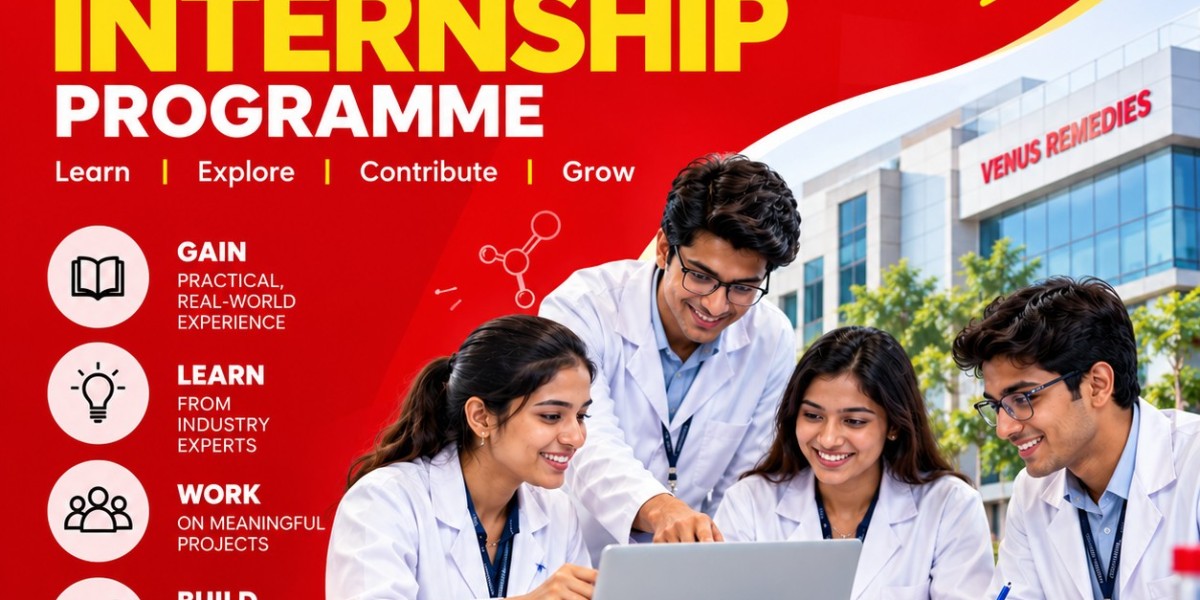
As healthcare becomes more technology-driven, pharmacy students have opportunities to develop skills beyond traditional pharmaceutical knowledge. Internship for Pharmacy Students can provide valuable exposure to hospitals, pharmaceutical companies, clinical research organizations, community pharmacies, regulatory departments, pharmacovigilance, and healthcare technology.
During an internship, students may learn about medication management, prescription processing, patient counselling, drug safety, inventory management, clinical research, quality control, and pharmaceutical marketing. Students interested in modern healthcare can also explore areas such as healthcare analytics, digital health, pharmacovigilance software, and AI-assisted pharmaceutical research.
A practical internship can help pharmacy students understand how their academic knowledge is applied in real healthcare environments. It can also improve communication, teamwork, documentation, and professional skills that may be useful when starting a career in the pharmaceutical or healthcare industry.
6. Understanding Common Medical Abbreviations
Medical abbreviations are frequently used by doctors, nurses, pharmacists, and other healthcare professionals. Understanding them correctly is important because confusion between abbreviations can potentially lead to medication or communication errors.
One commonly searched term is OD Medical Abbreviation. Depending on the context, OD may have different meanings. In prescription terminology, it may be used to mean once daily, while in some medical contexts OD can mean right eye from the Latin oculus dexter. Because the meaning can vary, healthcare professionals should always consider the complete prescription or clinical context rather than assuming one interpretation.
For students and healthcare professionals, learning commonly used medical terminology and abbreviations can make clinical communication easier. At the same time, unclear or potentially confusing abbreviations should be avoided when writing medication instructions.
7. Understanding Prescription Terms Such as Medicine BD
Another common prescription abbreviation is Medicine BD. BD generally means twice daily and comes from the Latin term bis in die. It indicates that a medicine is intended to be taken two times a day when prescribed in this manner.
However, patients should not change the frequency of a medicine based only on an abbreviation they find online. The exact dosage and timing should always follow the prescription and instructions provided by a qualified healthcare professional.
8. Focus on Preventive and Patient-Centered Healthcare
Healthcare is increasingly moving from treating illness after it develops toward prevention, early detection, and continuous health management. Regular health checks, healthy lifestyle habits, vaccination, appropriate screening, physical activity, balanced nutrition, and timely medical consultation can all contribute to better health outcomes.
Technology can support this shift by helping people track health information and enabling healthcare professionals to identify potential concerns earlier. Nevertheless, technology should complement—not replace—professional medical judgment.
9. The Future of Healthcare
The future of healthcare is likely to involve greater integration between medical science, digital technology, artificial intelligence, genetics, pharmaceuticals, and patient data. At the same time, healthcare systems must ensure that innovation remains safe, affordable, transparent, and accessible.
For students entering pharmacy and other healthcare professions, this changing environment creates new career possibilities. Developing strong pharmaceutical knowledge while gaining experience in technology, research, communication, and data-driven healthcare can help students prepare for emerging roles.
Conclusion
The latest healthcare trends show that medical advancement is no longer limited to new medicines and medical procedures. AI, digital health, telemedicine, precision medicine, advanced diagnostics, and personalized care are transforming how healthcare is delivered. India is also actively developing frameworks and initiatives for responsible healthcare AI.
For aspiring healthcare professionals, opportunities such as Internship for Pharmacy Students can provide practical experience and help connect academic learning with real-world healthcare. At the same time, understanding terms such as OD Medical Abbreviation and Medicine BD can improve familiarity with common prescription language. As innovation continues, combining medical knowledge with technology and responsible patient care will be increasingly important for the healthcare professionals of tomorrow.