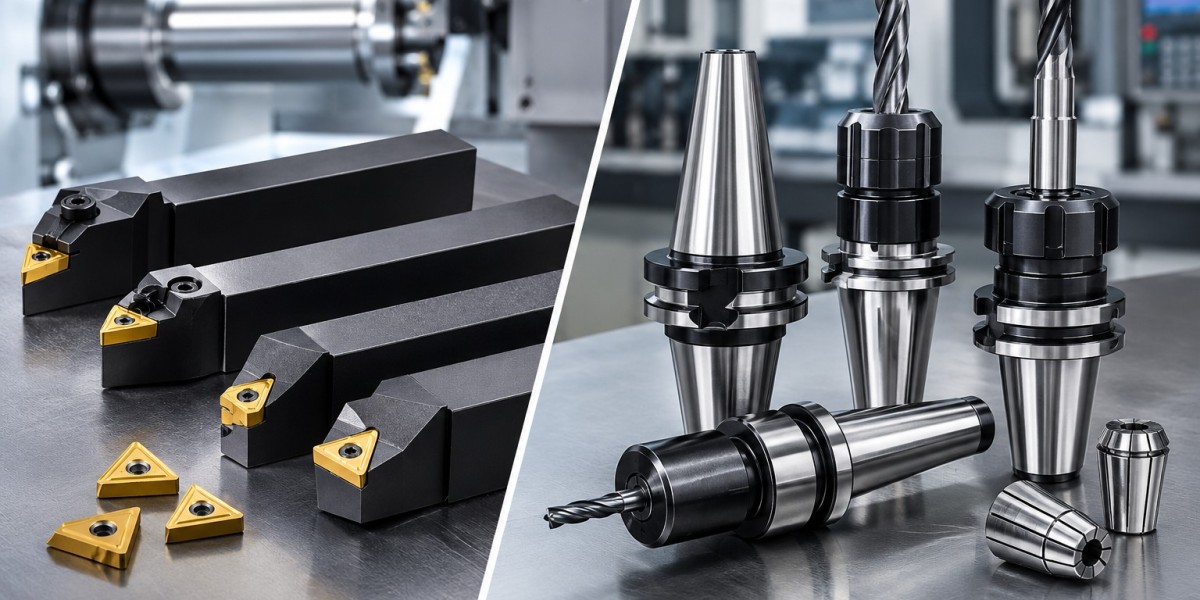

Choosing the right turning holder can make a significant difference to machining accuracy, tool life, productivity, and operating costs. For workshops using CNC or conventional lathe machines, the choice often comes down to selecting a specialised Pafana turning holder or a standard toolholder that meets everyday machining requirements.
The best option depends on your workpiece material, cutting conditions, insert compatibility, machine setup, and production volume. Khokhawala Trading LLC understands the importance of selecting suitable industrial tooling for reliable machining operations. If you plan to pafana turning holders order uae, comparing holder designs and performance requirements can help you make an informed decision.
Table of Contents
What Are Pafana Turning Holders?
What Are Standard Toolholders?
Key Differences Between Pafana and Standard Toolholders
How to Choose the Right Option
Cost and Compatibility Considerations
Frequently Asked Questions
Conclusion and CTA
1. What Are Pafana Turning Holders?
Pafana manufactures turning toolholders designed for different machining operations, including external turning, internal boring, grooving, and threading. Its product range includes several insert-clamping systems intended for different cutting requirements.
For example, Pafana's System S uses screw clamping, while System D uses a clamp that secures the insert in two directions. System D is designed for applications requiring strong insert positioning and repeatability during roughing and finishing.
These features can help workshops select holders according to their machining requirements rather than relying on a one-size-fits-all solution.
2. What Are Standard Toolholders?
Standard toolholders are general-purpose holders designed to fit particular lathe toolposts or CNC turret systems. They may use screw, lever, clamp, or other insert-retention methods, depending on the design.
A suitable standard holder can perform everyday turning operations effectively when its dimensions, insert compatibility, and rigidity match the application.
Standard toolholders are not necessarily inferior to branded alternatives. Performance depends on the holder's design, manufacturing quality, condition, and suitability for the machining task.
3. Key Differences Between Pafana and Standard Toolholders
| Feature | Pafana Turning Holders | Standard Toolholders |
|---|---|---|
| Product range | Includes specialised clamping systems and applications | Varies by manufacturer and model |
| Insert clamping | Specific systems such as screw or clamp-based designs | Depends on the holder design |
| Application choice | Models for turning, boring, grooving, and threading | Depends on available product range |
| Compatibility | Must match the designated insert and machine | Must also match insert and machine specifications |
| Purchasing decision | Based on model-specific features and requirements | Based on specifications, performance, and cost |
| Maintenance | Requires inspection of clamping parts and insert seats | Also requires regular inspection and maintenance |
Neither option is automatically better for every workshop. The right comparison should focus on equivalent specifications and the intended machining application.
4. How to Choose the Right Option
Consider the Machining Operation
For roughing, prioritise rigidity and secure insert clamping to handle higher cutting forces. Finishing operations may require a holder that supports accurate positioning and good surface quality. Boring, grooving, and threading each have their own clearance and geometry requirements.
Check Insert Compatibility
Confirm the insert shape, size, thickness, clearance angle, and clamping arrangement. Never assume that inserts are interchangeable simply because they look similar.
Evaluate Machine Compatibility
Check the shank dimensions, toolpost or turret fit, cutting direction, tool height, and available clearance. A high-quality holder will not perform properly if it is incompatible with the machine setup.
Assess Production Requirements
For repetitive production, consistent insert positioning and efficient insert changes can help reduce setup time. For occasional machining, a suitable general-purpose holder may provide sufficient performance without unnecessary expenditure.
5. Cost and Compatibility Considerations
When comparing prices, look beyond the initial purchase cost. Consider tool life, insert replacement costs, downtime, machining consistency, and the availability of compatible replacement components.
If you are also comparing sandvik coromant inserts price dubai, make sure you compare the correct insert grades and specifications. Insert prices alone do not establish whether a holder and insert combination will deliver the best machining results.
Before ordering, prepare the holder model number, insert designation, shank size, machine type, and intended application. These details help reduce compatibility errors and simplify purchasing.
6. Frequently Asked Questions
Q1. Are Pafana turning holders better than standard toolholders?
Not in every situation. Pafana offers different holder designs for specific applications, while standard holders can also perform well when correctly selected and maintained.
Q2. Can I use the same insert in different toolholders?
Only if the insert specifications and clamping systems are compatible. Always confirm the manufacturer's requirements before fitting an insert.
Q3. Which holder is best for roughing operations?
Choose a holder designed for the cutting forces, insert type, and workpiece material involved. Secure clamping and adequate rigidity are especially important during heavy cuts.
Q4. What should I check before ordering Pafana turning holders in the UAE?
Verify the holder designation, insert compatibility, shank dimensions, cutting direction, application, and availability.
Q5. How can the right toolholder reduce machining costs?
A suitable holder can help reduce vibration, insert damage, downtime, and inconsistent machining results when used under appropriate cutting conditions.
7. Conclusion and Call to Action
Pafana turning holders and standard toolholders can both support productive lathe operations. The right choice depends on insert compatibility, clamping design, machine requirements, machining conditions, and overall operating costs.
Looking for suitable industrial cutting tools for your workshop? Contact Khokhawala Trading LLC to discuss your tooling requirements and explore suitable options. Before placing an order, confirm the exact holder model and insert specifications to ensure compatibility with your lathe machine.