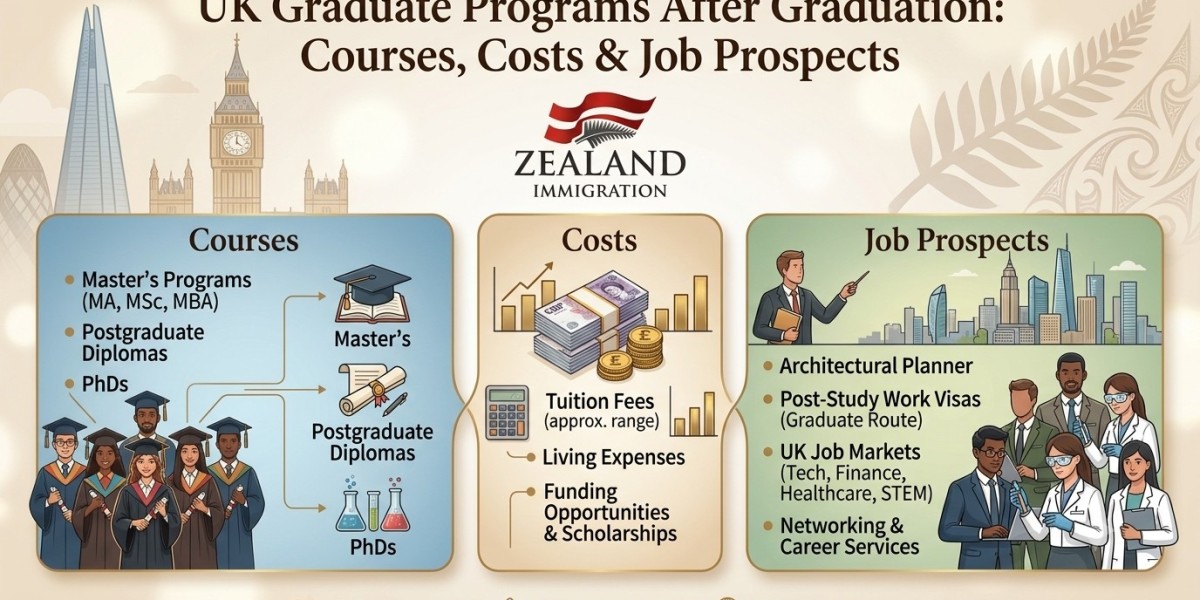

UK graduate programs can help students build specialist knowledge and improve their skills after completing an undergraduate degree. Depending on their goals, students may choose a postgraduate diploma, a master's degree, or a research qualification. Some courses focus on practical work, while others focus more on research and theory. Choosing the right course can help students prepare for suitable roles in their chosen industry.
Why Study in the UK After Graduation?
The UK offers different options for students who want to gain advanced knowledge and international experience. Many postgraduate courses take one year of full-time study, although the length depends on the subject and qualification.
Here are some benefits of postgraduate study:
Specialist knowledge: Learn more about your chosen subject.
Practical learning: Some courses include projects, case studies, or industry-based assignments.
International exposure: Meet students from different countries and backgrounds.
Career development: Build communication, research, and problem-solving skills.
Flexible choices: Explore different subjects and qualification levels.
However, students should compare course content and career goals before choosing a university. A qualification alone does not guarantee a job or a particular salary.
Popular Courses After Graduation
Students can explore many subjects based on their previous education and future plans. Popular choices include:
1. Business and Management
Business courses cover leadership, marketing, finance, human resources, and business planning. They may suit students interested in management or business operations.
2. Information Technology
IT courses may include data analytics, cybersecurity, artificial intelligence, and software development. Students should check the technical skills and previous qualifications required for admission.
3. Engineering
Engineering programmes cover areas such as civil, mechanical, electrical, and computer engineering. Course requirements often depend on the student's earlier degree.
4. Healthcare and Public Health
Students interested in healthcare may explore public health, healthcare management, or other relevant postgraduate subjects. Clinical professions may have additional registration requirements.
5. Finance and Accounting
These courses can help students develop skills in financial analysis, accounting, auditing, and business finance.
6. Education and Social Sciences
Students may consider education, psychology-related subjects, international relations, and social research, depending on their academic background.
Course Fees and Living Costs
Planning your budget is an important part of studying abroad. Tuition fees vary by university, course, qualification, and location. International postgraduate tuition fees can range from approximately £9,000 to more than £30,000 per year, with some specialist courses costing considerably more.
Students should also plan for accommodation, food, transport, books, health-related charges, and personal expenses.
Use these steps to manage your budget:
Compare tuition fees at different universities.
Check whether scholarships or bursaries are available.
Estimate monthly rent and everyday expenses.
Keep extra money for unexpected costs.
Confirm the latest fees directly with your chosen university.
London can be more expensive than many other UK cities. Therefore, compare the total cost of living before deciding where to study.
Admission Requirements and Application Process
Every university sets its own admission rules. Many postgraduate courses require a relevant bachelor's degree, academic transcripts, and proof of English language ability where applicable.
Some courses may also ask for a personal statement, references, a CV, work experience, or a portfolio.
Follow these steps when applying:
Choose a subject that matches your previous studies and career goals.
Compare universities, course modules, fees, and entry requirements.
Prepare your academic documents and English language evidence.
Submit your application before the deadline.
Review your offer and understand any conditions.
Arrange your finances and prepare for your move.
Applying early gives you more time to organise documents and compare available options.
Student Visa and Work Opportunities
International students should understand the UK student visa requirements before planning their studies. Applicants generally need an offer from an appropriately licensed student sponsor, a Confirmation of Acceptance for Studies (CAS), and evidence that they meet the applicable financial and other requirements. The exact documents depend on individual circumstances.
After graduation, some students may qualify for a post-study work route, subject to the rules in force when they apply. Eligibility, application deadlines, and permitted stay periods can change, so check the latest information before making plans. A student visa does not automatically provide permanent employment or settlement rights.
Job Prospects After Graduation
Job opportunities depend on your subject, skills, experience, and employer requirements. Graduates may explore roles in business, technology, finance, engineering, education, or other relevant sectors.
To improve your job prospects:
Build practical skills during your course.
Create a clear CV and professional online profile.
Attend career events and networking sessions.
Practise interviews and workplace communication.
Research employers and their sponsorship requirements.
Some jobs require professional registration or specific qualifications. Research your chosen career before selecting a course.
Choosing the Right UK Study Programs
When comparing UK study programs, look beyond university rankings. Review course modules, teaching methods, entry criteria, total fees, location, and available career support. Check whether the qualification is suitable for your intended profession and whether the university offers relevant practical or research opportunities. A well-matched course can help you make better use of your time and money.
Why Choose Zealand Immigration India?
Zealand Immigration India helps students understand overseas education options and prepare for their application journey.
Our support includes:
Personalised course and university guidance.
Assistance with admission documents.
Information about fees and scholarships.
Guidance on preparing visa application documents.
Support throughout the planning process.
Our goal is to help students make informed decisions based on their education, budget, and future plans. Admission and visa decisions remain with the relevant institutions and authorities.
Frequently Asked Questions
1. How long does a postgraduate course take in the UK?
Many full-time master's courses take one year, but duration varies by qualification and university.
2. How much does postgraduate study cost?
Fees depend on the course and institution. Students should also budget for accommodation and daily living expenses.
3. Can international graduates work in the UK?
Some graduates may qualify for a post-study work route or another suitable visa. Eligibility depends on current immigration rules.
4. When should I apply?
Start researching several months before your intended intake to allow time for applications, finances, and visa preparation.
Conclusion
Studying in the UK after graduation can be a valuable step when your course matches your goals and budget. Compare universities carefully, prepare your documents early, and research career options before applying. With proper planning and guidance, you can make a confident decision about your next academic step.




