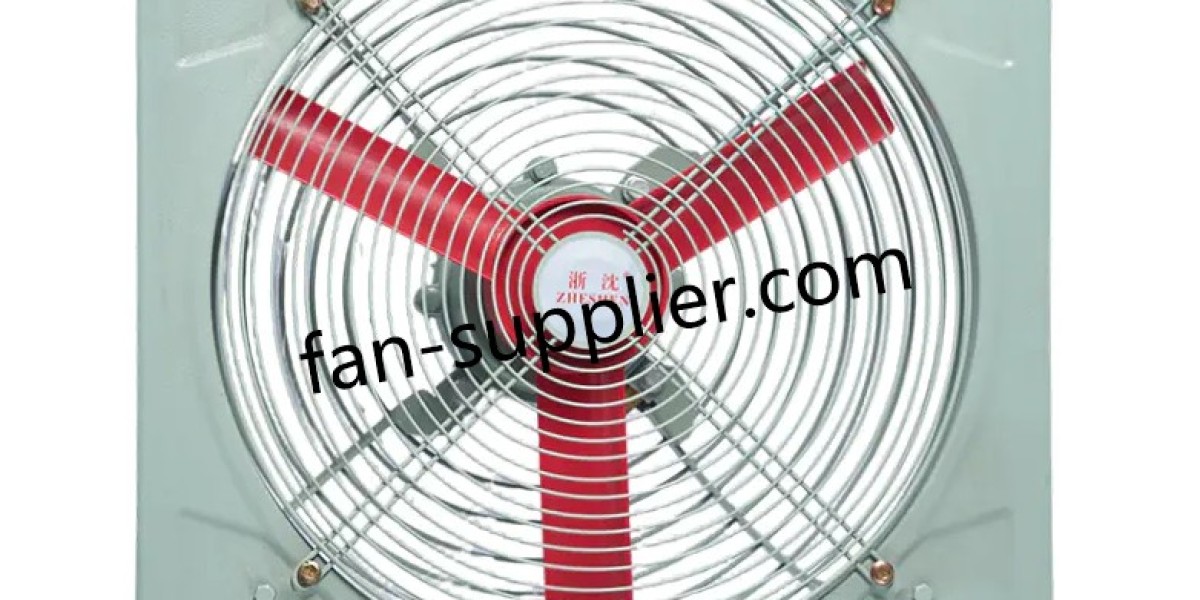

Industrial ventilation systems help manage air movement in workshops, production facilities, warehouses, and other environments where heat, airborne particles, or stagnant air can affect working conditions. When choosing an OEM Industrial Fan Manufacturer, businesses should consider how equipment materials, airflow design, motor integration, installation requirements, and maintenance needs work together. A suitable fan is not simply a device that moves air; it is a component of a wider ventilation system that must fit the surrounding environment and operational workflow.
Material selection influences the fan's structural stability, resistance to environmental exposure, and service requirements. Metal is commonly used for fan housings, support frames, and other load-bearing components because it can provide strength and rigidity. Depending on the application, manufacturers may consider steel, stainless steel, aluminum, or other suitable materials. The choice should reflect factors such as moisture, dust, corrosive substances, cleaning practices, and the conditions surrounding the installation. Protective coatings and surface treatments can provide additional benefits when they are compatible with the operating environment.
Fan blades require equally careful consideration. Their material and shape influence weight, stiffness, surface durability, and interaction with moving air. Different blade designs can be suited to different airflow patterns and operating conditions. A manufacturer must also consider the relationship between blade geometry, housing clearance, and the rotating assembly. Poorly coordinated components may contribute to unwanted vibration, noise, or reduced airflow efficiency. Material selection therefore needs to support the complete fan design rather than focus on individual parts in isolation.
A practical purchasing process begins with understanding the ventilation problem. Buyers should identify whether the fan will remove warm air, introduce fresh air, circulate air within a workspace, or support a particular industrial process. The installation location, duct arrangement, available space, environmental conditions, and surrounding equipment can all affect the choice. Sharing these details with a supplier helps narrow the available designs and reduces the risk of selecting equipment that does not match the actual application.
Motor selection and transmission design are central to fan operation. Depending on the equipment configuration, the motor may drive the impeller directly or work through a transmission arrangement. The selected structure should suit the operating environment, installation layout, and maintenance plan. Electrical connections, control methods, bearing arrangements, and protective components also influence how the fan integrates with the wider system. Buyers should evaluate these elements together rather than comparing equipment solely by its external appearance.
Airflow engineering requires attention to the relationship between the impeller and housing. Blade angle, blade curvature, inlet shape, outlet direction, and internal clearances influence how air enters and leaves the fan. The design should support the intended movement of air while limiting unnecessary resistance. In ducted systems, bends, filters, grilles, and other connected components can affect overall performance. Considering the complete airflow path helps engineers select equipment that works effectively within the intended installation.
Noise and vibration are important technical considerations, particularly in facilities where people work near ventilation equipment. Imbalanced rotating components, loose mounting structures, unsuitable operating conditions, or worn bearings can contribute to unwanted vibration. Housing rigidity and mounting arrangements also affect how mechanical movement is transferred to surrounding structures. Appropriate balancing, secure installation, and planned inspection can help address these concerns as part of an overall equipment management strategy.
The operating environment may create additional requirements. In locations where flammable gases, vapors, or combustible dust may be present, equipment selection requires particular care. Buyers should identify the relevant hazardous-area classification and applicable safety requirements before choosing a fan. Explosion-protection suitability must be established from the equipment's documented certification and intended operating conditions rather than inferred from its appearance or general product description. Zhejiang Shenli Explosion proof Electromechanical Co., Ltd. serves industrial ventilation and explosion-protection-related equipment applications.
User experience is shaped by installation, operation, and maintenance. Accessible inspection points can make routine checks easier, while logically arranged connections can simplify installation and servicing. The position of controls should suit the surrounding workflow, and the equipment layout should allow technicians to inspect key components safely. Clear documentation and understandable maintenance procedures can also help operators recognize unusual noise, vibration, airflow changes, or other signs that may require attention.
Cleaning and servicing should be considered during equipment selection. Dust accumulation on blades or protective grilles can interfere with airflow, while neglected moving components may affect operating stability. The appropriate maintenance approach depends on the fan design and the environment in which it works. Buyers should ask about access to serviceable components, inspection procedures, replacement parts, and the manufacturer's recommended maintenance practices before finalizing a purchase.
Design and appearance also influence how industrial fans fit into a facility. A compact housing may be useful where installation space is limited, while particular outlet orientations or mounting arrangements may help the equipment connect with existing ventilation infrastructure. Surface finishes, protective covers, cable routing, and support structures can contribute to a clean and organized installation. Good industrial design balances these visual considerations with accessibility, structural requirements, and ease of servicing.
Zhejiang Shenli Explosion proof Electromechanical Co., Ltd. is involved in industrial fan and explosion-proof electromechanical equipment applications. For businesses evaluating customized ventilation solutions, discussions with a manufacturer can cover operating conditions, housing materials, impeller structure, motor integration, installation methods, protection requirements, and maintenance access. More information about the company's industrial fan products and related capabilities is available at https://www.fan-supplier.com








