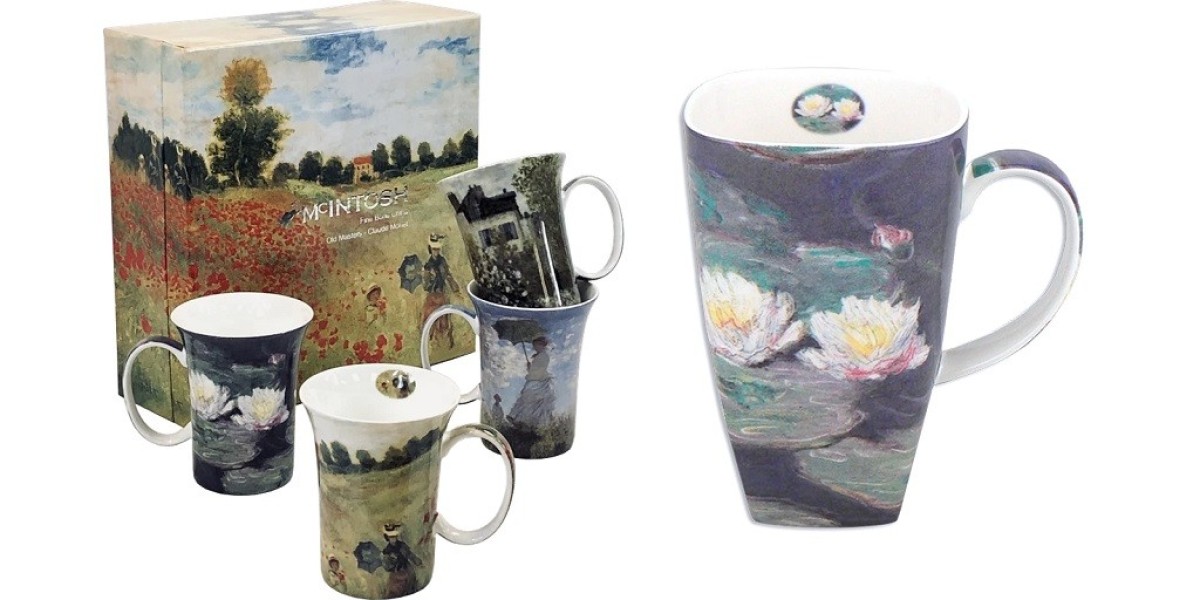

Once in every generation, there is an artist who transcends time and taste. Claude Monet is one, and Monet gifts have a way of fitting naturally into everyday spaces because his paintings make ordinary scenes feel worth noticing. A garden, a pond, a row of trees, or a quiet stretch of countryside can become something memorable when seen through his eyes. That quality helps explain why his work has remained popular far beyond museums and art history books.
Monet was one of the central figures in the Impressionist movement, but his appeal isn't limited to his place in art history. People respond to the feeling in his paintings. Instead of presenting nature as a fixed scene with every detail carefully outlined, he was interested in changing light, atmosphere, color, and the impression a particular moment left on the eye. That idea still feels remarkably current.
A Different Way of Seeing Nature
One reason Monet's paintings remain so recognizable is his treatment of light. The same subject could look completely different depending on the time of day, weather, or season. He returned to subjects repeatedly, studying how their appearance shifted rather than treating the first painting as the final word.
His series of haystacks, poplars, and bridges demonstrates this approach particularly well. The subject itself isn't necessarily extraordinary. What changes is the light and atmosphere surrounding it.
His garden at Giverny became an especially important source of inspiration. The water, flowers, Japanese-style bridge, and reflections gave Monet endless opportunities to explore color and changing conditions. The famous water-lily paintings are perhaps the clearest example. They aren't simply paintings of flowers floating on water. They invite the viewer to slow down and pay attention to reflections, movement, color, and the space between solid objects.
The Appeal of Monet Gifts and Why His Work Is Reproduced Often
Not every famous painting translates easily into a reproduction. Monet's work does because many of his compositions have an immediate visual quality. You don't necessarily need to know the painting's title, the year it was created, or the history of Impressionism to appreciate it.
His use of color is another reason. Blues, greens, pinks, yellows, and soft neutrals can create an inviting atmosphere without overwhelming a room. A reproduction of a garden or water scene can bring that same sense of calm into a living room, bedroom, office, or reading space. This also makes his work especially adaptable to different forms. Paintings can appear on prints, books, textiles, puzzles, decorative objects, and other products without losing their basic visual identity.
The MFA Shop in Boston reflects that broad appeal through its selection of merchandise inspired by works in its collections, including Monet's water-lily paintings. Visitors and art lovers can find items ranging from socks and pillows to trays, mugs, puzzles, and books. These aren't replacements for seeing the original paintings, of course. They are another way of keeping a connection with the artwork in everyday surroundings.
Why Monet Still Inspires Artists and Viewers
Monet's influence reaches beyond decoration. His work encouraged artists to reconsider what a painting needed to accomplish. A picture didn't have to reproduce a scene with photographic precision to communicate something meaningful. Instead, color, brushwork, atmosphere, and perception could carry the experience.
That combination of beauty, experimentation, and everyday subject matter gives his work an unusual staying power. No matter where you encounter Monet, in a museum, through a reproduction, or in a thoughtfully chosen collection of Monet gifts, the paintings continue to encourage the same simple act: stop, look closely, and notice how much is happening in the light.
For more information about Art Christmas Cards and Van Gogh Museum Shop Please visit: Museum of Fine Arts – Boston.








