
What Are Mechatronics Engineering Services?
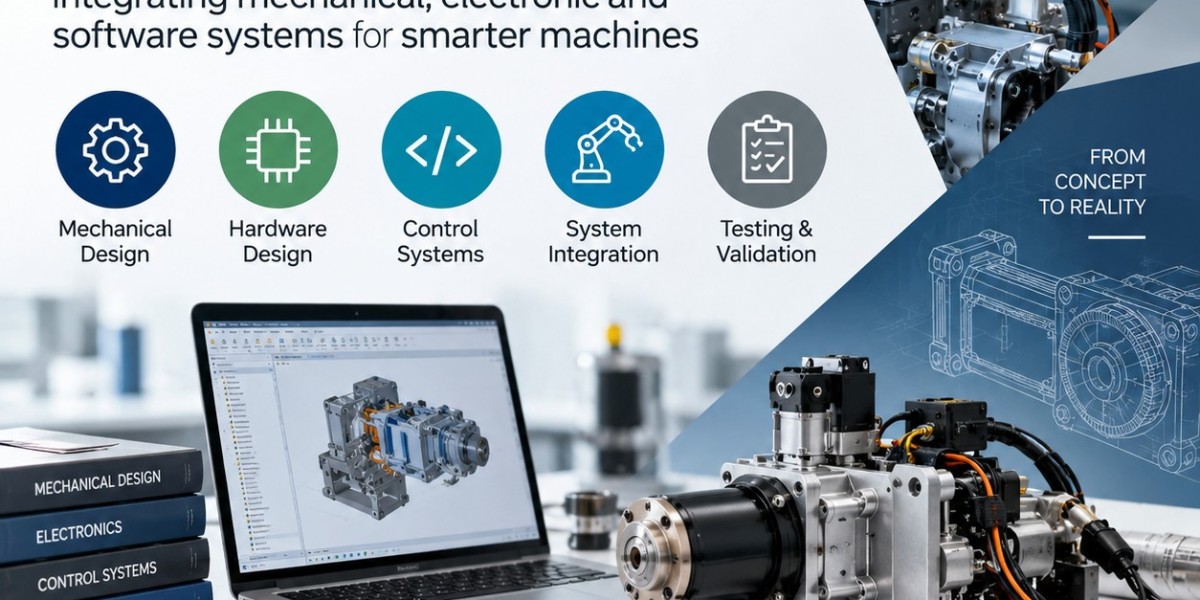
Mechatronics engineering services involve designing, developing, integrating, and testing systems that combine mechanical engineering, electronics, control systems, and software.
Instead of treating each component as a separate part, mechatronics engineers consider how the complete system will work together. This integrated approach helps ensure that mechanical parts, electronic devices, sensors, and control software operate as intended.
Depending on a project's requirements, mechatronics engineering may include system design, electronic integration, control system development, prototyping, simulation, and product testing.
Key Components of Mechatronics Engineering
1. Mechanical System Design
Mechanical engineering provides the physical structure of a product or machine. This may include mechanisms, moving parts, enclosures, and other mechanical components.
Good mechanical design considers strength, durability, movement, space requirements, and manufacturing needs. These factors help create systems that can perform their intended functions reliably.
2. Electronics and Sensors
Electronic components allow a system to collect information and respond to its environment. Sensors can measure factors such as position, temperature, pressure, speed, and movement.
Engineers select and integrate suitable sensors and electronic components based on the application's requirements. Accurate signals are important for effective monitoring and control.
3. Control Systems
Control systems manage how a machine or device responds to inputs. They use information from sensors and control logic to regulate system behavior.
For example, a control system may adjust motor speed, maintain a required position, or coordinate the movement of multiple components.
4. Embedded Software
Many modern mechatronic products rely on embedded software to process sensor data and control hardware. This software helps electronic controllers communicate with different components and execute programmed functions.
Software development and hardware integration must work together to achieve the required system behavior.
5. System Integration and Testing
System integration brings mechanical, electronic, and software components together. Engineers then test the complete system to identify compatibility issues, verify functionality, and evaluate performance against project requirements.
Benefits of Mechatronics Engineering Services
Improved System Performance
An integrated engineering approach helps different components work together more effectively. This can improve accuracy, consistency, and overall system operation.
Support for Industrial Automation
Mechatronics plays an important role in automated equipment, robotics, and smart manufacturing systems. It can help reduce repetitive manual tasks and improve process consistency.
Better Product Development
Considering mechanical, electronic, and software requirements together can help engineering teams identify design problems earlier. This may reduce rework during later development stages.
Greater Flexibility
Mechatronic systems can be designed around specific operating requirements. Depending on the application, engineers can adapt control logic, sensors, and mechanical components to meet changing needs.
More Efficient Troubleshooting
A system-level understanding helps engineers investigate problems involving multiple components. This is especially useful when an issue may involve mechanical movement, electronic signals, or software behavior.
Industries That Use Mechatronics Engineering
Mechatronics engineering services can support a wide range of industries.
Automotive: Vehicle electronics, control systems, and automated production equipment.
Manufacturing: Automated machinery, assembly systems, and industrial equipment.
Robotics: Robotic mechanisms, sensors, motion control, and system integration.
Agricultural and mobile machinery: Electronic controls and machine monitoring systems.
Medical equipment: Devices that combine mechanical movement, electronics, and software.
Industrial automation: Systems designed to coordinate machines, sensors, and controllers.
The specific services required depend on the product, industry, technical requirements, and applicable safety standards.
How to Choose the Right Mechatronics Engineering Partner
Choosing an engineering partner requires a clear understanding of the project's needs. Businesses should consider the provider's relevant experience, technical capabilities, development process, and testing approach.
It is also important to discuss project timelines, documentation, communication, and integration requirements before development begins. A well-defined scope helps both parties understand the expected deliverables and responsibilities.
Organizations should select a provider whose verified expertise matches the project's technical requirements rather than relying only on general service descriptions.
Conclusion
Mechatronics engineering services bring mechanical design, electronics, control systems, and embedded software together to support the development of modern products and industrial equipment. This integrated approach can help businesses address complex engineering challenges, improve system coordination, and support automation.
For companies developing advanced machinery, robotics, electronic control systems, or automated equipment, mechatronics can be an important part of the product development process. With clear requirements, effective integration, and thorough testing, engineering teams can build systems designed to meet specific operational needs.








