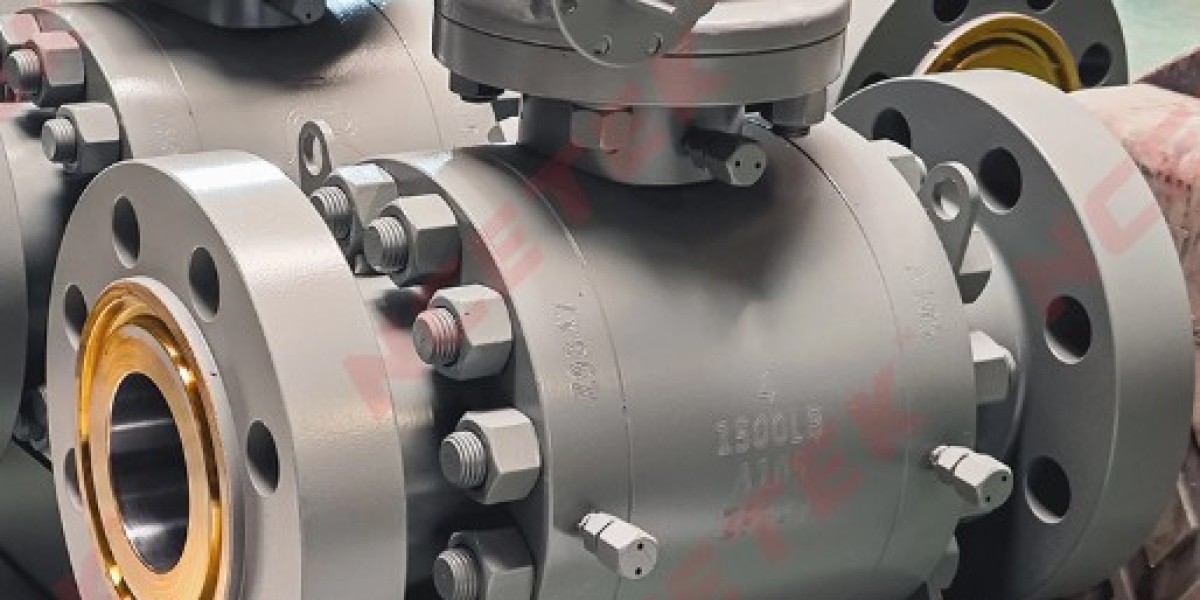

Industrial pipelines require shut-off valves that combine dependable sealing, manageable operating torque, and compatibility with the transported medium. A Cast Steel Floating Ball Valve uses a spherical closure element that moves slightly under pressure to establish contact with the downstream seat. This operating principle makes the design suitable for many general industrial applications, provided the pressure, temperature, size, and media conditions remain within the limits of the selected model. Understanding the valve's structure and service requirements helps buyers choose a configuration that supports stable operation.
Cast steel is used in many industrial valve bodies because it can accommodate a range of shapes and pressure-containing designs. Depending on the service environment, manufacturers may offer carbon steel or other suitable cast steel grades. Material selection should account for operating pressure, temperature, corrosion exposure, and fluid compatibility. The valve body, ball, stem, seats, and auxiliary components must be considered as a complete assembly, since selecting a body material alone does not guarantee suitability for the entire application.
The floating-ball structure is a defining feature of this valve type. Unlike a trunnion-mounted design, the ball is not supported by a separate set of trunnions that carry the principal ball loads. Instead, differential pressure helps move the ball against the downstream seat. This arrangement can provide effective shut-off with a relatively straightforward internal structure. However, the loads on the seats and operating torque may increase as pressure and valve size rise, so the intended duty should be reviewed carefully before selection.
Seat design has a direct influence on sealing performance. Soft-seat materials are frequently considered for applications requiring tight shut-off, but their suitability depends on temperature, pressure, fluid chemistry, and potential contamination. Materials such as PTFE and other engineered polymers may be used when their operating limits are appropriate. In more demanding services, alternative seat arrangements may be required. Buyers should confirm the specified seat material and leakage criteria rather than assuming that all floating ball valves provide identical sealing performance.
Machining and assembly accuracy are equally important. The ball surface, seat contact areas, stem connection, and body interfaces must meet the design tolerances to help reduce leakage and excessive operating resistance. Poor dimensional control may cause uneven seat contact, inconsistent torque, or premature wear. Reliable manufacturing therefore includes suitable machining processes, dimensional inspection, assembly checks, and testing according to the applicable purchase specification. These controls also help maintain consistency across repeat orders.
End connections and installation arrangements should match the pipeline design. Depending on the model, connections may include flanged or other specified end configurations. Face-to-face dimensions, pressure class, flow direction requirements, access for operation, and available installation space should all be verified before procurement. If the valve will be installed in a location with limited access, the operating method and clearance for handles or actuators deserve particular attention. Early dimensional confirmation can prevent installation delays and costly modifications.
A broad range of industries uses floating ball valves for isolation duties. Applications may include water treatment, general chemical processing, utility systems, selected oil and gas services, and industrial fluid distribution. Each application presents different requirements. Water systems may emphasize corrosion protection and maintenance access, while chemical applications require careful compatibility assessment. For combustible, toxic, or otherwise hazardous media, the valve must also meet the project's applicable safety, emissions, and pressure-containment requirements.
Quality assurance should be based on the specified design and intended service. Relevant checks may include material verification, dimensional inspection, shell pressure testing, seat leakage testing, and operational testing. The precise requirements depend on the selected model, governing standard, and customer specification. For critical pipeline projects, purchasers may also require inspection records, traceability documents, and defined acceptance criteria. Confirming these requirements before production helps avoid misunderstandings during inspection and delivery.
Maintenance planning can extend service life and reduce unplanned downtime. Operators should follow the manufacturer's guidance for installation, operation, and inspection, and avoid exceeding the valve's rated pressure or temperature limits. Abnormal torque, external leakage, or changes in shut-off performance should be investigated using approved procedures. Replacement seats and other service parts must be compatible with the original design and process conditions.
When comparing suppliers, buyers should evaluate material options, manufacturing consistency, testing capability, documentation, and technical communication. Choosing a suitable Cast Steel Floating Ball Valve requires matching the floating-ball mechanism and seat arrangement to the real operating conditions rather than selecting by nominal size alone. Zhejiang Naishi Valve Co., Ltd. provides industrial valve options for different pipeline requirements. Buyers can review available models and confirm project-specific configurations at https://www.ncevalve.com/product/.








