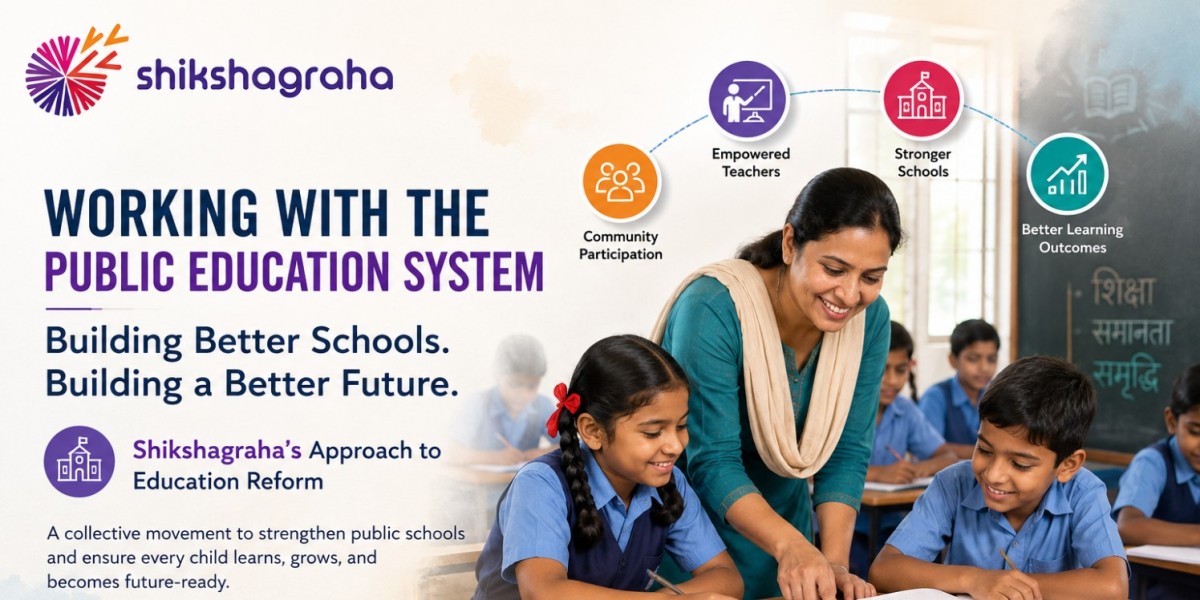

Education is one of the strongest foundations for building an equitable and progressive society. Every child deserves access to a meaningful learning experience that develops their knowledge, confidence, creativity, and ability to contribute to the world. However, achieving this vision requires more than improving individual classrooms. It calls for a collective effort involving teachers, school leaders, parents, communities, government institutions, and organisations committed to educational development.
Working with the public education system provides an opportunity to create lasting improvements that reach children across different communities. Instead of implementing isolated solutions, stakeholders can collaborate with existing education structures, understand local challenges, and develop approaches that schools can sustain over time. This collaborative approach is central to building stronger public schools and making quality education a shared responsibility.
Understanding the Importance of Working with the Public Education System
Public schools play a significant role in providing educational opportunities to children from diverse social and economic backgrounds. Their ability to deliver meaningful learning experiences depends on several interconnected factors, including teaching practices, school leadership, community participation, access to resources, and institutional support.
Improving public education therefore requires a comprehensive understanding of how schools operate and what teachers, students, and families need to succeed.
Working alongside the education system can help stakeholders:
Strengthen school leadership: Equip school leaders with the knowledge and confidence to identify priorities and guide improvement initiatives.
Support teachers: Encourage practical teaching strategies that respond to students’ learning needs.
Improve community participation: Help parents and local communities become active contributors to school development.
Encourage collaborative decision-making: Bring different perspectives together to identify challenges and develop relevant solutions.
Build sustainable practices: Support improvements that can become part of everyday school operations rather than ending with a temporary project.
When these efforts work together, schools can develop stronger foundations for continuous improvement and better learning experiences for every child.
The Role of an Education Nonprofit Organisation in School Transformation
An education nonprofit organisation can contribute to public education by connecting people, knowledge, resources, and practical solutions around a shared purpose. Such organisations can help identify gaps, strengthen local leadership, facilitate collaboration, and support education stakeholders as they work towards common goals.
Their role is not simply to introduce new programmes. It is also to understand existing systems, respect local contexts, and help people within those systems develop the capacity to lead change.
Effective collaboration may involve:
Understanding the specific challenges faced by schools and communities.
Supporting teachers and school leaders with practical tools and learning opportunities.
Facilitating partnerships between government institutions and civil society organisations.
Encouraging the use of evidence and local experiences when making decisions.
Sharing successful practices so other schools and communities can adapt them.
Promoting accountability through regular reflection and collective problem-solving.
This approach helps align individual initiatives with broader educational priorities. It also creates opportunities for successful practices to be adapted across schools and districts while remaining responsive to local needs.
Shikshagraha: Building a Collective Movement for Public Education
Shikshagraha is a people's movement focused on strengthening India's public schools so that every child can experience enriching learning and become ready for the future. Its approach recognises that meaningful education reform requires collective responsibility rather than the efforts of a single institution or group.
The movement brings together teachers, school leaders, parents, young people, civil society organisations, government stakeholders, and other partners to contribute to public school improvement. It emphasises the importance of enabling people closest to children to identify opportunities for change and take meaningful action.
At its core, Shikshagraha works towards a future where public education is recognised as a shared priority and schools become places where every child can learn, grow, and fulfil their potential.
Its approach is built around several important principles:
Local leadership: Teachers, parents, school leaders, and communities have valuable insights into the needs of children and schools.
Collective action: Collaboration enables stakeholders to combine their strengths and work towards shared educational goals.
Continuous improvement: Small, practical changes can contribute to broader progress when they are sustained and shared.
Shared responsibility: Improving public education requires participation from multiple stakeholders across society.
Long-term transformation: School improvement should strengthen the capacity of the education system to continue progressing over time.
By connecting local action with a wider movement, Shikshagraha seeks to make public school improvement a collaborative and ongoing process.
Turning Small Improvements into Meaningful Educational Change
Large-scale education reform can seem challenging when the problems are complex and involve multiple stakeholders. However, progress often begins with identifying a specific issue and taking a practical step towards addressing it.
For example, a school may want to improve student attendance, strengthen reading habits, encourage greater parent participation, or create a more supportive classroom environment. These goals can be approached through manageable actions that educators and communities can implement, review, and improve.
Some practical examples include:
Organising regular discussions between teachers and parents about student progress.
Encouraging school leaders to review attendance patterns and understand the reasons behind absences.
Introducing activities that help students participate more actively in classroom learning.
Creating opportunities for teachers to exchange ideas and reflect on their teaching practices.
Mobilising community members to support a safe, welcoming, and inclusive school environment.
Reviewing progress regularly and adapting approaches based on what works.
These actions may appear small individually, but they can create meaningful opportunities for learning and collaboration. When stakeholders document their experiences and share useful practices, other schools may learn from them and adapt similar approaches to their own circumstances.
For an education nonprofit organisation, supporting this process means helping local stakeholders build confidence, learn from experience, and sustain improvements through collective effort.
Why Collaboration Matters in Public Education Reform
Educational challenges rarely exist in isolation. A student’s learning experience may be influenced by classroom practices, school leadership, family circumstances, community expectations, and the support available to educators.
Addressing these interconnected factors requires cooperation among people who understand different parts of the education system.
Collaboration can make school improvement more effective in several ways. Government institutions can provide system-level direction, teachers can identify classroom needs, parents can contribute their understanding of children’s experiences, and civil society organisations can facilitate learning and coordination.
When these stakeholders work towards shared priorities, they can develop solutions that are more relevant to local needs and easier to integrate into existing practices.
Working with the public education system also creates opportunities to move beyond short-term interventions. Instead of treating each challenge as an isolated problem, stakeholders can build relationships, strengthen leadership, share evidence, and establish processes that support continuous improvement.
This requires patience, mutual trust, open communication, and a willingness to learn from both successes and setbacks. Lasting transformation develops when people have the opportunity to contribute, take ownership, and work together consistently.
Measuring Progress Through Learning and Collective Responsibility
Meaningful education reform requires more than counting the number of activities completed. It also involves understanding whether those activities contribute to better school environments, stronger leadership, greater community participation, and improved learning experiences for children.
Monitoring progress helps stakeholders identify what is working, where additional support is required, and which practices may be worth adapting elsewhere.
A practical school improvement process can include:
Identify a priority: Understand the specific challenge that needs attention.
Develop a shared plan: Involve relevant stakeholders in deciding what action to take.
Implement practical changes: Begin with achievable steps that suit the school's context.
Review progress: Examine observations, feedback, and available evidence.
Adapt and improve: Refine the approach based on lessons learned.
Share learning: Help other educators and communities understand the experience.
This process encourages continuous learning instead of treating improvement as a one-time activity. It also helps keep attention on the experiences and needs of children.
For Shikshagraha, collective participation and locally led improvements are important parts of creating a stronger public education ecosystem. By encouraging stakeholders to work together, the movement supports a broader vision of educational equity and sustainable school transformation.
Building a Stronger Future Through Public Education
Every child deserves a school environment that encourages curiosity, builds confidence, and supports meaningful learning. Achieving this requires a long-term commitment to strengthening the people, relationships, and practices that shape public education.
An education nonprofit organisation can contribute to this effort by facilitating collaboration, supporting local leadership, and helping communities turn shared aspirations into practical action. However, lasting progress depends on the active participation of the wider education ecosystem.
Shikshagraha reflects this collective approach by bringing people together around the goal of improving India's public schools. Its emphasis on local leadership, continuous improvement, and shared responsibility highlights how individual actions can contribute to a larger movement for educational change.
Ultimately, working with the public education system is about creating the conditions in which schools, educators, families, and communities can work together to deliver better learning experiences. When improvement becomes a shared responsibility rather than the task of a single organisation, it creates stronger foundations for long-term progress.
A future where every child receives an enriching education begins with practical steps, committed leadership, and collective action. By strengthening public schools together, society can move closer to ensuring that every child has the opportunity to learn, grow, and become future-ready.