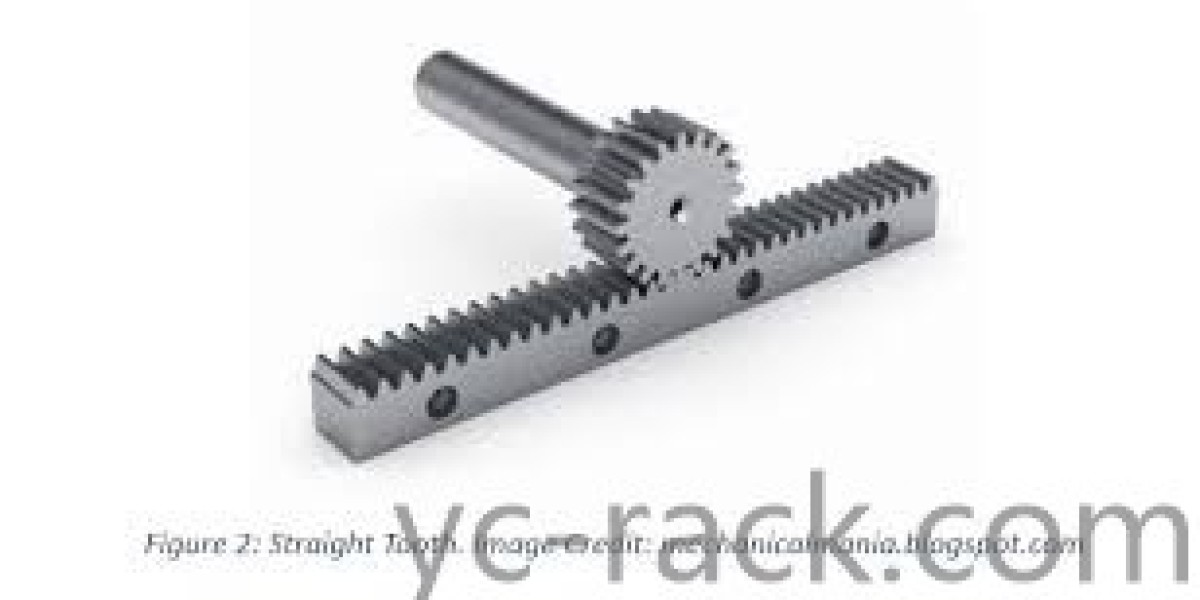

The quality of a gear's working surface influences contact behavior, friction, wear, and transmission consistency, making Ground Gear manufacturing an important consideration for applications that require controlled mechanical engagement. Zhejiang Yuchen Transmission Technology Co., Ltd. approaches gear production by coordinating material selection, tooth geometry, machining accuracy, thermal treatment, finishing, and inspection throughout the manufacturing workflow.
Material engineering is the first step in establishing suitable mechanical properties. Different grades of carbon steel and alloy steel can provide varying combinations of strength, toughness, machinability, and hardenability. The material must be compatible with both the expected service conditions and the manufacturing processes required to produce the final component. Choosing an appropriate grade also helps determine which heat-treatment and finishing methods are suitable.
Tooth geometry must be produced accurately to maintain the intended relationship between mating components. Profile shape, pitch, alignment, and dimensional consistency influence how loads are distributed across the working surfaces. If tooth geometry deviates from the design, contact may become concentrated in localized areas, increasing the possibility of uneven wear and unwanted vibration. Controlled machining provides the foundation for improving these characteristics.
Initial machining operations create the basic component dimensions and tooth structure. Depending on the design, production may involve cutting, milling, shaping, or other specialized methods. Tool wear, machine rigidity, workpiece positioning, and process parameters all affect the resulting accuracy. Zhejiang Yuchen Transmission Technology Co., Ltd. considers these factors when organizing manufacturing stages to reduce variation before the component proceeds to heat treatment and finishing.
Heat treatment can improve surface durability and alter the internal structure of the material. Depending on the intended application, carburizing, quenching, tempering, or other treatments may be considered. A suitable process can establish a harder working surface while retaining an appropriate level of toughness. Excessive hardness or poorly controlled thermal processing may create undesirable characteristics, so the treatment must be matched to the material, geometry, and expected operating conditions.
Grinding refines the functional surfaces after the earlier manufacturing stages. Controlled material removal can improve tooth-profile accuracy and reduce selected surface irregularities. Because heat treatment may introduce dimensional changes, grinding also provides an opportunity to correct certain deviations and restore the intended geometry. The required finishing process depends on the component design, material condition, and level of precision needed by the application.
Surface finishing influences the contact between mating teeth. Irregular surfaces can affect local stress and friction, while consistent finishing helps establish more predictable interaction under suitable operating conditions. Lubrication remains essential, but surface quality can influence how effectively the lubricant supports the contact surfaces. For this reason, finishing should be coordinated with the broader requirements of the transmission system.
Quality inspection verifies the results of machining and finishing. Tooth-profile measurements, dimensional checks, and surface assessments can help determine whether the component meets its design requirements. Inspection at intermediate stages allows manufacturers to identify deviations before they continue through subsequent operations. Digital measurement records can also reveal recurring patterns that help improve process stability and manufacturing repeatability.
Digital engineering provides additional support for precision production. Computer-aided design defines the intended geometry and assembly relationships, while manufacturing software helps translate those requirements into production operations. Digital inspection results can then be compared against the design model to identify discrepancies. Zhejiang Yuchen Transmission Technology Co., Ltd. can integrate these methods into its manufacturing approach to connect engineering specifications with measurable production outcomes.
Operating conditions also affect the final selection of a gear component. Industrial automation, machine tools, material-handling equipment, and other mechanical systems can have different requirements for speed, load, duty cycle, and positioning consistency. Mounting alignment, structural rigidity, lubrication, and environmental exposure all contribute to actual performance. Even a precisely finished gear must operate within a suitable mechanical arrangement to achieve its intended function.
Noise and vibration are closely related to gear engagement. Manufacturing deviations, uneven contact, or installation errors may produce periodic disturbances during operation. Accurate machining and grinding can improve contact consistency, while correct alignment helps maintain the intended relationship between mating components. In equipment that operates continuously or performs frequent positioning cycles, these factors can influence overall mechanical stability.
Long-term reliability depends on the combined effects of material properties, tooth geometry, surface finishing, lubrication, and maintenance. No single manufacturing process determines the complete outcome. Zhejiang Yuchen Transmission Technology Co., Ltd. considers these elements together when supporting transmission component requirements for industrial applications. With suitable material selection and controlled finishing, a Ground Gear can provide a consistent working surface for mechanical power transmission. Further information about the company's product range is available at https://www.yc-rack.com/product/spur-gear-rack/.







