
Walk through any busy market in Ghaziabad and the same story repeats itself. A shopkeeper waits for stock that cannot enter a crowded lane, a delivery runner makes a fourth trip of the day with a half-empty vehicle, and the fuel bill quietly eats into the margin. For businesses that move goods over short distances, transport is not a side issue. It decides how quickly orders reach customers and how much of every sale remains as profit.
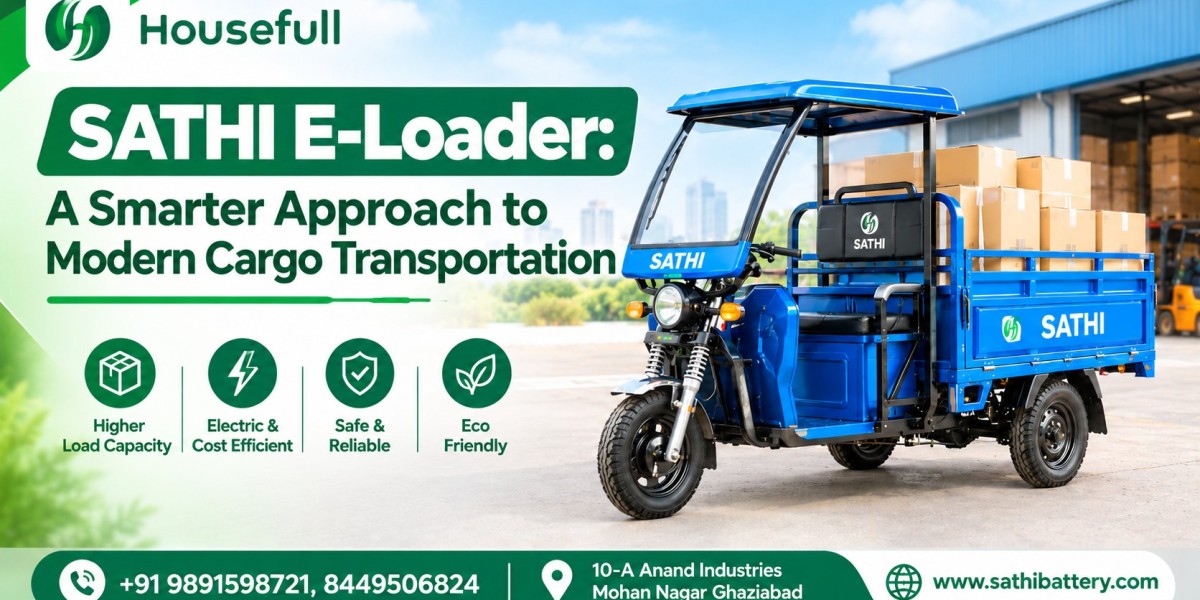
Battery-operated cargo vehicles have become a practical option for these routine, repeated trips. A SATHI -E LOADER, offered by Housefull E-Rickshaw, is one example of this category. This guide explains how electric cargo loaders work, what to evaluate before buying one, and how to judge whether the idea suits your business.
Understanding the Role of Electric Cargo Loaders in Modern Transportation
An electric cargo loader is a battery-operated three-wheeler built to carry goods instead of passengers. A passenger e-rickshaw is designed around seating, comfort and easy boarding. A loader, by contrast, has an open or boxed cargo bed and a body intended to carry weight, which makes it better suited to sacks, cartons, crates and similar loads.
Businesses choose dedicated cargo vehicles because overloading a passenger vehicle or hiring a larger truck for a short run both create problems. The first strains the vehicle and risks breakdowns, while the second raises cost for a trip that never needed that much capacity. A compact electric goods carrier sits in between, handling local, frequent, lighter movements of stock.
Common Cargo Transportation Challenges and Practical Solutions
Business Challenge | Operational Impact | Practical Approach to Evaluating a Solution |
Rising fuel expenses | Daily running cost grows with every trip | Compare fuel, charging and upkeep costs over a realistic month of work |
Repeated short-distance trips | Time and energy are spent on many small runs | Estimate daily trips and distance, then match them to battery capacity |
Delivery delays | Late orders and unhappy customers | Test how the vehicle handles your usual routes and loading time |
Narrow market lanes | Larger vehicles cannot reach shops directly | Check vehicle width and manoeuvrability on your actual lanes |
Unexpected maintenance costs | Downtime and repair bills disrupt work | Ask about spare part availability and service support before buying |
Common Transportation Challenges Faced by Small Businesses
Fuel is usually the first pain point. When a vehicle makes a dozen short trips every day, even small increases in fuel prices add up over a month. Short trips also mean frequent starts and stops, which are not kind to engines or to the budget.
Access is the second challenge. Wholesale markets, old bazaars and residential neighbourhoods often have lanes where bigger vehicles struggle, forcing workers to carry goods by hand for the last stretch. That slows deliveries and adds labour. Maintenance completes the picture, because a vehicle that is frequently in the workshop costs money twice: once for repairs and once for lost working days.
Electric cargo transportation is worth examining against these problems, but it is not a universal answer. A business moving very heavy loads over long highway distances will have different needs from a vendor serving a few lanes. The honest approach is to measure your own routes, loads and daily distance first, and then decide whether a loader fits.
SATHI E-LOADER and Its Role in Everyday Cargo Transportation
Housefull E-Rickshaw, based in Mohan Nagar, Ghaziabad, has been manufacturing and supplying e-rickshaws and e-rickshaw loaders since 2014. According to its electric rickshaw loader product page, the company offers loaders across several load classes, including 400 kg, 450 kg, 500 kg and 700 kg models, along with an electric garbage rickshaw and an e-cart.
The same page presents the SATHI -E LOADER alongside the Housefull E-Loader as popular models intended for commercial transport, from small shops to larger logistics operations. The website describes the range in terms of durability, battery life, load capacity and eco-friendly operation. Because capacity and configuration vary by model, buyers should confirm the exact specifications of the version they are considering directly with the company.
For a business owner, the useful question is not whether a loader sounds impressive, but whether its intended use matches daily work. Think about the weight of a typical load, the number of stops, the condition of local roads and how many hours the vehicle runs. Those answers will point you toward the right model.
Key Factors to Consider Before Choosing an Electric Loader
Load Capacity
Choose capacity based on your usual load, not your rare heaviest one. A vehicle that is regularly pushed beyond its rated limit wears faster, while one that is far too large for your needs adds unnecessary cost.
Battery Type and Charging Requirements
Ask which battery the vehicle uses, how long it takes to charge and whether you have a safe, convenient place to charge it. A good battery is only useful if the charging routine fits your working day.
Daily Travel Distance and Road Conditions
List the route you cover in a normal day, including detours and return trips. Uneven roads, slopes and stop-and-go traffic all affect how a vehicle performs, so test it where you actually work.
Durability, Maintenance and Service Support
Strong build quality matters, but so does the ability to get help quickly. Check whether spare parts are easy to find and whether technical support is available locally.
Total Operating Cost
Purchase price is only one part of the picture. Charging cost, battery replacement, servicing and downtime all shape what a vehicle really costs over several years, so compare options on total cost rather than sticker price alone.
Key Factors to Compare Before Buying an Electric Cargo Loader
Selection Factor | What Buyers Should Check | Why It Matters |
Load capacity | Rated payload against your typical daily load | Prevents overloading and unnecessary wear |
Battery and charging | Battery type, charging time and charging setup | Decides whether the vehicle fits your working hours |
Daily distance | Realistic route length including return trips | Avoids running out of charge mid-day |
Road conditions | Performance on your lanes, slopes and surfaces | Affects comfort, safety and component life |
Durability | Chassis, body and component quality | Influences long-term reliability |
Service support | Spare parts and technical help nearby | Reduces downtime when repairs are needed |
Operating cost | Charging, servicing and battery replacement | Shows the real cost beyond purchase price |
Business Applications of Electric Cargo Loaders
Retail shops use loaders to bring stock from wholesale markets to the counter, a job that repeats several times a week and rarely needs a large truck. Grocery and vegetable sellers benefit in a similar way, since early-morning deliveries from mandis to local stalls involve frequent short runs through busy lanes.
In wholesale markets, a compact vehicle can move bulk items between godowns and shops without blocking narrow passages. E-commerce and courier operators rely on small cargo vehicles for the last stretch of delivery, where manoeuvrability matters more than raw size. Warehouses and factories also use loaders to shift materials between buildings or to carry manufacturing supplies from one unit to another.
Local distribution businesses, such as those supplying water, packaged food or household goods to nearby areas, can plan fixed routes around a vehicle with predictable charging needs. In each case, a suitably selected SATHI -E LOADER or any comparable cargo loader helps only when its capacity and range genuinely match the work. Matching the vehicle to the task is what turns a purchase into a useful asset.
How to Evaluate an E-Loader Manufacturer in Ghaziabad
Choosing an E-Loader Manufacturer in Ghaziabad is as important as choosing the vehicle itself, because the support you receive after delivery shapes your experience for years. Start with clear product information. A reliable manufacturer should explain specifications openly and be willing to answer questions about battery, motor, load rating and intended use.
Next, ask about spare parts, warranty terms and after-sales assistance. Find out how quickly service can be arranged, who to contact when something goes wrong and whether technical guidance is available for local operating conditions. Visiting the workshop, seeing the vehicle in person and speaking with existing users can reveal far more than a brochure.
Housefull E-Rickshaw states on its website that it provides after-sales assistance and works with customers on specific operational needs. As with any manufacturer, buyers should confirm warranty terms, service arrangements and current specifications directly before deciding.
Electric Cargo Loader Buyer Checklist
Checklist Item | Question Buyers Should Ask | Expected Information to Verify |
Model and capacity | Which model suits my typical load? | Rated load capacity and intended use of the model |
Battery details | What battery is used and how is it charged? | Battery type, charging method and charging time |
Warranty | What does the warranty cover? | Coverage period and conditions in writing |
Spare parts | Are parts readily available? | Availability and typical supply time |
After-sales support | Who do I contact for service? | Contact details and service process |
Test run | Can I try it on my own route? | Performance with a realistic load |
Pricing and availability | What is the current price and delivery time? | Written quotation and current stock status |
Conclusion: Making a Smarter Decision for Cargo Transportation
Choosing a cargo vehicle is a business decision, not just a purchase. Start by understanding your daily loads, distances and routes, then compare vehicles on capacity, battery, durability, support and total operating cost. Remember that no single vehicle suits every application, and the right choice is the one that fits your working conditions.
Housefull E-Rickshaw, based in Ghaziabad, offers a range of electric loaders for commercial use, including the SATHI -E LOADER. If you would like to learn more, you can explore the official loader product page or contact the team to ask about current specifications and availability.
Frequently Asked Questions About SATHI E-Loader
1. What is a SATHI E-Loader, and how is it used?
A SATHI E-Loader is an electric cargo loader from Housefull E-Rickshaw, intended for commercial goods transport. Businesses use electric loaders for short-distance deliveries, stock movement and local distribution. Buyers should confirm exact specifications and the suitable model for their needs with the company.
2. Which businesses can benefit from an electric cargo loader?
Retail shops, grocery and vegetable sellers, wholesalers, e-commerce delivery operators, warehouses and local distributors can all benefit. These businesses make frequent short trips through busy areas. The right fit depends on load weight, daily distance and road conditions, so evaluate your own routes before choosing.
3. What should buyers check when choosing an electric loader's load capacity?
Check the rated payload and compare it with your typical daily load rather than your occasional heaviest one. Consider the weight of packaging and any growth in business. Avoid regular overloading, and confirm the capacity of your chosen model directly with the manufacturer.
4. How can businesses evaluate the running and maintenance costs of an electric cargo vehicle?
Estimate charging costs from your daily distance, then add servicing, spare parts and eventual battery replacement. Compare these with your current fuel and repair spending over a month. Ask the manufacturer about service support and parts availability, since downtime also affects total cost.
5. How can buyers contact Housefull E-Rickshaw to enquire about loader specifications and availability?
You can call +91-98915 98721 or +91-84495 06824, or email sathibattery3935@gmail.com. The company is located at 10-A Aanand Industries, Mohan Nagar, Ghaziabad. You can also use the contact page on the official website to ask about current specifications and availability.







