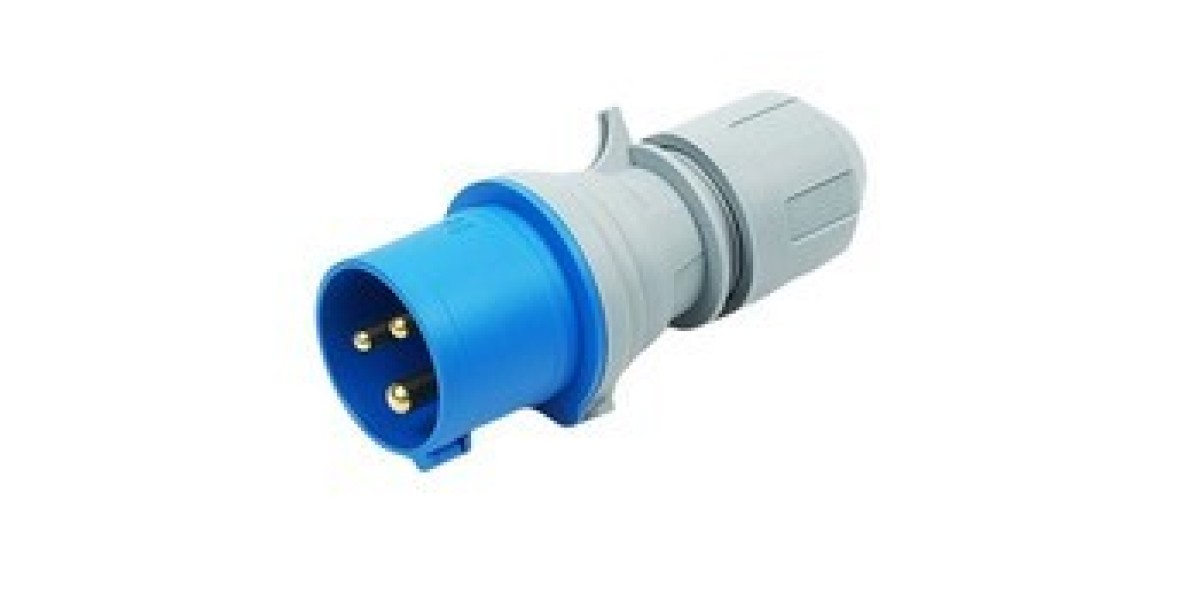

In compatible electrical installations, a 110V Industrial Plug provides a connection between an electrical supply and equipment designed for that system. Industrial environments may expose connectors to vibration, repeated handling, dust, moisture, and mechanical stress. Reliable performance depends on the interaction of housing materials, conductive contacts, insulation systems, cable-entry design, and mechanical retention.
The housing protects internal components and provides the structural interface for handling and installation. Engineering plastics are commonly used because they can offer electrical insulation and useful mechanical strength. Material selection should reflect the expected operating environment, including potential exposure to moisture, temperature changes, impact, oils, and cleaning processes. A consistent housing structure also helps maintain correct contact alignment.
Inside the connector, insulating components separate conductive elements and support them in their intended positions. Insulation performance depends on the selected material, component geometry, surface condition, and manufacturing precision. Properly formed insulation parts help maintain appropriate separation between conductive components during normal connection and disconnection cycles.
Conductive contacts establish the electrical interface with the mating socket. Materials are selected according to conductivity, corrosion resistance, and mechanical durability. Contact shape and position must be controlled so that the plug engages correctly with the corresponding socket. Consistent contact pressure helps maintain electrical continuity while supporting normal operation.
Cable termination deserves careful attention because electrical conductors must remain securely connected to their designated contacts. The cable entry should also support the cable and reduce mechanical stress near the termination area. Strain-relief structures can help control the effects of pulling, bending, and movement, particularly in applications involving portable machinery or frequent equipment relocation.
Mechanical retention helps maintain the connection after the plug is inserted. Vibration and movement can occur around industrial machinery, workshops, and construction equipment. A suitable locking structure reduces the risk of unintended separation during normal use. The housing should also protect the locking mechanism and internal components from routine mechanical handling.
Manufacturing consistency is important for every major component. Injection molding can produce housings and insulating supports with carefully controlled dimensions. Metal contacts require accurate forming and assembly. Mating surfaces, cable entries, contact supports, and locking structures must work together, making dimensional inspection and process control valuable parts of production.
Quality-control procedures may include visual checks, dimensional measurements, continuity testing, insulation testing, and mechanical verification. These procedures help identify assembly defects and variations in component positioning. Manufacturers can use consistent inspection practices to improve production repeatability and reduce the likelihood of defective connectors reaching installation sites.
The application environment should influence product selection. Workshop equipment may require frequent connection and disconnection, while manufacturing machinery can experience continuous operation and vibration. Construction environments may involve dust, moisture, and mechanical impact. Voltage compatibility must be considered alongside current requirements, contact configuration, cable type, environmental protection, and socket compatibility.
Correct installation is equally important. Before use, technicians should inspect the plug and cable for damage and confirm that the connector matches the intended equipment. Conductors should be terminated according to the connector's design, and cable routing should minimize unnecessary tension and bending. The plug should be fully inserted and secured before equipment is energized.
Maintenance teams can periodically examine housings, contacts, cable entries, insulation, and locking components. Corrosion, cracking, loose connections, or visible deterioration should be evaluated before the connector returns to service. Proper storage and cleaning can also help maintain connector condition.
A carefully designed 110V Industrial Plug integrates electrical contacts, insulation, housing materials, cable support, and mechanical retention into one connection system. Considering these elements helps users choose products according to the actual electrical and operating conditions. Industrial plug and socket solutions are available at https://www.socketsfe.com, where connector compatibility, construction, environmental exposure, and installation requirements can be considered together.







