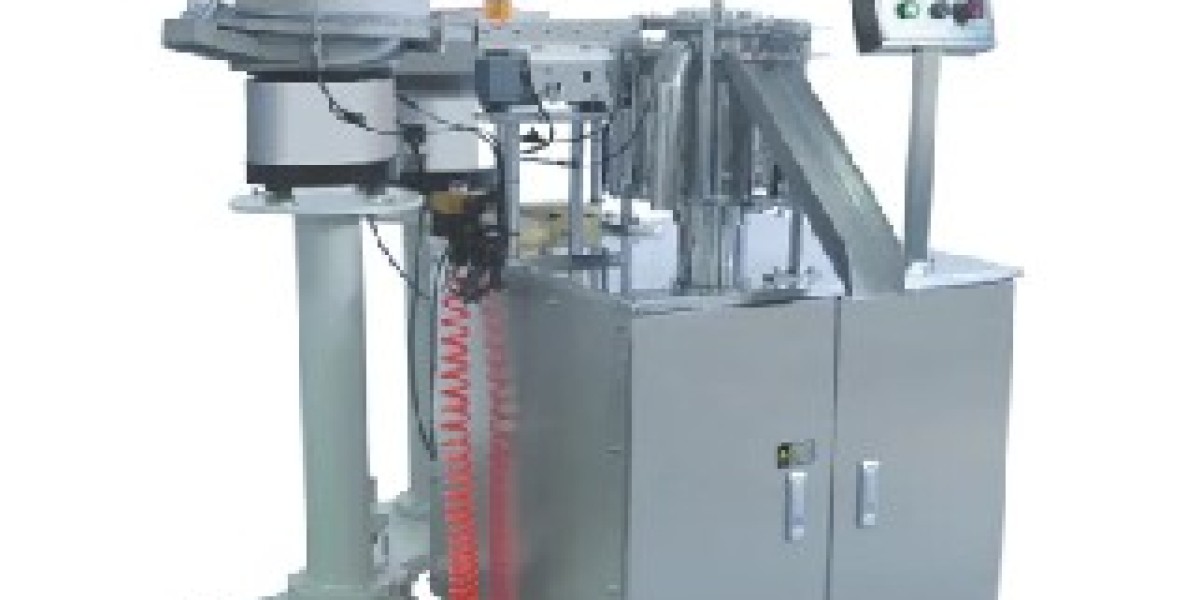

Medical consumable manufacturing often involves specialized components, complex assembly sequences, and production requirements that standard equipment cannot always accommodate. Different products may require unique feeding methods, carefully controlled mechanical movements, dedicated inspection systems, or customized handling procedures. Customized R&D for Non-Standard Automated Production Lines of Medical Consumables focuses on developing equipment around these specific requirements, connecting product characteristics with mechanical engineering, control technology, and production workflow design.
The development process begins with a detailed understanding of the product and its manufacturing requirements. Medical consumables may include flexible tubing, molded polymer components, elastomeric parts, metal fittings, films, or combinations of different materials. Each material behaves differently under pressure, friction, bending, and mechanical contact. Engineers need to evaluate these properties before selecting feeding mechanisms, fixtures, gripping structures, and transfer methods. This initial analysis helps establish an appropriate technical foundation for the equipment.
Production workflow analysis is equally important. A specialized line may include component loading, orientation, feeding, assembly, inspection, marking, transfer, and finished-product collection. These stages need to work together without creating unnecessary handling or inconsistent production timing. Engineers can map the sequence of operations, identify potential bottlenecks, and determine which tasks require automation. The result is a production architecture based on the actual manufacturing process rather than a collection of disconnected automated stations.
Mechanical design determines how the equipment handles and processes each component. Fixtures must hold parts in suitable positions while allowing accurate assembly movements. Grippers need to provide sufficient holding force without damaging delicate surfaces, and guides must support stable material movement. For flexible tubing or thin polymer products, uncontrolled compression or bending may affect product geometry. Appropriate tooling design helps balance secure positioning with careful component handling.
Control engineering connects the mechanical equipment with sensors, actuators, motion systems, and operator interfaces. Programmable controllers can coordinate sequential operations and monitor machine status. Sensors may confirm component presence, positioning, movement, or completion of an assembly task. These feedback signals allow the system to respond to actual operating conditions and help prevent subsequent operations from proceeding when required conditions have not been met.
Inspection technology should be selected according to the quality characteristics of each product. Vision systems may detect missing components, incorrect orientation, visible defects, or assembly deviations. Other sensing or measurement methods can be incorporated when dimensional accuracy or specific process conditions need verification. By integrating suitable inspection functions into the production sequence, manufacturers can identify deviations earlier and provide more useful information for quality analysis.
Material compatibility and manufacturing cleanliness also require attention. Components may be sensitive to contamination, surface abrasion, or excessive contact pressure. Equipment surfaces, transfer mechanisms, fixtures, and product-contact areas should therefore be considered in relation to the intended manufacturing environment. The layout should also allow practical access for cleaning, inspection, and maintenance according to applicable production procedures.
Production data provides another opportunity to improve equipment management. Customized systems can be designed to collect information about operating states, inspection results, alarms, and production events. When these records are organized consistently, engineers can analyze recurring interruptions, investigate deviations, and identify opportunities to improve process stability. Data requirements are best considered during the early design stage so that sensors, controls, and interfaces can be integrated coherently.
Flexibility is a major consideration when manufacturers expect product changes or future production expansion. Modular workstations, replaceable tooling, adjustable fixtures, and configurable software can make selected equipment functions easier to modify. This can reduce the need for extensive redesign when component dimensions, assembly sequences, or inspection requirements change. However, flexibility should be balanced with operational simplicity so that equipment remains manageable for production personnel.
Safety and maintenance planning complete the engineering process. Protective structures, appropriate access controls, alarm functions, and clearly defined maintenance points help support practical equipment operation. Technicians should be able to inspect critical mechanical and electrical components without unnecessary difficulty. A successful