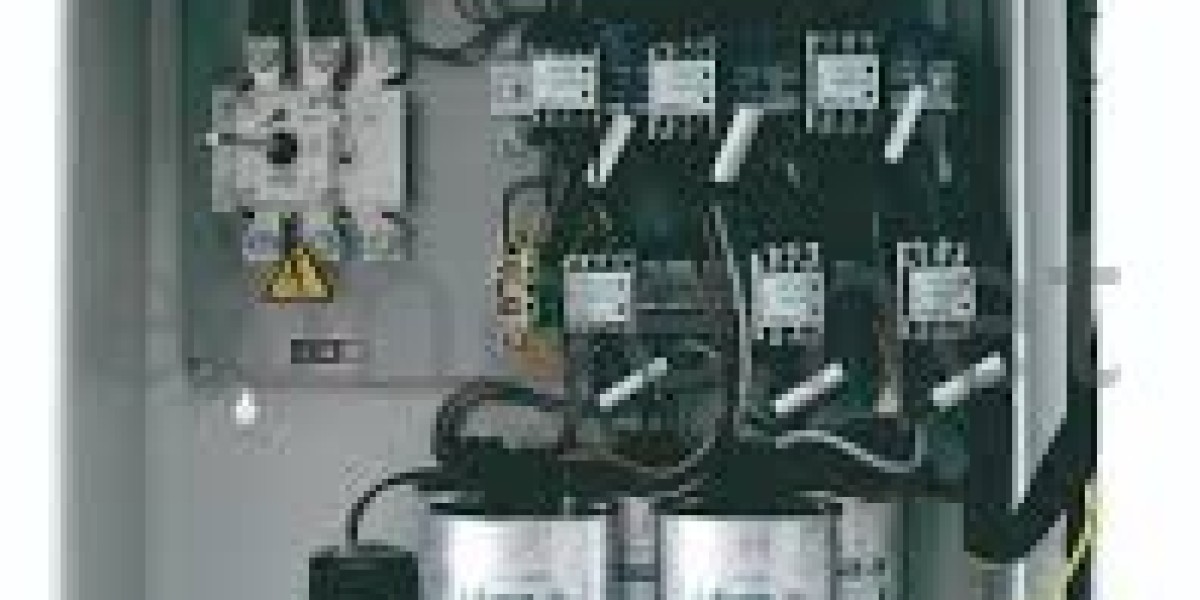

Industrial power networks support equipment with widely varying electrical characteristics, from continuously operating motors to automated machinery that starts and stops throughout a production cycle. These operating patterns influence reactive power demand and can affect current loading across the distribution system. A Reactive Power Compensation Device helps manage reactive energy through an arrangement of electrical components and control methods selected for the requirements of the installation.
Successful compensation begins with an assessment of the connected loads. Engineers need to understand operating schedules, changes in demand, transformer loading, and the electrical characteristics of major equipment. A facility with stable production conditions may require a different compensation arrangement from one where machinery changes frequently between operating states. Evaluating actual demand helps establish a suitable design basis and reduces the likelihood of inappropriate compensation.
Capacitor-based systems are widely used to provide reactive power support. Their performance depends on the electrical characteristics of the capacitors, the quality of associated connections, and the way individual components are integrated into the network. Dielectric materials, conductive layers, terminals, enclosures, and insulation structures must work together to provide consistent operation. Manufacturing precision helps maintain uniform component characteristics across different production batches.
Automatic control is useful where reactive demand changes over time. Controllers can monitor selected electrical parameters and coordinate switching stages according to system conditions. By adjusting the connected compensation capacity, the system can respond to changing loads instead of maintaining a fixed configuration under every operating condition. Switching equipment must be selected and coordinated carefully because repeated switching can introduce electrical stress into the system.
Harmonic assessment is another important aspect of system planning. Nonlinear loads, including variable-frequency drives, rectifiers, and electronic power converters, can introduce harmonic currents into industrial networks. These currents may interact with capacitive components and affect overall electrical behavior. Engineers should evaluate the harmonic environment before finalizing the compensation arrangement and determine whether filtering or other mitigation measures are appropriate.
Thermal conditions influence long-term reliability as well. Components installed in enclosed cabinets may experience heat from nearby conductors, transformers, and switching equipment. Insufficient ventilation can contribute to elevated operating temperatures and accelerated material aging. Appropriate enclosure design, component spacing, airflow, and environmental assessment help create suitable operating conditions for the complete compensation system.
Protection must be coordinated with the electrical installation. Protective devices should address relevant abnormal operating conditions while remaining compatible with upstream equipment and the system's overall protection strategy. Isolation and discharge procedures are particularly important when capacitors are included, as stored energy may remain after the supply has been disconnected. Maintenance personnel should follow established safety procedures before accessing any internal components.
Mechanical installation quality also matters. Secure terminals, properly routed conductors, suitable mounting arrangements, and clear equipment identification help support reliable operation. Good accessibility makes it easier to inspect connections, examine switching devices, and perform maintenance without unnecessarily disturbing other parts of the electrical installation.
Monitoring and maintenance can help identify developing problems. Inspection may include checking connection points, ventilation paths, enclosures, switching components, and visible signs of deterioration. Abnormal heating, damaged terminals, repeated protective actions, or unexpected changes in electrical behavior may indicate that additional investigation is required. Historical operating records can help technicians identify recurring issues and refine maintenance schedules.
A carefully engineered Reactive Power Compensation Device brings together load assessment, component selection, switching control, harmonic evaluation, protection, and maintenance. For businesses seeking electrical components and related power-system solutions, Shanghai Yongjin Electric Technology Co.,Ltd. provides further product information at https://www.eonge.net/product.