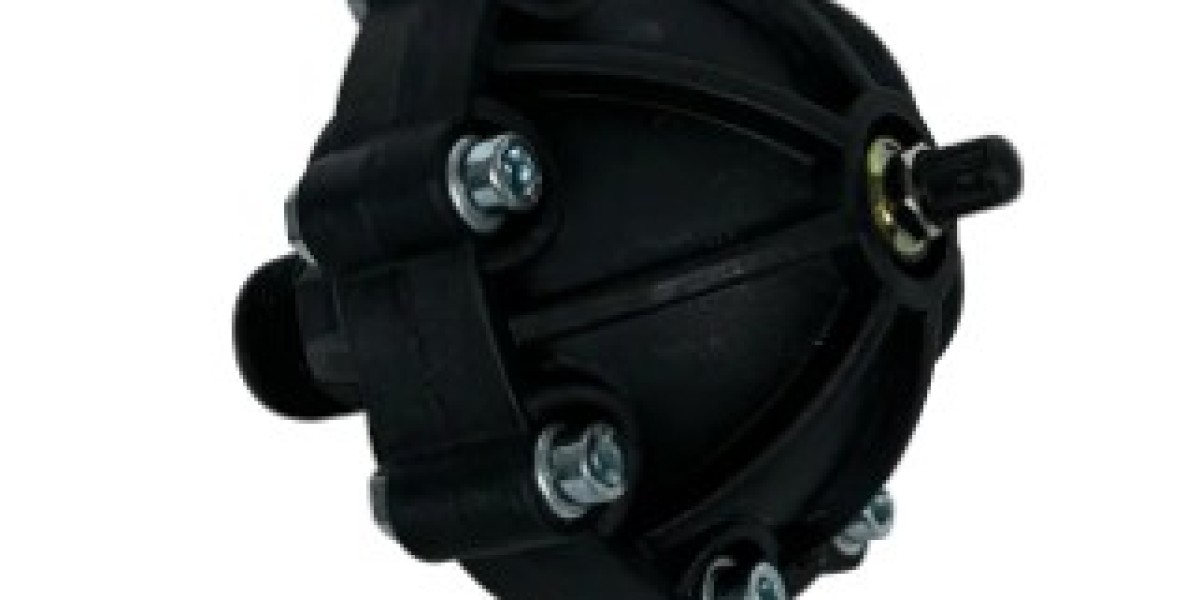

Crop spraying equipment depends on a connected fluid system that moves agricultural liquids from a supply source through distribution lines and toward application components. A Crop Spraying Diaphragm Pump uses the movement of a flexible diaphragm to support this transfer process. Its practical operation depends on several interacting factors, including material compatibility, valve construction, sealing performance, internal passage design, and manufacturing consistency.
The diaphragm creates pumping action by repeatedly changing the volume inside a chamber. As the chamber expands and contracts, liquid enters through the inlet and moves toward the discharge pathway. This operating principle allows the mechanical drive to remain separated from the handled fluid. However, repeated flexing places demands on the diaphragm, so engineers must consider its elasticity, fatigue resistance, and stability throughout the intended operating environment.
Material compatibility is especially important when agricultural formulations are involved. Different liquids may have different chemical properties, and cleaning agents can introduce additional substances into the system. Engineers should therefore evaluate the interaction between fluid-contacting materials and the liquids expected during normal use. Selecting suitable elastomers and related components helps support consistent operation while reducing the risk of premature material deterioration.
Valve technology controls the direction of liquid movement during the pumping cycle. Inlet and outlet valves need to respond appropriately as the diaphragm changes chamber volume. Their geometry and seating surfaces affect how they interact with the surrounding assembly. Material characteristics also matter because valves repeatedly move or contact adjacent surfaces during operation. Consistent manufacturing helps maintain the intended component relationships.
Seals provide an additional layer of protection against leakage. They maintain contact between adjoining surfaces and help separate different areas of the pumping assembly. Agricultural machinery can be exposed to moisture, dust, vibration, and chemical residues, so sealing materials should be selected according to the operating environment. Installation quality also matters because incorrect positioning or uneven contact may compromise the intended seal.
Internal passage design influences how fluid moves through the pump. The inlet, chamber, valve sections, and outlet form a connected route, and their geometry should support the intended direction of movement. Engineers can consider surface finish, passage transitions, and areas where residue might collect. A well-considered layout can make cleaning easier and help reduce unnecessary restrictions within the fluid pathway.
Manufacturing quality connects these engineering decisions to finished products. Molding processes can help maintain consistent diaphragm shapes, while controlled machining supports the accuracy of valve and housing components. Assembly processes must ensure that parts are positioned correctly and interact as intended. Inspection during production can identify defects, material inconsistencies, or dimensional variation before the pump is installed in larger agricultural equipment.
The housing and mounting structure must also suit the working environment. Crop spraying equipment may travel across uneven ground and experience vibration, dust, humidity, and changing temperatures. A practical design considers the pump's relationship with the machine frame, fluid connections, and nearby components. Secure mounting and accessible service areas can help simplify installation and maintenance.
Filtration and cleaning practices are important for protecting the internal mechanism. Particles entering the system may interfere with valve movement or contribute to wear on contact surfaces. Suitable filtration can help control contamination, while regular cleaning can remove residues from fluid passages. Cleaning methods should be compatible with the materials used throughout the assembly so that maintenance does not create avoidable material damage.
Routine inspection supports the ongoing care of agricultural pumping equipment. Operators can look for visible wear, leakage, contamination, or changes in normal operating behavior. Diaphragms, valves, and seals experience repeated mechanical or chemical exposure, making their condition relevant to the wider system. Clear inspection procedures can help identify maintenance needs before they affect other components.
The engineering of a Crop Spraying Diaphragm Pump combines diaphragm mechanics, material science, valve design, sealing technology, manufacturing control, and practical maintenance planning. Considering these factors together helps manufacturers integrate pumping assemblies into agricultural spraying equipment more effectively.