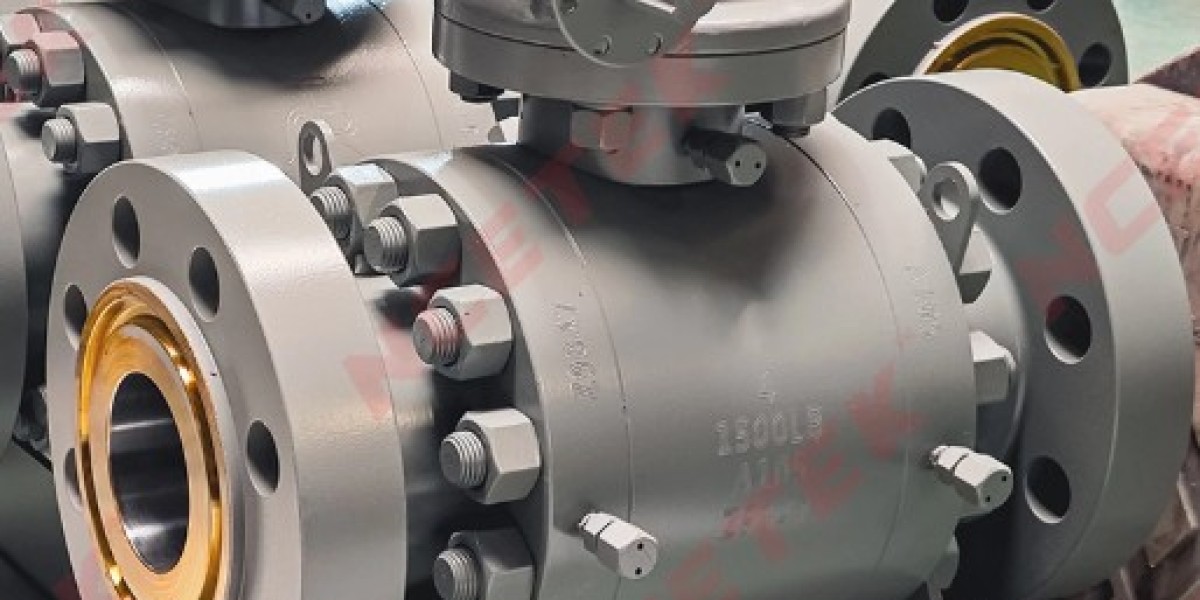

Industrial systems operating at extremely low temperatures require flow control equipment designed around material behavior, thermal changes, and sealing performance. Effective Cryogenic Ball Valve Design considers the complete relationship between the valve body, ball, seats, stem, operating mechanism, and surrounding pipeline. Applications such as LNG processing, gas separation, industrial refrigeration, and specialized chemical systems can expose valve components to significant temperature changes, making appropriate engineering essential from material selection through final testing.
Material selection is one of the first considerations in low-temperature valve engineering. Materials that perform adequately at normal ambient temperatures may experience changes in mechanical behavior when exposed to severe cold. Stainless steels and other materials with suitable low-temperature characteristics may therefore be selected according to the intended service conditions. Internal components should be evaluated as carefully as the body because the complete valve assembly must maintain appropriate mechanical and sealing relationships during operation.
Thermal contraction is another important factor. When a valve cools from ambient conditions toward a cryogenic operating temperature, its components can contract. Different materials may experience different dimensional changes, which can affect the relationship between the ball, seats, stem, and body. Engineering calculations and controlled manufacturing tolerances help accommodate these changes and reduce the possibility of excessive mechanical interference or inadequate sealing contact.
The sealing system requires particular attention because seats must continue to perform under severe temperature conditions. Seat materials should be evaluated for their temperature range, chemical compatibility, pressure conditions, and expected operating cycles. The sealing arrangement should provide appropriate contact with the ball while allowing controlled movement during opening and closing. Stem seals are equally important because the stem forms a mechanical connection between the internal valve mechanism and the external operating system.
Stem extension can be incorporated when the application requires separation between the cold valve body and external operating components. By positioning the operating mechanism farther from the cold process area, an extended stem arrangement can support practical operation and maintenance. The exact configuration depends on the installation, actuator type, insulation arrangement, and applicable engineering requirements.
Body construction also affects thermal behavior and installation. The valve must withstand pressure while accommodating the effects of low temperature on its structural components. Connection design should correspond with the surrounding piping system, and installation planning should consider thermal movement and accessibility. Proper alignment can help prevent unnecessary mechanical loads from being transferred between the pipeline and valve.
Precision machining is essential because cryogenic service can magnify the consequences of dimensional inconsistencies. Ball surfaces, seat pockets, stem interfaces, and body connections require controlled tolerances and suitable surface finishes. Accurate machining supports consistent assembly and helps maintain the intended relationship between moving and sealing components.
Testing should reflect the requirements of the intended application as closely as practical. Depending on project specifications, manufacturers may conduct pressure testing, leakage testing, operational checks, and material verification. Functional testing can confirm that the ball and stem move correctly, while leakage testing provides information about closure performance. Documentation of inspection and testing results can provide valuable traceability for specialized industrial projects.
Different industries can impose different demands on low-temperature equipment. LNG facilities may require specialized materials and operating arrangements, while refrigeration systems can involve other combinations of temperature, pressure, and media characteristics. Gas processing and chemical applications may additionally require careful consideration of material compatibility and sealing behavior.
Maintenance planning should begin during the design stage. Operators need to understand how the valve will be accessed, inspected, operated, and serviced after installation. Suitable actuator selection, stem configuration, connection arrangement, and documentation can make future maintenance more manageable. Clear records of materials and test results can also assist with equipment identification throughout the operating lifecycle.
For demanding low-temperature applications, Cryogenic Ball Valve Design should integrate material selection, thermal contraction, sealing technology, stem arrangement, manufacturing accuracy, and testing rather than treating these factors independently. A coordinated manufacturing process can support consistent valve production for specialized industrial environments. Additional valve configurations and flow control solutions can be reviewed at https://www.ncevalve.com/product/ when evaluating equipment for cryogenic and process pipeline applications.







