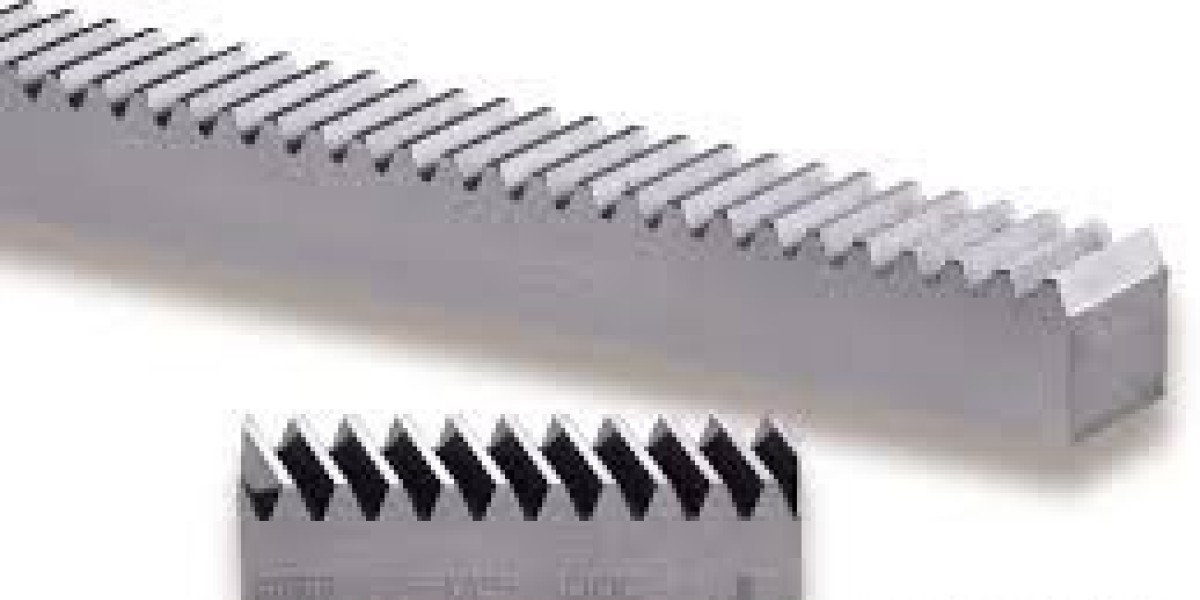

In mechanical transmission, the quality of a tooth surface can influence contact stability, friction, wear, noise, and the overall consistency of motion, making Ground Gear technology an important consideration when a transmission system requires controlled surface characteristics. Zhejiang Yuchen Transmission Technology Co., Ltd. focuses on the relationship between material selection, machining processes, heat treatment, grinding, and inspection to develop transmission components with consistent manufacturing quality.
The production process begins with material engineering. The base material must provide a suitable balance of strength, toughness, machinability, and resistance to service-related wear. Different grades of steel can be selected according to the mechanical requirements of the application. Alloying elements may improve hardenability and structural stability, while the material's response to machining and thermal treatment must also be considered. Selecting a suitable material at the beginning creates a foundation for subsequent tooth formation and finishing operations.
Gear geometry must then be translated accurately from the engineering model into the physical component. Tooth profile, pitch, alignment, and dimensional relationships determine how mating components interact. Manufacturing errors at this stage can affect the contact pattern and lead to uneven load distribution. Zhejiang Yuchen Transmission Technology Co., Ltd. uses controlled machining processes to establish the basic tooth form before later finishing operations refine the functional surfaces.
Heat treatment is often introduced to modify the mechanical characteristics of gear materials. Depending on the application, processes such as carburizing, quenching, and tempering can be used to establish a harder working surface while retaining an appropriate internal structure. The objective is not simply to maximize hardness. Excessive or poorly controlled thermal treatment can create brittleness, distortion, or dimensional changes. For this reason, heat-treatment parameters must be coordinated with the material grade, geometry, and later finishing requirements.
Grinding provides an important opportunity to improve tooth accuracy after heat treatment. Thermal processing can cause small dimensional changes, and grinding can correct selected geometric deviations while improving surface condition. The controlled removal of material allows manufacturers to refine tooth profiles and achieve more consistent contact surfaces. This is particularly valuable in transmission systems where repeated movement requires predictable interaction between mating gear components.
Surface quality also affects lubrication behavior. Properly finished tooth surfaces can support a more consistent lubricant film under suitable operating conditions. If surfaces contain excessive irregularities, localized contact and friction may increase. Grinding does not eliminate the need for appropriate lubrication, alignment, or maintenance, but it can provide a more controlled starting condition for the transmission system.
Inspection technology is closely connected to precision grinding. Measuring equipment can evaluate tooth geometry, dimensional relationships, surface characteristics, and other manufacturing features. Instead of relying exclusively on final inspection, modern production systems can incorporate quality checks at multiple stages. This approach enables process deviations to be identified earlier, reducing the possibility that repeated manufacturing errors will continue through an entire production batch.
Digital manufacturing tools further strengthen this process. Computer-aided design can define detailed tooth geometry and mounting relationships before machining begins. Manufacturing software can then translate engineering information into controlled production operations. Digital inspection data can be compared against design requirements to identify trends in dimensional variation. Zhejiang Yuchen Transmission Technology Co., Ltd. can connect these digital engineering methods with practical machining and inspection processes to improve production repeatability.
The structural relationship between a gear and its mating rack or pinion should also be considered. Even a precisely manufactured component may not perform as intended if installation alignment is poor. Mounting rigidity, center relationships, lubrication, load direction, and operating speed can all influence actual contact behavior. Engineers should therefore evaluate the transmission as a complete mechanical assembly rather than judging a single component independently.
Noise and vibration provide additional evidence of transmission quality. Irregular contact caused by geometric deviations, mounting errors, or surface inconsistencies can generate unwanted mechanical excitation. A properly finished tooth surface can contribute to more stable engagement, while accurate alignment helps maintain a consistent contact pattern. These factors become especially relevant in automated machinery where repeated positioning cycles can make small mechanical disturbances more noticeable.
Wear resistance is another important engineering consideration. Transmission surfaces experience repeated contact, and long-term performance depends on the interaction between material structure, hardness, surface condition, lubrication, and load. Heat treatment establishes important material characteristics, while grinding provides a controlled finishing condition. Zhejiang Yuchen Transmission Technology Co., Ltd. integrates these manufacturing stages so that material and process decisions work together instead of being treated as separate production steps.
For industrial users, the value of precision finishing extends beyond the appearance of a component. It influences how mechanical surfaces interact, how loads are transferred, and how consistently a transmission system behaves during repeated operation. By combining appropriate materials, controlled tooth generation, heat treatment, grinding, digital inspection, and application-focused engineering, a Ground Gear can provide a carefully controlled contact surface for demanding transmission systems. Zhejiang Yuchen Transmission Technology Co., Ltd. provides further information about its transmission product range at https://www.yc-rack.com/product/spur-gear-rack/.







