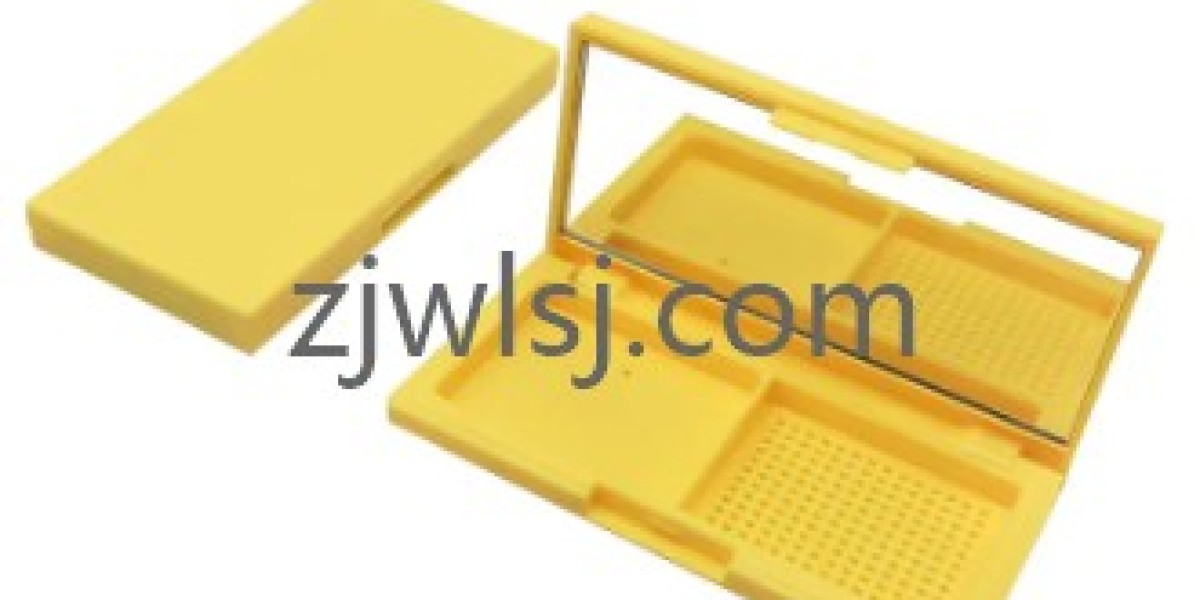

The case surrounding a cosmetic product serves both functional and visual purposes, making packaging development an important part of the manufacturing process. For brands working with pressed or loose powder products, a Powder Case needs to provide suitable product protection while maintaining convenient handling and a consistent appearance. Material selection, structural engineering, molding, finishing, assembly, and inspection all contribute to the final quality of the package.
Material selection establishes the foundation for the case. Plastic is widely considered for cosmetic packaging because it supports flexible shapes and can accommodate different surface treatments. Manufacturers may evaluate factors such as rigidity, weight, molding behavior, surface quality, and compatibility with decorative processes when selecting a material. The chosen material should support the intended structure and remain suitable for normal handling, transportation, storage, and daily use.
Structural design determines how the case protects and presents the cosmetic product. A typical package may involve a base, cover, internal pan area, insert, hinge, closure component, or other structural elements. Each component should be designed according to its function and relationship with the rest of the package. Accurate alignment is particularly important for moving or connecting components because poor fitting can affect both appearance and usability.
Injection molding can provide consistent production of plastic packaging components. Mold development requires attention to details such as corners, joining areas, ejection points, surface texture, and dimensional relationships. When these elements are considered during tooling, manufacturers can improve production repeatability and reduce unnecessary adjustments during assembly. Consistent molding also creates a reliable foundation for later printing, coating, or other decorative processes.
Surface treatment contributes significantly to the visual identity of cosmetic packaging. Brands may choose from different combinations of color, printing, coating, polishing, or other finishing methods. The selected treatment can help create a specific appearance across a product family while supporting brand recognition. Manufacturers need to control the finishing process carefully because variations in color, surface texture, or printed graphics can become noticeable when multiple packages are displayed together.
Internal structure is another important consideration. Powder products may require a stable area that keeps the cosmetic component properly positioned within the case. An internal insert or supporting structure can help maintain alignment while contributing to the overall design. During prototype development, manufacturers can evaluate how these internal components interact with the outer case and whether the assembly process remains practical for larger production quantities.
Quality control should address both appearance and functionality. Inspection procedures may include checks for molding defects, component alignment, surface consistency, closure performance, printing quality, and assembly condition. Maintaining clear inspection criteria helps production teams identify variations and manage consistency across different batches. For brands with recurring orders, stable quality control can also support a more consistent packaging appearance over time.
Customization allows a Powder Case to reflect different brand identities and product concepts. Cosmetic companies may request customized shapes, colors, finishes, graphics, or component configurations according to their target market. However, each customization decision can influence tooling, assembly, finishing, and production efficiency. Early communication between the packaging manufacturer and brand can help determine whether the proposed design is suitable for practical manufacturing.
Efficient packaging design can also consider material use and assembly complexity. Unnecessary components may increase production steps without providing meaningful functional benefits. By reviewing the structure during the early design stage, manufacturers can identify opportunities to simplify components while maintaining the protection required by the cosmetic product. Material efficiency should be considered alongside structural stability, appearance, and quality requirements.
For brands selling cosmetics internationally, packaging development often involves several stages, including concept design, material selection, prototype production, tooling, sample evaluation, decoration, assembly, and quality inspection. Keeping these stages connected can help reduce communication problems and make it easier to identify potential production concerns before larger orders are released.
A well-developed cosmetic package combines practical engineering with visual design. Manufacturers that understand both production technology and cosmetic packaging requirements can help brands move from an initial concept toward a repeatable commercial product. When evaluating packaging options for powder cosmetics, brands can also review related cosmetic structures and manufacturing approaches at https://www.zjwlsj.com/product/eye-shadow-palette/shadow-palette-1-grid/ as part of their packaging development research.