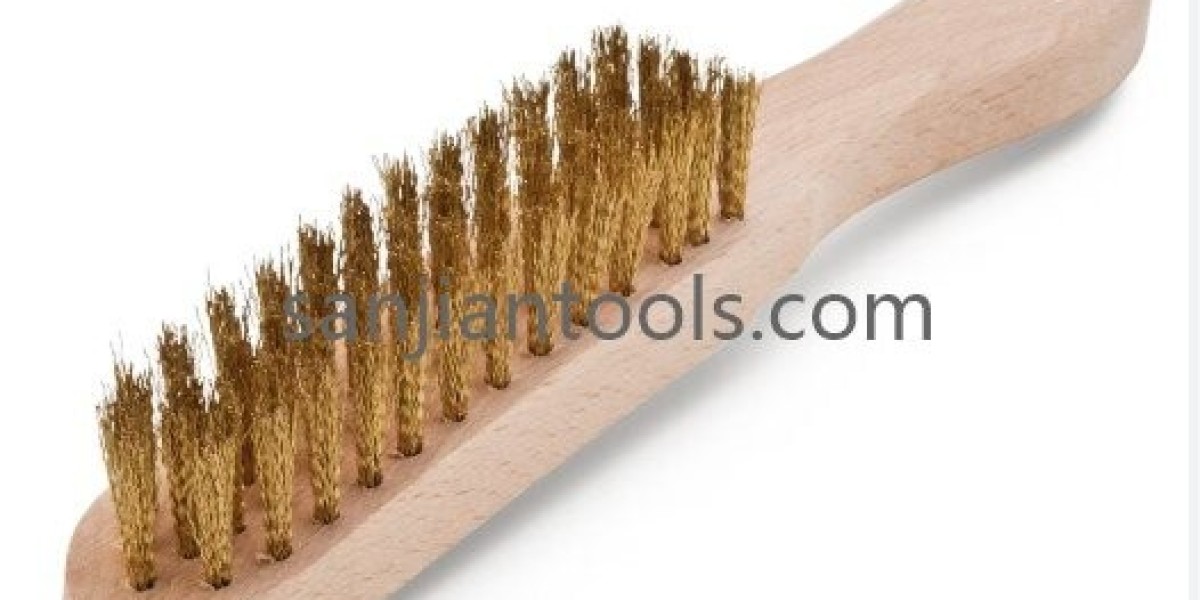

Cleaning metal components often requires a balance between effective mechanical action and controlled surface contact. For these applications, a Brass Wire Brush can be considered when brass filaments provide an appropriate combination of flexibility and cleaning action for the intended workpiece. Product performance is influenced by filament characteristics, wire diameter, density, brush-head construction, handle design, and assembly quality, so manufacturing decisions should be evaluated as a complete system.
Brass wire has different physical characteristics from common steel filaments. Its relative flexibility and material properties can make it suitable for selected cleaning tasks where users need controlled brushing action. The correct application depends on the surface material and the type of residue being removed. Manufacturers should therefore define product specifications according to actual use conditions instead of assuming that one filament configuration will suit every metal cleaning requirement.
Wire diameter is one of the key variables in brush construction. Smaller filaments can provide more flexibility and may follow irregular surface contours more readily. Larger filaments can provide firmer contact and a more pronounced mechanical brushing effect. The selection should take into account the size of the workpiece, the condition of the surface, and whether the tool is intended for light cleaning, residue removal, or preparation work.
Filament density can affect the consistency of contact between the brush and the workpiece. A properly distributed wire arrangement helps provide predictable brushing action across the working area. Manufacturers need to control the insertion depth, spacing, trimming, and fixing of the filaments so that the brush head remains consistent. Stable production processes are particularly useful when brushes are supplied in larger quantities to wholesalers and industrial distributors.
The brush-head base provides structural support for the working filaments. During use, repeated manual movement can place stress on the connection between the wire and supporting structure. Secure fastening helps maintain the intended brush configuration and reduces the possibility of loose or uneven filaments. Quality inspection should therefore include the condition of the wire assembly, the integrity of the brush base, and the alignment of the finished head.
Handle design affects how effectively users can control the brushing process. A molded plastic handle can provide consistent dimensions and allow manufacturers to create practical grip profiles. The surface can be shaped or textured to support manual handling, while the overall length and width can be adjusted for different applications. A stable connection between the handle and brush head is also important when users apply repeated pressure.
Application requirements can vary significantly. Workshop technicians may use small handheld brushes for cleaning components, while maintenance personnel may need different shapes for reaching narrow or irregular areas. Hardware and fabrication applications may also involve different surface conditions. Manufacturers can respond with variations in brush-head dimensions, wire density, filament stiffness, and handle configuration, allowing distributors to build product ranges for different customer requirements.
Production quality should remain consistent across all these variations. Inspection may include wire dimensions, filament distribution, trimming quality, handle molding, joint strength, and surface finish. Consistent control of these characteristics helps reduce differences between production batches. For professional sourcing teams, stable manufacturing is particularly relevant when tools are purchased repeatedly for distribution or industrial supply.
Storage and packaging also deserve consideration. Exposed wire filaments can be affected by unsuitable warehouse conditions, while brush heads may become deformed if products are compressed during transportation. Appropriate packaging helps maintain the intended shape and protects the finished tools during handling. Clear labeling can further assist distributors in distinguishing between brush types and identifying their intended applications.
Selecting a suitable Brass Wire Brush therefore involves more than comparing the appearance or basic material of different products. Filament properties, wire diameter, density, brush-head construction, handle design, fastening quality, and production consistency should all be evaluated together. These factors provide a practical framework for buyers seeking hand tools for controlled cleaning, maintenance, and surface treatment applications. More information about related hand tools is available at https://www.sanjiantools.com/product.







