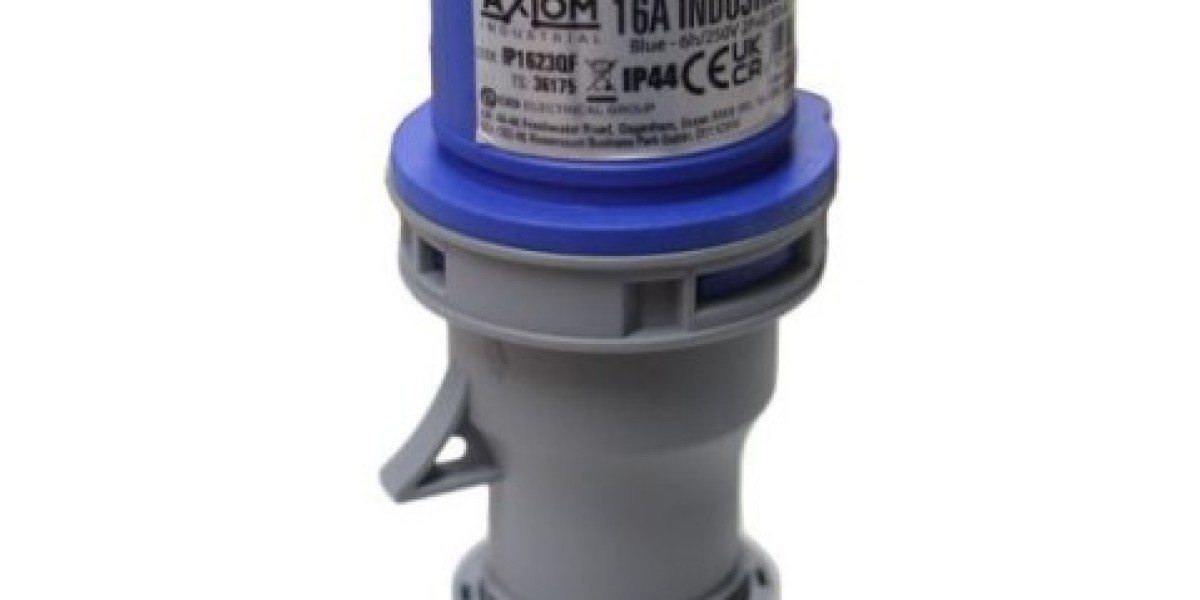

For equipment operating from a compatible 240V electrical supply, a 240V Industrial Plug provides a structured connection between the equipment and its power source. Industrial applications often involve more demanding mechanical and environmental conditions than ordinary household use, making connector design an important consideration. Housing materials, conductive contacts, insulation, cable management, and mechanical retention all contribute to the overall quality of the connection.
The outer housing protects the internal electrical components while providing the physical interface used during connection and handling. Engineering plastics are frequently used for industrial connector housings because they can provide electrical insulation and useful mechanical strength. Depending on the application, manufacturers may consider resistance to impact, moisture, temperature changes, oils, cleaning agents, and other environmental factors when selecting housing materials.
Inside the connector, insulating components help separate conductive elements and maintain controlled electrical paths. Insulation performance depends on the characteristics of the material as well as the dimensions and geometry of the components. Accurate molding and assembly are therefore important. If insulating parts are not positioned correctly, the intended electrical clearances and mechanical support may not be maintained.
Conductive contacts form the current-carrying interface between the plug and its compatible socket. Contact materials are generally selected according to electrical conductivity, corrosion resistance, mechanical strength, and expected connection cycles. Contact geometry is equally important because each conductive component needs to engage with its corresponding mating element accurately.
A stable contact interface depends on proper alignment and suitable contact pressure. Excessive movement can affect connection stability, while poorly controlled contact geometry can make insertion difficult or create inconsistent engagement. Precision manufacturing helps maintain the dimensions needed for reliable mating between connector components.
Cable termination is another important area of industrial plug design. The conductors must be connected securely to the appropriate internal contacts, while the cable entry needs to provide suitable mechanical support. Strain-relief structures can reduce the amount of pulling and bending force transferred to the termination points. This becomes particularly useful in applications where cables are moved during equipment operation or maintenance.
Mechanical retention helps prevent unintended separation after the plug has been connected. Industrial machinery may generate vibration, and portable equipment may be moved regularly. A suitable locking mechanism keeps the connector in its intended position while still allowing authorized personnel to disconnect it when necessary. The housing should also protect the locking and contact components from routine mechanical handling.
Manufacturing technology plays an important role in achieving consistent connector performance. Plastic housings and insulation parts may be produced through controlled molding processes, while metal contacts require accurate forming and assembly. Dimensional consistency is particularly important around mating interfaces, contact supports, cable entries, and locking structures.
Quality assurance may include visual inspection, dimensional checks, continuity testing, insulation-related electrical testing, and mechanical verification. These processes can help identify issues involving contact positioning, housing defects, assembly errors, or mechanical operation. Consistent production control is especially valuable when connectors are used across large equipment installations or repeated manufacturing projects.
The operating environment should be considered alongside the electrical requirements. Factory machinery may operate continuously and experience vibration, while workshops can involve frequent connection and disconnection. Construction equipment may encounter dust, moisture, and mechanical movement. Commercial installations can have different requirements depending on equipment location and maintenance procedures. Voltage compatibility is therefore only one part of the connector selection process.
Installation should follow the connector manufacturer's intended configuration. Before use, technicians should check the plug, cable, housing, and contacts for visible damage. Conductors should be terminated correctly, and cable routing should avoid excessive tension or sharp bending. The plug should be aligned with its mating socket and fully engaged before the equipment is energized.
Routine maintenance can further support reliable operation. Inspection should look for cracked housings, corrosion, damaged insulation, loose cable entries, worn contact surfaces, or deterioration around mechanical locking components. If abnormal heating, physical damage, or other unusual conditions are observed, the connector should be evaluated before continued service.
A correctly engineered 240V Industrial Plug brings together electrical contacts, insulating materials, housing technology, cable protection, and mechanical retention to create a coordinated industrial connection system. Considering these elements helps equipment manufacturers, installers, and maintenance teams select connectors according to actual operating requirements. Industrial plug and socket solutions can be explored at https://www.socketsfe.com, with attention to electrical compatibility, environmental conditions, connector materials, cable requirements, and installation practices.