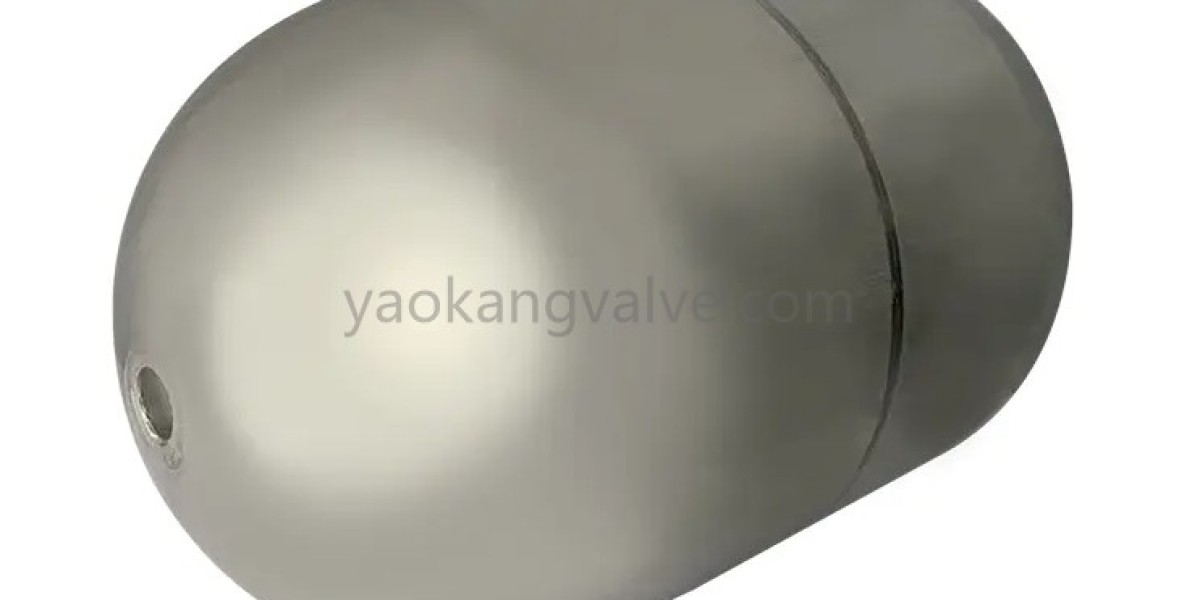

In mechanical liquid-level systems, a Float Ball uses buoyancy to respond to changes in fluid height and transfer movement to a connected control mechanism. Although the operating principle is straightforward, the component must maintain suitable geometry, balance, surface quality, and dimensional accuracy to function properly within the complete assembly. These factors make engineering and manufacturing control important from the beginning of product development.
The operating environment is one of the first considerations when designing a floating component. Water tanks, industrial processing equipment, storage vessels, and fluid-handling systems can expose components to different temperatures, liquids, cleaning procedures, and mechanical conditions. Understanding these requirements helps manufacturers select suitable materials and production methods before fabrication begins.
Material selection affects both manufacturing and service performance. The selected material should provide appropriate mechanical strength, environmental compatibility, and resistance to the conditions expected during operation. Material behavior during forming should also be considered because some production processes can introduce deformation if the characteristics of the raw material are not properly understood.
Geometry is closely connected with buoyancy. The component needs sufficient volume and an appropriate shape to remain stable on the liquid surface and respond to level changes. Variations in dimensions can influence its movement and may affect the timing or position of the connected mechanism. Controlled tooling and repeatable manufacturing processes can help maintain consistent geometry between production batches.
Surface condition is another practical consideration. Components that remain around liquids for extended periods may encounter moisture, dissolved substances, cleaning agents, or other environmental factors. Suitable finishing procedures can help establish an appropriate surface condition. The required finish should be determined according to the operating environment rather than treated as a purely cosmetic characteristic.
Connection accuracy is equally important. A floating element may work together with an arm, pivot, fastening point, or valve mechanism. If the connection is misaligned or dimensions vary beyond the intended tolerance, movement can become less consistent. Identifying critical interface dimensions during engineering review allows manufacturers to establish suitable inspection points during production.
Manufacturing quality control should cover more than final inspection. Raw material verification can confirm that production begins with suitable inputs. In-process checks can monitor forming and dimensional stability, while final inspection can verify important characteristics before packaging. This staged approach makes it easier to identify process variation and maintain consistency.
The liquid itself should also be considered when evaluating the finished design. Buoyancy depends partly on the relationship between the component and the surrounding fluid. Different liquid densities can produce different floating behavior. Engineers should therefore consider the component's weight, volume, geometry, and operating medium together rather than evaluating any single characteristic in isolation.
Industrial applications may require different design priorities. A water storage installation may emphasize environmental durability, while processing equipment may place greater importance on surface condition and cleaning requirements. Other applications may focus on connection dimensions or compatibility with an existing valve assembly. The same basic operating principle can therefore lead to different engineering requirements.
Customization can be useful when standard dimensions do not match a customer's equipment. Changes may involve overall dimensions, connection structures, materials, or surface finishes. Before production, manufacturers can review drawings, samples, and application information to determine whether a requested configuration can be produced consistently and integrated into the intended assembly.
For OEM projects, repeatability is particularly important. Customers may need components with consistent dimensions across multiple orders so that replacement parts and new production units remain compatible. Standardized manufacturing procedures, controlled tooling, inspection records, and clear technical documentation can support this requirement.
A Float Ball is therefore a relatively simple component whose practical performance depends on several interconnected engineering factors. Buoyancy, geometry, material compatibility, surface condition, connection accuracy, and production consistency all contribute to its suitability for liquid-level equipment. Manufacturers and equipment integrators can review related products and technical information at https://www.yaokangvalve.com/product/ when evaluating components for industrial fluid-control systems.








