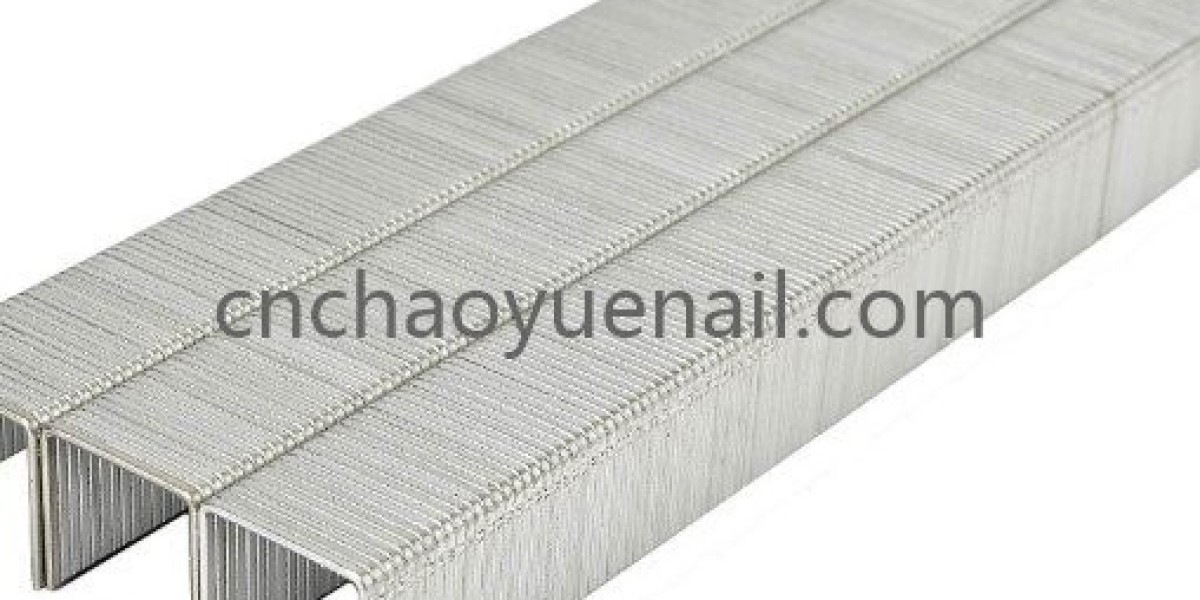

Precision fastening depends on consistency at every stage of manufacturing. In applications where clean installation and controlled material use are important, Fine Wire Staples can provide a practical fastening option for furniture, upholstery, packaging, crafts, and light industrial assembly. Their quality is influenced by steel selection, wire preparation, forming technology, surface treatment, inspection, and compatibility with installation equipment.
Steel wire provides the foundation for many staple products because it combines useful strength with the ability to undergo mechanical forming. For fine-wire applications, stable raw material characteristics are particularly important. Differences in composition, surface cleanliness, or internal structure may influence feeding and forming behavior. Manufacturers therefore need appropriate incoming material controls before the wire enters continuous production.
Wire drawing helps prepare the material for subsequent manufacturing operations. A controlled drawing process can establish a consistent wire profile while supporting stable mechanical behavior. The condition of drawing equipment and tooling also matters because excessive wear or unsuitable processing conditions can influence surface quality. Maintaining consistent preparation helps create a more predictable starting point for staple forming.
Straightening and feeding are equally important. Automated staple machines depend on smooth material movement through cutting and forming stations. If the wire does not enter the equipment consistently, finished products may show variation in alignment or shape. Proper straightening, controlled feeding, and equipment maintenance help manufacturers maintain stable production conditions and reduce avoidable interruptions.
Modern forming equipment can integrate feeding, cutting, bending, and shaping into a continuous manufacturing sequence. Automation improves repeatability by reducing unnecessary manual handling and keeping operating conditions more consistent. It also allows production lines to support large-volume orders while maintaining standardized processes across different manufacturing batches.
Tooling condition has a direct influence on finished staple geometry. Forming tools repeatedly experience mechanical stress and can gradually wear during production. Changes in tool condition may affect the crown, legs, or overall alignment of the finished product. Preventive maintenance and scheduled tooling inspection allow manufacturers to identify potential deviations before they develop into broader production problems.
Surface engineering provides additional protection for steel products. During storage and transportation, staples may encounter humidity, condensation, or changing temperatures. An appropriate surface treatment can help reduce corrosion-related deterioration and maintain the condition of the finished product. Treatment selection should be connected to the intended application and expected environmental conditions.
Fastening-tool compatibility is another important consideration. Professional users may operate pneumatic, electric, or automated stapling equipment. Consistent geometry supports predictable feeding and installation, while excessive variation can increase the possibility of interruptions. Manufacturers therefore need to consider not only the physical appearance of a staple but also how it interacts with the tool and substrate during actual use.
Different industries place different priorities on staple performance. Upholstery and furniture production may emphasize clean installation and stable attachment. Packaging operations may prioritize feeding efficiency and reliable closure. Craft and light assembly applications can place additional emphasis on handling and surface appearance. Understanding these conditions helps buyers evaluate material and manufacturing characteristics more effectively.
Quality control should be integrated throughout the production process. Incoming wire inspection, process monitoring, dimensional checks, surface evaluation, and final inspection each provide useful information. Automated vision systems can identify visible inconsistencies during continuous manufacturing, while quality personnel can analyze production data and investigate recurring deviations.
Packaging and logistics also influence product quality after manufacturing. Proper packaging can protect steel staples from moisture, dust, and physical impact during transportation. Batch identification supports traceability and inventory management, which is especially useful for international B2B distribution. Maintaining product condition throughout the supply chain helps ensure that manufacturing quality is preserved until final use.
Manufacturing efficiency can also reduce unnecessary material consumption. Accurate wire feeding, optimized forming, and early defect detection help limit scrap and reprocessing. Preventive equipment maintenance can further reduce downtime and repeated adjustments. These practices allow manufacturers to improve production stability while using steel and other resources more efficiently.
The consistency of Fine Wire Staples ultimately depends on the interaction of material quality, wire preparation, forming accuracy, tooling management, surface engineering, inspection, and packaging. For professional buyers, reviewing these factors together provides a more complete understanding of product suitability. Companies seeking additional information about steel fastening products can visit https://www.cnchaoyuenail.com/product for further product references.