
Large-Scale Vanadium Flow System technology is gaining attention as energy developers look for practical ways to store electricity for longer periods. Unlike short duration applications that focus mainly on rapid power delivery, long duration projects require careful consideration of capacity, operating cycles, renewable generation patterns, and site requirements. Storage projects with discharge periods of 10 hours or more are receiving increasing attention as grids incorporate more renewable generation and seek greater flexibility.
One important feature of this technology is the separation between power output and stored energy capacity. Power is largely determined by the number and configuration of electrochemical stacks, while energy capacity can be adjusted through the amount of electrolyte and related storage equipment. This design approach gives project developers more flexibility when planning different discharge durations.
For renewable energy projects, this flexibility can be useful because electricity generation does not always match consumption. Solar generation, for example, can produce substantial electricity during daylight hours while demand may continue after sunset. A properly configured storage installation can absorb available electricity during periods of production and release it later when the site requires additional power. This approach can support renewable integration without requiring generation and consumption to occur at exactly the same time.
Another consideration is repeated cycling. Long duration projects may operate regularly rather than only during emergency events. Vanadium redox technology is being studied for applications where frequent charging and discharging are required over extended operating periods. This makes cycle planning an important part of project design, especially when customers expect the equipment to participate in daily energy management.
For commercial and industrial users, stored electricity can support several operational strategies. Electricity can be retained when renewable generation is available and used later according to the facility load profile. The equipment may also support peak demand management, backup requirements, and renewable output smoothing. The appropriate configuration depends on the facility, local electricity structure, expected operating schedule, and required discharge duration.
Project planning should begin with actual operating requirements rather than simply selecting a nominal capacity. Buyers should consider expected daily energy consumption, required discharge time, charging opportunities, available installation area, environmental conditions, maintenance access, and future expansion plans. These factors can influence the selection of stacks, electrolyte volume, power conversion equipment, control equipment, tanks, piping, and supporting components.
Manufacturing quality also matters during project development. Electrochemical equipment contains many interconnected components, so consistency in assembly, sealing, fluid management, electrical connections, and monitoring can affect practical operation. A manufacturer with integrated production capabilities can coordinate different components during customization and system integration. This can also make communication easier when customers require specific power ratings, capacity configurations, or installation arrangements.
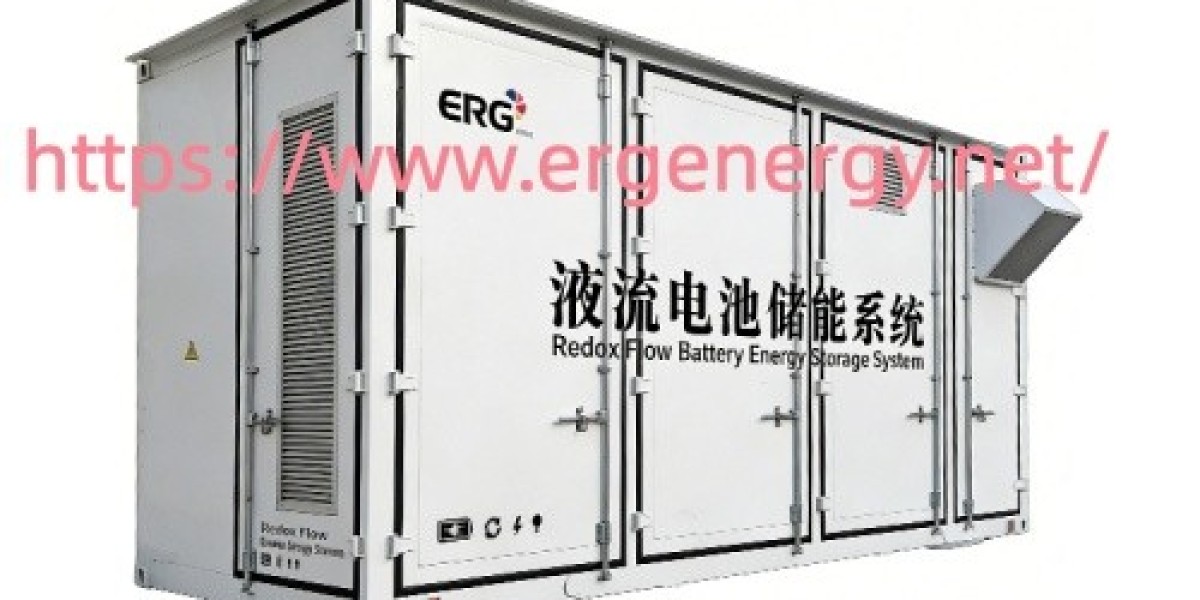
ERG focuses on flow battery stacks, battery energy storage equipment, electrolyte related products, and supporting components for different energy storage applications. Its product range includes storage configurations and stack products designed for integration into larger projects. These products can be considered for applications such as renewable energy output smoothing, load balancing, peak management, and backup power.
For buyers, another practical issue is future expansion. Energy requirements can change as renewable generation capacity increases, industrial loads grow, or electricity management strategies develop. A modular architecture can provide a pathway for adding equipment when project conditions justify additional capacity. However, expansion planning should be considered from the beginning because space, electrical infrastructure, piping, controls, and safety requirements may affect future installation work.
Long duration storage is becoming increasingly relevant as grids incorporate more variable renewable generation and facilities seek greater control over when electricity is used. For project developers, this creates a need to evaluate equipment according to actual operating conditions instead of relying on a single specification.
The right solution should therefore be based on measurable requirements. Capacity, duration, cycling pattern, site conditions, integration requirements, maintenance planning, and expansion possibilities all deserve attention before equipment is selected. Customers looking for configurable products and manufacturing support can visit https://www.ergenergy.net/ to review ERG energy storage products and related components for different project requirements.