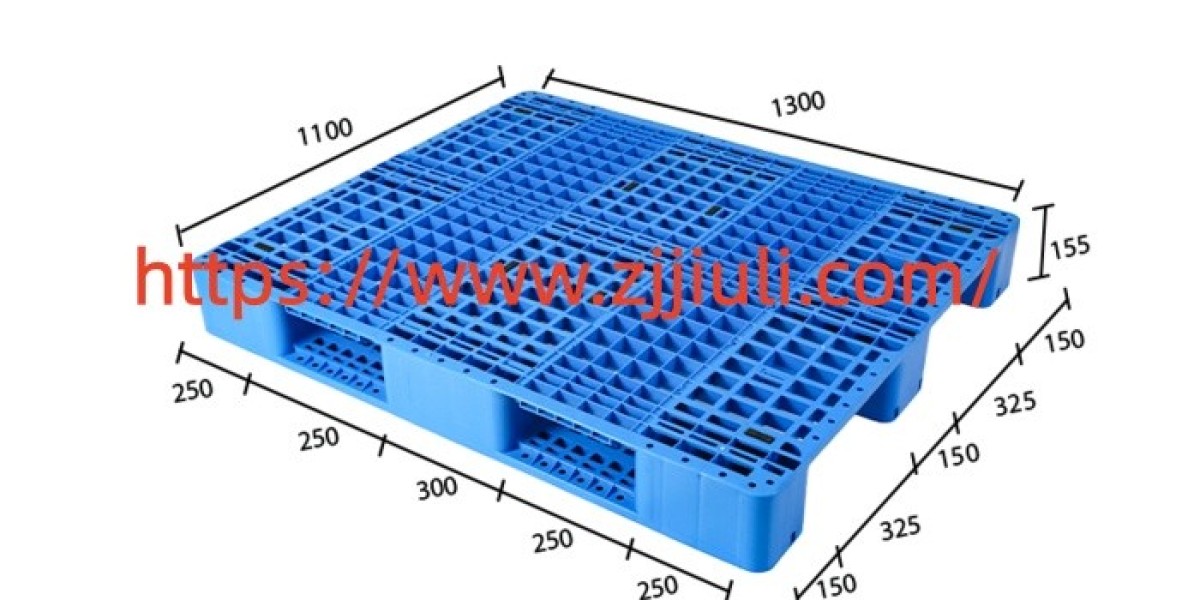

Industrial Plastic Pallets serve as essential platforms in material handling where the ability to support weight safely guides every decision about warehouse layout and transport planning. Several elements decide how much weight these units can carry without deformation or failure. Material composition stands as the foundation. High density polyethylene or polypropylene resins provide the base strength while additives improve resistance to impact and temperature shifts. Thicker walls and denser formulations increase the safe working load yet still allow the units to remain light enough for efficient manual or forklift movement.
Structural design plays an equally important role. Internal rib patterns distribute force across the surface so that concentrated pressure from heavy boxes or drums does not create weak points. A well arranged grid of supports under the deck transfers weight evenly to the feet or runners. Some designs use a solid top deck for small items while others feature open grids that reduce overall mass and permit drainage. The choice between nestable and stackable configurations further influences capacity because nested units save space when empty yet stacked units must maintain stability under successive layers of cargo.
Foot and runner geometry also affects performance. Nine foot designs offer balanced support for racking systems while three runner versions suit certain conveyor lines. The contact area with the floor or rack beam determines how the total weight spreads and whether point loading becomes a concern. Larger contact surfaces generally improve stability on uneven floors and reduce the chance of tipping when loads shift during movement.
Environmental conditions introduce additional variables. Cold storage environments can make some resins more brittle so capacity ratings must account for lower temperatures. High heat areas may soften the material and lower the safe limit. Exposure to chemicals or ultraviolet light over time can gradually reduce strength therefore regular inspection remains necessary. Dynamic loads created by forklift acceleration or sudden stops place greater stress than static storage so operators often apply a safety margin when calculating maximum weights for transit.
Size and overall dimensions interact with all previous factors. Longer or wider platforms may span multiple rack beams yet they can flex more under heavy center loads unless reinforced. Height of the unit influences stacking limits because taller stacks raise the center of gravity. Matching the platform dimensions to standard pallet racking or truck trailer widths ensures the rated capacity remains usable in real operations rather than theoretical only.
Manufacturing quality controls the consistency of these factors. Uniform wall thickness across every unit prevents unexpected weak spots. Precise molding of ribs and feet guarantees that each piece performs within the stated range. Zhiguangplastic applies careful process monitoring so that capacity ratings stay reliable from batch to batch. Teams that select units with verified load data can plan inventory levels and transport schedules with fewer interruptions.
Operators gain practical benefit by reviewing both static and dynamic ratings before purchase. Static capacity covers long term storage on racks while dynamic capacity covers movement by forklift or conveyor. Many facilities apply a conservative approach by keeping actual weights well below the published maximum. This practice extends service life and reduces the frequency of replacement. Regular visual checks for cracks or excessive deflection help identify units that no longer meet original capacity levels.
In mixed cargo environments the heaviest items should sit centered and lower in the stack. Uneven distribution concentrates force on limited areas and can exceed local strength even when total weight stays within limits. Training warehouse staff on proper loading techniques therefore becomes part of capacity management. Clear labeling of rated weights on each unit further supports safe daily decisions.
When facilities expand or change product lines the existing fleet may need reassessment. New heavier packages or different packaging formats can push previous selections beyond comfortable limits. In such cases evaluating fresh options that match the updated weight profile keeps operations smooth. Zhiguangplastic offers a range of sizes and reinforcement levels so that buyers can align platforms with current requirements without excess cost.
Selecting platforms based on measured factors rather than general assumptions protects both cargo and equipment. Material choice structural layout environmental adaptation and manufacturing consistency together create predictable performance. Facilities that review these elements carefully experience fewer handling delays and maintain steady throughput.
Teams seeking detailed specifications and available configurations can review current options at https://www.zjjiuli.com/product/ to match units with their exact weight and handling needs.







