
Introduction
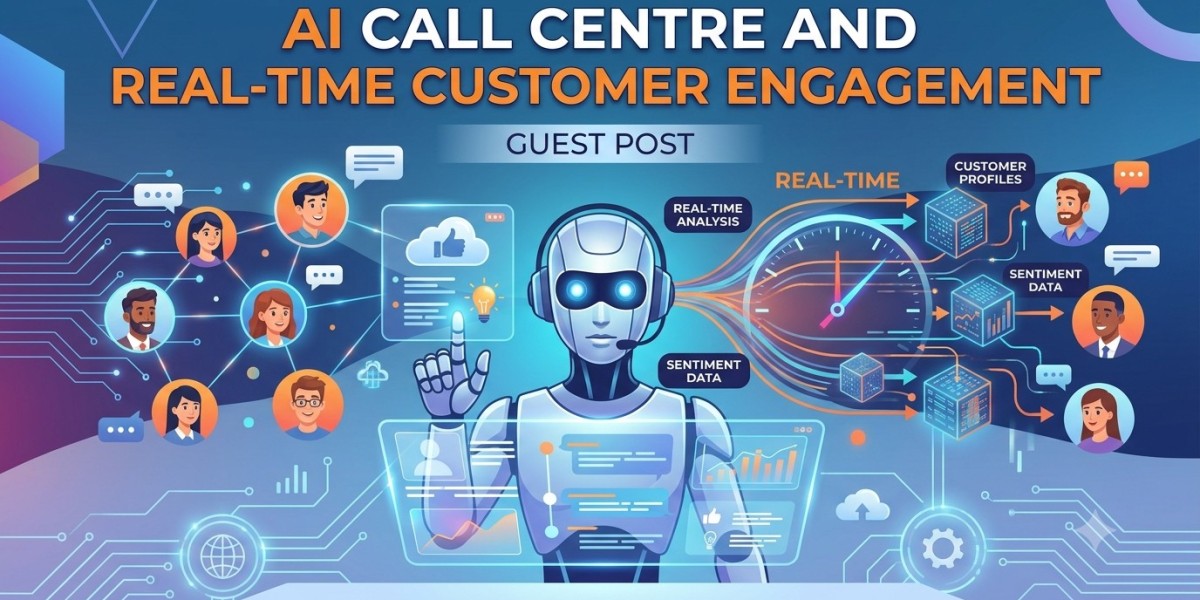
The AI Call Centre has emerged as a transformative solution, enabling businesses to engage customers in real time with speed, intelligence, and context. By combining conversational AI, automation, and live analytics, AI-powered call centres turn every interaction into an opportunity for meaningful engagement and long-term value.
The Evolution of Customer Engagement in Call Centres
Traditional Engagement Models and Their Limitations
Traditional call centre engagement models are largely reactive. Calls are routed through static IVR menus, handled by agents following predefined scripts, and analyzed only after interactions are completed. While this approach worked in the past, it struggles to meet modern expectations.
Common challenges include long wait times, limited personalization, inconsistent service quality, and a lack of real-time visibility into customer sentiment or intent. Agents often lack immediate access to relevant information, leading to longer calls and repeated explanations. These inefficiencies negatively impact both customer satisfaction and operational performance.
The Shift to AI-Driven, Real-Time Engagement
AI-driven call centres represent a fundamental shift from reactive support to proactive, real-time engagement. Instead of waiting for calls to end before analyzing data, AI systems interpret conversations as they happen. This enables instant decision-making, adaptive responses, and intelligent routing.
Understanding the AI Call Centre
Defining Real-Time AI-Powered Engagement
An AI call centre is a voice-based engagement platform powered by artificial intelligence technologies such as speech recognition, natural language processing, and machine learning. Its defining feature is the ability to analyze and act on conversations in real time.
Real-time AI-powered engagement means understanding customer intent as they speak, detecting emotional cues instantly, and delivering appropriate responses or actions without delay. This creates interactions that feel natural, intelligent, and highly responsive.
Key Features and Capabilities
Key capabilities of an AI call centre include conversational AI, live speech analytics, sentiment detection, intelligent automation, and real-time agent assistance. Together, these features enable faster resolutions, consistent service quality, and actionable insights from every interaction.
Conversational AI and Voice Intelligence
Natural Language Processing and Speech Recognition
Speech recognition converts spoken language into text with high accuracy, even across accents, dialects, and speaking styles. Natural Language Processing (NLP) then interprets meaning, intent, and context from that text.
This combination allows AI systems to understand natural speech rather than relying on rigid commands. Customers can explain their needs in their own words, creating smoother and more intuitive voice interactions.
Intent Detection and Context Awareness
Intent detection identifies what the customer is trying to accomplish, while context awareness considers previous interactions, account details, and conversation flow. These capabilities ensure that responses are accurate, relevant, and timely.
Real-Time Customer Engagement Technologies
Live Call Analysis and Decision Making
Live call analysis is at the core of real-time customer engagement. AI systems continuously analyze conversations to detect keywords, intent shifts, and compliance indicators. This enables instant decision-making, such as adjusting responses, routing calls, or escalating issues.
Real-time analysis ensures that actions are taken during the conversation—not after it—resulting in faster resolutions and better outcomes.
Sentiment Analysis and Emotion Detection
Sentiment analysis evaluates tone, language, and speech patterns to assess customer emotions such as frustration, confusion, or satisfaction. Emotion detection adds an additional layer of intelligence by identifying stress or urgency in real time.
Intelligent Automation in Real-Time Interactions
Automating High-Volume Customer Conversations
Business customers make phone calls to complete their work which requires them to check account balances and schedule appointments and track order status. Intelligent automation allows AI systems to provide instant customer service while delivering accurate responses to all customer questions.
The automation of high-volume interactions enables businesses to operate more efficiently because the system provides continuous customer service during peak times which reduces customer wait times and decreases business operation costs.
AI Receptionists and Virtual Call Assistants
AI receptionists serve as the initial points of contact for reception operations to manage all incoming calls through their customer interaction assessment system. Virtual call assistants conduct complete customer conversations while they help agents gather vital details which agents use to show upcoming essential tasks.
Smart Call Routing and Self-Service
Smart routing uses AI Phone Call current information to handle incoming phone calls by directing them according to the caller's intended use and their emergency status while using existing customer data about the caller. Self-service systems equipped with conversational AI technology enable customers to solve their problems through natural everyday voice communication.
Personalized and Context-Aware Customer Experiences
Real-Time Personalization
AI call centers use real-time personalization to adjust their communication methods according to customer history and current customer requirements. The system identifies customers through identification which leads to quick recognition while providing an efficient process for matching customers with their needs.
Proactive and Predictive Customer Engagement
AI technology empowers businesses to establish customer relationships before problems arise through its ability to help them understand customer needs. The prediction model process identifies customer behavior patterns which result in customer support requests needed for proactive service delivery.
Empowering Agents with Real-Time AI Support
AI Call Assistants and Live Agent Guidance
AI call assistants deliver direct support to agents who manage active phone conversations. The system provides users with pertinent information while it recommends possible answers and determines which actions to follow after finishing the current dialogue.
The guidance functions help workers concentrate better on their tasks because they decrease mental workload while delivering higher accuracy rates which enable agents to fulfill their job responsibilities.
Human–AI Collaboration in Customer Engagement
AI call centers need human workers who will team up with AI systems to produce successful operational outcomes. The artificial intelligence systems conduct data analysis while they process operational assignments to provide users who need immediate information with operational data.
Business Impact of Real-Time AI Call Centres
Improved Efficiency and Faster Resolution
Real-time AI engagement improves operational efficiency for organizations that implement this technology. The combination of instant routing with automated systems and live agent support helps reduce customer service delays which leads to better first contact resolution rates.
Enhanced Customer Satisfaction and Loyalty
AI call centers provide customers with fast personalized service which includes emotional understanding which leads to increased customer satisfaction and loyalty. Customers who receive positive service will develop trust which will result in repeated purchases and improved brand recognition.
Future Trends in Real-Time AI Call Centres
Generative AI and Autonomous Engagement
Generative AI will enable flexible conversations that allow AI systems to handle complete customer journeys from start to finish. The system maintains its capability to produce natural speech behavior that does not involve dialogue while adjusting to the particular needs of each customer.
Omnichannel Integration and Intelligent Ecosystems
Omnichannel integration represents the upcoming approach to real-time engagement. Intelligent ecosystems will provide users with a continuous experience across all digital platforms.
Conclusion
AI call centers empower organizations to create instant customer interactions through their automated systems which operate together with their customized customer support services. The organizations produce valuable results through voice interactions by using their conversational AI systems together with live analytics and human-AI collaboration to engage their customers.