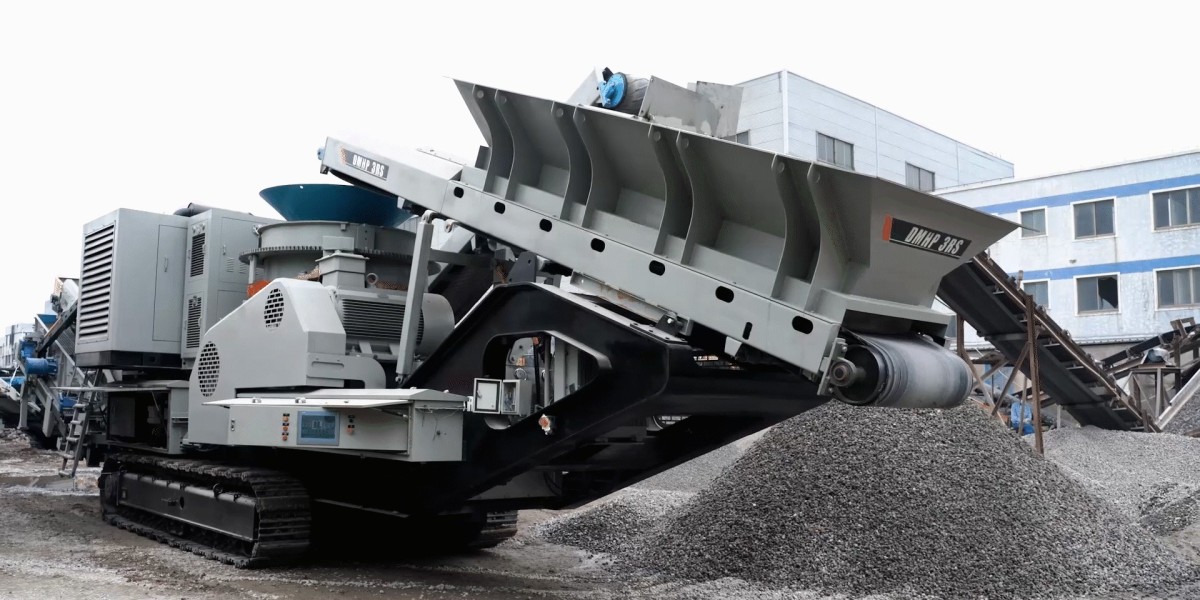

Across quarrying, construction, mining, and aggregate production, a Stone Crushing Machine provides an essential mechanical stage for reducing naturally occurring rock into material suitable for subsequent processing or end use. Effective stone processing involves much more than applying force to a large piece of rock. Material properties, crushing principles, equipment structure, wear resistance, feeding conditions, safety management, and maintenance planning all influence the stability and efficiency of an industrial crushing operation.
The first consideration is usually the nature of the material. Natural stone can vary significantly in hardness, abrasiveness, density, moisture, and fracture characteristics. Limestone may behave differently from granite, basalt, sandstone, or other geological materials when exposed to mechanical forces. These differences affect the selection of crushing principles and the configuration of the overall processing line. Understanding the feed material allows engineers to create a more appropriate relationship between the equipment and the intended application.
Mechanical design determines how effectively crushing forces are transmitted through the system. Structural frames, shafts, bearings, crushing chambers, wear components, and fastening systems must operate together under repeated loading. During continuous production, equipment can experience vibration, impact, cyclic stress, and thermal changes. Engineering therefore needs to consider both normal operating conditions and unexpected variations in feed. Structural stability and proper component alignment are important for maintaining consistent mechanical behavior over time.
Material science plays an equally important role in the durability of components that directly contact the feed. Crushing environments can expose liners, impact surfaces, plates, and other wear parts to repeated abrasion and mechanical stress. A suitable material needs an appropriate balance of hardness and toughness. Excessive hardness without adequate toughness may not be suitable for applications involving strong impact, while insufficient hardness may result in faster wear. Component selection should therefore be based on the actual material characteristics and operating environment.
Feeding consistency is another important factor. Uneven distribution can create localized loading and may influence the stability of the crushing process. Large pieces mixed with unsuitable foreign objects can also increase mechanical stress. Proper upstream preparation, screening, or sorting can help create a more controlled feed stream. When material enters the crushing chamber at a relatively stable rate and composition, the complete production line can operate under more predictable conditions.
Many industrial applications require more than one processing stage. A typical material flow may include primary reduction, secondary processing, screening, conveying, and stockpiling. Each stage needs to complement the others. If crushing capacity and screening capacity are poorly balanced, material can accumulate at certain points or require unnecessary recirculation. Process engineers therefore need to evaluate the complete flow of material instead of considering the crushing equipment as an isolated machine.
Safety should remain central throughout equipment installation and operation. Crushing systems include moving components and can generate noise, dust, vibration, and falling material. Appropriate guards can help restrict access to hazardous mechanical areas, while emergency stopping arrangements provide an important layer of protection during abnormal situations. Operators should understand operating procedures, safe access routes, and emergency responses. Maintenance personnel should isolate relevant energy sources before inspection or repair and verify that equipment cannot start unexpectedly.
Dust control is also important in stone processing environments. Dry rock can produce airborne particles during feeding, crushing, screening, and conveying. Depending on local conditions and regulatory requirements, operations may use water suppression, extraction, enclosure, ventilation, or other suitable control methods. Maintaining clean working areas can further improve visibility and make equipment inspection easier. Environmental management should also consider material storage, transportation, water consumption, and the potential reuse of processed materials.
Maintenance planning can significantly affect the reliability of a processing system. Instead of waiting for visible failure, operators can establish routine inspection schedules for wear parts, bearings, lubrication systems, fasteners, structural components, and safety devices. Changes in vibration, temperature, unusual sounds, or material flow may indicate developing problems. Recording inspection and service information creates a useful history that can support more informed decisions about component replacement and maintenance intervals.
Modern monitoring technologies can complement traditional maintenance practices. Sensors and control systems may provide information about operating conditions, equipment health, vibration, temperature, or material flow. This information can help technical teams recognize deviations from normal operation and investigate potential issues earlier. Digital monitoring is most effective when combined with physical inspection and experienced engineering judgment rather than treated as a complete substitute for hands-on maintenance.
Resource efficiency is becoming increasingly important across the aggregate industry. Effective crushing and screening can help reduce unnecessary material movement and improve the utilization of extracted resources. Suitable construction and demolition materials may also be processed for recycling, depending on their composition and intended application. Thoughtful process planning can therefore contribute to more efficient material cycles while reducing unnecessary handling and supporting responsible resource management.
When selecting a Stone Crushing Machine, buyers should evaluate the entire processing environment rather than focusing on one operational factor. Material characteristics, equipment design, wear resistance, feed conditions, maintenance access, safety systems, environmental requirements, and the relationship between crushing and screening stages all deserve consideration. Organizations developing stationary processing solutions can also review the equipment information available at https://www.dmcrushers.com/product/stationary-crusher/ when planning a suitable long-term aggregate production system.