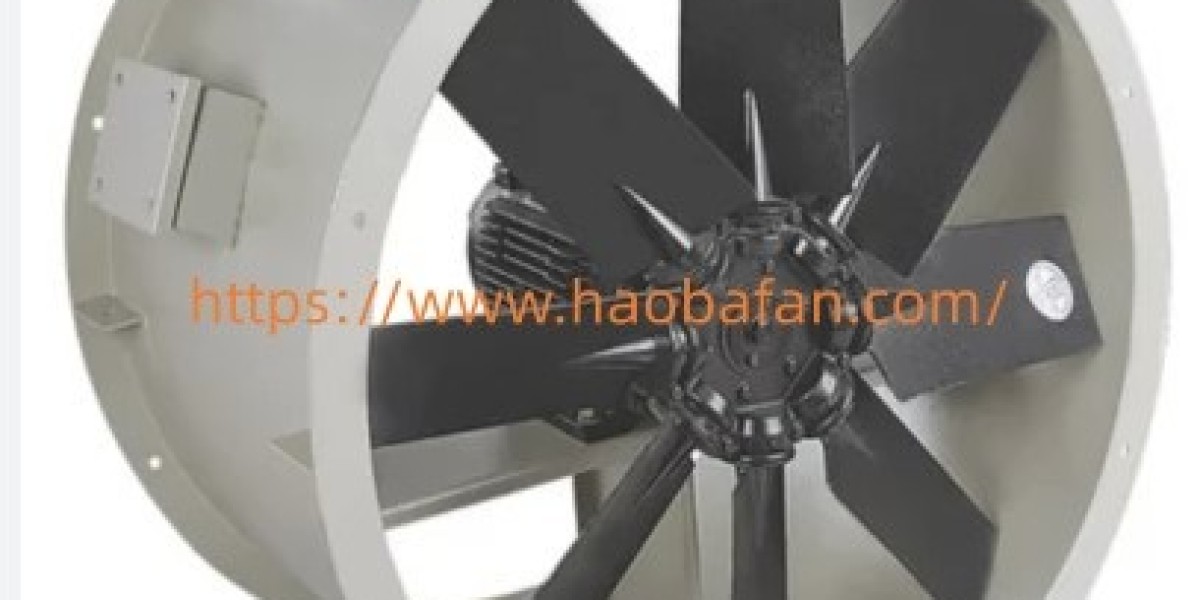

Modern ventilation equipment increasingly emphasizes compact construction, efficient component integration, and reliable mechanical operation, making an External Rotor Fan an interesting solution for applications where the motor and rotating assembly need to work within a space-conscious design. Unlike conventional arrangements where the motor is positioned separately from the impeller, an external rotor configuration integrates the rotor into the rotating structure, creating a compact arrangement that can support practical equipment layouts.
The external rotor concept changes the relationship between the motor and fan assembly. Instead of relying on a conventional motor body connected to an external shaft arrangement, the rotating motor component can form part of the fan structure. This arrangement allows manufacturers to develop equipment with a relatively compact profile while maintaining direct coordination between motor operation and airflow generation.
Motor integration requires careful engineering because electrical and mechanical components operate together within a relatively concentrated assembly. The rotor, stator, bearings, impeller, housing, and supporting structures need to maintain appropriate alignment. Manufacturing accuracy is therefore important for achieving stable rotation and reducing unnecessary mechanical movement during operation.
The impeller is responsible for generating the primary airflow, so its geometry and balance remain fundamental to fan performance. Blade shape, blade positioning, material consistency, and assembly accuracy can all affect how air moves through the equipment. An unbalanced impeller may produce vibration that can influence bearings, mounting structures, and surrounding ventilation components.
Material selection should reflect the intended operating environment. Structural components need sufficient strength to maintain stability while remaining practical for forming and assembly. Metal materials are commonly considered for industrial fan construction because they can provide a combination of rigidity and manufacturability. Surface treatment may also be relevant when equipment is exposed to moisture, dust, or changing environmental conditions.
The housing performs several functions at the same time. It protects internal components, provides structural support, and establishes the airflow path around the rotating assembly. Accurate housing fabrication helps maintain the intended relationship between the impeller and surrounding surfaces. This is particularly important where compact construction leaves limited space for correcting dimensional inconsistencies during installation.
Heat management is another consideration in motor-integrated equipment. Electrical components naturally generate heat during operation, while the surrounding ventilation process can influence heat transfer. Appropriate structural design and airflow around the motor assembly can contribute to more controlled thermal conditions. Engineers should consider the installation environment and expected operating pattern when assessing the overall design.
Noise and vibration are closely connected with rotating equipment. Mechanical imbalance, bearing conditions, motor operation, mounting instability, and airflow turbulence can all contribute to unwanted sound. Accurate balancing and secure installation can help control mechanical vibration, while suitable blade and housing design can contribute to smoother airflow.
External rotor technology can be applied across different ventilation environments. Equipment rooms may require compact air movement solutions where available installation space is limited. Commercial buildings can use integrated fan assemblies within air-handling equipment, while industrial machinery may incorporate compact ventilation components for localized cooling or circulation.
Maintenance planning should not be overlooked simply because the equipment has an integrated construction. Bearings, electrical connections, impeller surfaces, mounting points, and protective structures may still require periodic inspection. Dust accumulation can influence both airflow and rotating balance, especially in manufacturing or workshop environments. Accessible construction can make routine inspection and cleaning more practical.
Manufacturing consistency is especially important when producing an External Rotor Fan because multiple components must operate as one integrated assembly. A capable manufacturer should control rotor and stator assembly, impeller forming, balancing, housing fabrication, bearing installation, electrical integration, and finished-unit inspection. Consistent production methods help reduce variation between units and support more predictable installation results.
For distributors and engineering buyers, supplier selection should involve more than reviewing general product descriptions. Buyers should consider manufacturing experience, component quality, assembly processes, communication, technical documentation, and maintenance support. Understanding how the motor and impeller are integrated can help determine whether a particular design is suitable for the intended ventilation system.
Installation conditions also influence the final operating result. Mounting stability, airflow direction, inlet conditions, surrounding clearance, electrical connection, and duct arrangement can all affect performance. Even well-manufactured equipment should be integrated into a ventilation system according to the requirements of the actual application.
Safety should remain part of the complete design and installation process. Rotating components should have appropriate protection where required, electrical connections should follow applicable practices, and the equipment should be securely mounted. Maintenance personnel should also have safe access to areas requiring inspection or service.
For B2B projects, the advantages of compact motor integration are most useful when they correspond with actual system requirements. Rather than selecting equipment based solely on its structural concept, engineers should evaluate airflow needs, installation limitations, environmental conditions, maintenance expectations, and system compatibility together.
Taizhou Haoba Electromechanical Co Ltd. develops ventilation and air movement equipment for industrial and commercial applications, with attention to integrated mechanical construction and practical airflow requirements. Buyers evaluating related ventilation technologies can explore https://www.haobafan.com/product/mixed-flow-fan/ when reviewing solutions for different air movement systems.