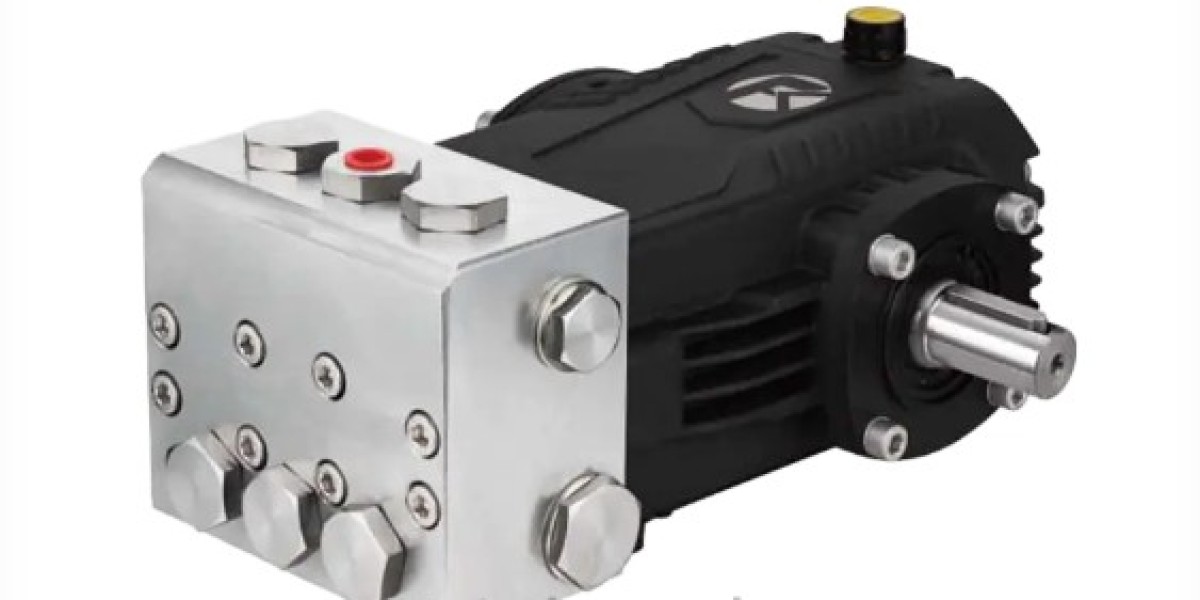

Reliable pressure generation is an important requirement in many industrial fluid-handling processes, especially when equipment must operate continuously under demanding conditions. A Feike High Pressure Pump can be incorporated into systems that require controlled fluid movement, stable pressure management, and carefully coordinated mechanical operation. Its suitability for an application depends on more than pressure generation itself, because materials, valves, seals, machining accuracy, safety measures, and system integration all influence long-term equipment performance.
The reciprocating principle used in many industrial pressure systems converts mechanical movement into fluid displacement. During each operating cycle, the pumping element changes the pressure inside the chamber, allowing fluid to enter through the inlet side and leave through the discharge side. When multiple pumping elements are coordinated, their individual cycles can contribute to a more continuous delivery pattern. This approach can be useful in industrial cleaning, water treatment, process equipment, surface preparation, and manufacturing systems where controlled fluid movement is required.
Material selection is one of the first technical considerations when developing industrial pumping equipment. Fluid characteristics can vary significantly between applications. Water, cleaning agents, chemical solutions, and process liquids may expose internal components to different levels of corrosion or mechanical stress. Stainless steel and corrosion-resistant alloys may be suitable for certain environments, while specialized surface treatments can provide additional protection in areas affected by repeated mechanical contact. The material decision should always be based on the actual fluid and operating environment.
Precision machining is equally important because reciprocating components move repeatedly through closely controlled areas. The dimensions and surface condition of plungers, cylinders, valve seats, and related components can affect friction, sealing, and mechanical stability. Consistent manufacturing processes help ensure that individual components interact correctly. Surface finishing may also reduce unnecessary friction and support more predictable movement over repeated operating cycles.
Valve design directly affects the fluid path. Inlet and discharge valves must open and close according to changes in chamber pressure, allowing the intended direction of fluid movement while limiting reverse flow. Valve seating surfaces can experience repeated mechanical contact, making material durability and dimensional accuracy important. Contamination can also influence valve performance, so filtration and suitable maintenance procedures may be necessary in some applications.
Sealing technology has a similar role. Seals must contain the fluid while allowing reciprocating components to move with controlled friction. Their selection depends on chemical compatibility, temperature, pressure conditions, surface characteristics, and operating frequency. A sealing system that is appropriate for one industrial fluid may not be suitable for another. Maintenance accessibility should also be considered because seals are wear components that may require periodic inspection or replacement.
Safety needs to be addressed at the system level. Pressurized fluid can create significant mechanical and operational hazards when connections or control components are unsuitable. Industrial installations should therefore consider pressure monitoring, relief arrangements, correctly selected fittings, protective components, and emergency shutdown procedures. Maintenance personnel should isolate and depressurize the system before working on relevant components. Routine inspections can help identify leakage, unusual vibration, abnormal noise, or other signs of deterioration.
Automation is becoming increasingly important in industrial fluid management. Sensors can monitor operating conditions such as pressure, temperature, vibration, and flow, while controllers can coordinate pump operation with valves and other production equipment. This allows fluid delivery to be adjusted according to changing process requirements. Monitoring information can also support preventive maintenance by giving engineering teams a clearer understanding of how equipment behaves during actual operation.
System integration should be considered before equipment is installed. Piping arrangements, inlet conditions, filtration, valves, fluid characteristics, and downstream restrictions can all influence how pumping equipment operates. Even a well-manufactured pump may perform poorly if the surrounding system creates unsuitable operating conditions. A complete engineering review can therefore help identify potential restrictions and ensure that the pump is appropriately matched to the process.
Maintenance planning is another factor that influences long-term equipment management. Regular inspection of valves, seals, fittings, lubrication areas, and moving components can help detect wear before it develops into a larger problem. Cleaning procedures should also be compatible with the materials being used. Maintenance records can provide useful information about recurring wear patterns and help determine practical service intervals.
When evaluating a Feike High Pressure Pump, industrial users should consider the entire application rather than focusing only on pressure capability. Fluid compatibility, material construction, machining precision, valve design, sealing performance, safety provisions, automation compatibility, and maintenance accessibility all contribute to equipment suitability. A detailed evaluation can help ensure that the selected equipment corresponds with actual process conditions.
For manufacturers, engineering companies, and industrial distributors, working with an experienced pump supplier can simplify the process of matching mechanical design with application requirements. Different industries may require different combinations of materials, pumping structures, sealing arrangements, and control methods. Companies seeking additional information about FEIKE pumping equipment can explore the available product range at https://www.triplex-plungerpump.com/product/pumps/ when evaluating solutions for industrial pressure and fluid-transfer applications.