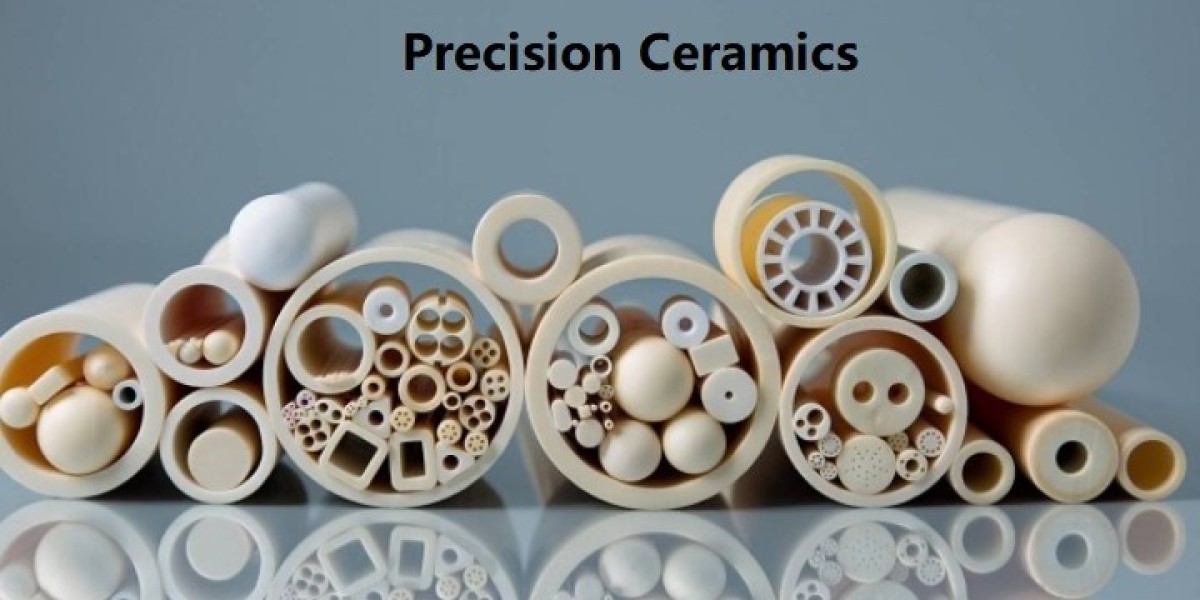

When industrial equipment requires stable positioning, electrical insulation, or resistance to heat and wear, Ceramic Rods can offer a dependable material choice. Compared with conventional metal components, Ceramic Rods can provide a useful combination of hardness, chemical stability, thermal performance, and insulation for specialized equipment. With flexible material options and precision processing capabilities, zfcera develops ceramic structural components around different dimensions, surface requirements, and operating conditions. This makes them suitable for equipment designers looking beyond standard mechanical parts and seeking a more application-focused solution.
Material Selection For Different Environments
The material should be selected according to the actual working conditions of the component. Alumina is a practical option for applications that require high hardness, electrical insulation, chemical stability, and resistance to elevated temperatures. It is often considered for industrial supports, insulating structures, and precision equipment.
Zirconia provides a different performance balance, with strong wear resistance, toughness, and chemical stability. This makes it useful for applications involving repeated movement or mechanical contact. Silicon nitride and silicon carbide can also be considered when thermal shock resistance, high-temperature performance, corrosion resistance, or demanding wear conditions become important.
Choosing the material according to the application helps engineers achieve a better balance between performance, manufacturing requirements, and overall equipment design.
Zfcera For Customized Structural Components
Standard cylindrical designs are only one possibility. Depending on the equipment, ceramic components can be produced with different diameters, lengths, edge treatments, surface finishes, or special geometries. Customized shapes can make integration easier when available installation space is limited or when a component must connect with other precision parts.
Chamfered designs are one example of how geometry can improve practical use. Carefully designed edges can help reduce stress concentration and make assembly more convenient. Special-shaped components can also reduce the amount of secondary processing required after forming, which may be useful for equipment manufacturers developing non-standard machinery.
For projects with specific drawings or technical requirements, customized production provides greater freedom than relying entirely on standard dimensions.
Precision Finishing Makes A Difference
Ceramic components often need more than basic forming accuracy. Diameter, straightness, surface roughness, concentricity, and dimensional consistency can all influence how a part performs after installation. These factors become especially important when the component is used for positioning, guiding, transmission, or repeated movement.
After molding and sintering, precision processes such as centerless grinding, surface grinding, honing, and CNC machining can be used to improve dimensional accuracy and surface quality. Careful finishing can help create smoother contact surfaces and more consistent component dimensions.
For precision machinery, even relatively small dimensional variations may affect assembly or movement. A controlled finishing process therefore plays an important role in turning a ceramic blank into a functional industrial component.
Applications Beyond Conventional Machinery
These components can be used in many fields where ordinary materials may struggle with heat, corrosion, electrical conductivity, or continuous wear. Industrial machinery may use them as supports, guide elements, shafts, insulation structures, or wear-resistant parts.
They can also be found in semiconductor equipment, photovoltaic machinery, electronic systems, automation equipment, laboratory instruments, medical applications, laser technology, and precision manufacturing. High-purity alumina can be useful where insulation and thermal stability are required, while zirconia can be considered for mechanical applications involving wear and repeated contact.
The broad range of material choices allows engineers to match the component more closely with the environment instead of using the same material for every project.
Designing Around Real Application Needs
A successful ceramic component starts with a clear understanding of how it will work inside the finished equipment. Important factors can include operating temperature, mechanical load, friction, chemical exposure, electrical requirements, dimensions, tolerances, and installation conditions.
For customized projects, providing detailed drawings or application information can help determine the appropriate material and manufacturing process. Prototype and small-batch production can also be useful when testing a new equipment design before moving toward larger quantities.
By combining suitable ceramic materials with controlled forming, sintering, and precision finishing, manufacturers can create components that fit specific equipment requirements rather than forcing a machine to adapt to a standard part. To explore ceramic structural components and customized manufacturing capabilities, visit https://www.zfcera.com/ .