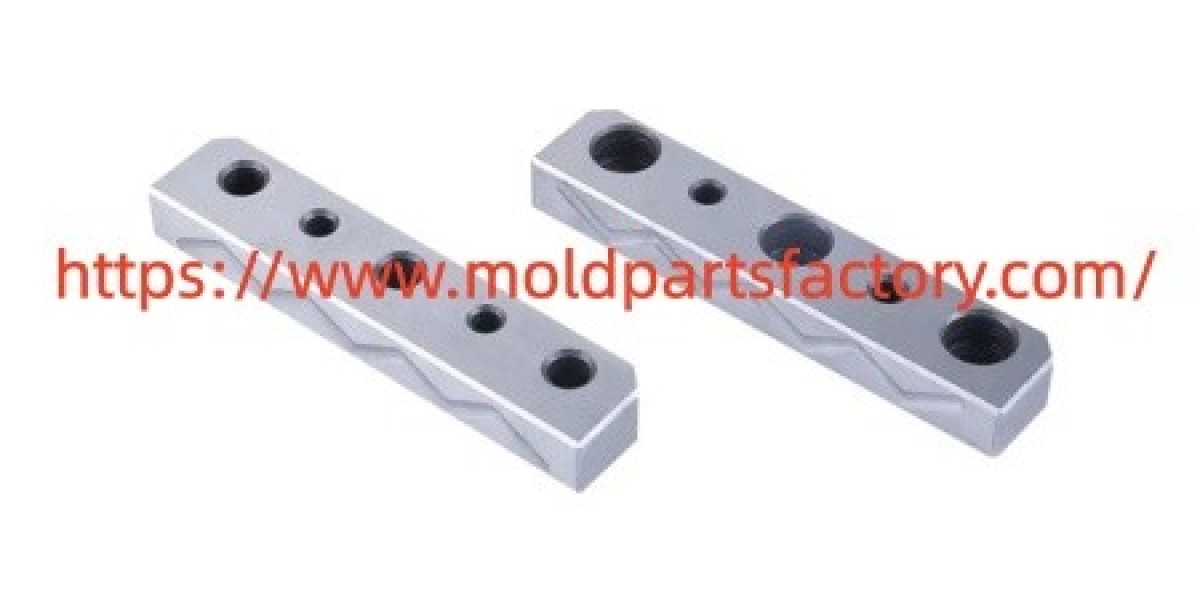

Mold Pressing Strip functions as an interface element that transfers clamp force evenly across mating surfaces in tooling assemblies. When this unit is fitted with correct height flatness and alignment the contact faces remain closed under load and the path for material escape is minimized.
Uneven load distribution creates localized gaps at the parting interface. Material under high pressure seeks the path of least resistance and flows into those gaps forming thin unwanted edges on the finished item. A properly seated unit eliminates most of those gaps by presenting a continuous rigid plane that matches the opposing surface.
Height control is critical. If the unit sits too low the mating faces do not meet fully when the clamp closes. If it sits too high it can cause over compression and deflection of surrounding plates. Measurement of the installed height against the design specification confirms that the unit reaches the required plane without excess or shortage.
Flatness of both the unit and the mounting pocket must stay within tight tolerance. Any warp or high spot concentrates force in one area while leaving adjacent zones under loaded. Precision grinding of the contact face and careful cleaning of the pocket remove particles or residual marks that would otherwise disturb the plane.
Alignment in the horizontal plane also matters. Lateral shift of the unit leaves an open channel along one edge. Locating features or carefully controlled fastener positions keep the unit centered so that its full length remains in contact.
Material choice supports long term consistency. A hardened alloy with uniform hardness through the cross section resists surface change under repeated loading and thermal cycling. Soft spots or uneven hardness allow local deformation that reopens gaps after a number of cycles.
Fastener torque must be applied evenly. Over tightening one end lifts the opposite end and recreates the gap that the unit is meant to close. Sequential tightening in a balanced pattern distributes residual stress and keeps the unit flat against its seat.
Surface preparation before installation removes oil scale or machining marks that reduce contact area. A clean dry interface allows the full face of the unit to bear against the opposing plane and improves the seal under pressure.
Thermal expansion of the surrounding structure can alter clearances during the cycle. A unit with matching thermal characteristics expands and contracts in step with the adjacent plates and maintains contact through the temperature range of the process.
Inspection after installation and at planned intervals verifies that contact remains continuous. A thin feeler gauge or pressure sensitive film can reveal any remaining open zones so that adjustment can be made before production resumes.
When these geometric material and installation factors are observed the interface element keeps the parting faces closed and the volume of escaped material stays low. Production teams therefore spend less time on secondary trimming and scrap rates decline.
Operators looking for components that support clean parting line conditions can review available sizes and material options at https://www.moldpartsfactory.com/product/ to match their specific tooling requirements.