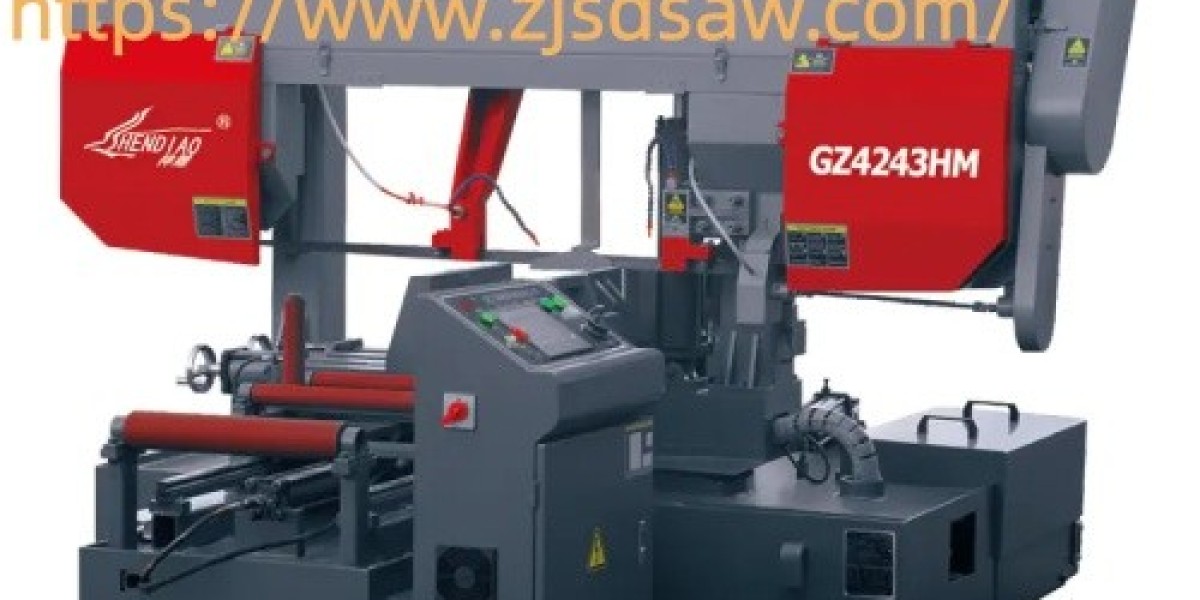

Fully Automatic Angle Cutting Band Saw Machine technology can change the way metal fabrication teams organize recurring cutting work. Instead of treating measuring, positioning, clamping, angle setting, and cutting as separate manual activities, an automated system can connect several stages into one coordinated process. This can be useful when a workshop regularly prepares structural sections, profiles, bars, tubes, or other components that require repeatable angled cuts. Chendiao develops sawing equipment around practical production requirements, including automated feeding, programmable control, and angle processing functions.
One of the clearest workflow changes comes from material positioning. In a conventional setup, an operator may need to measure each workpiece, move it into position, check the required length, and prepare it for the next cut. When the same operation is repeated throughout a shift, these small tasks can consume considerable working time.
An automated arrangement can reduce the number of repeated manual actions. Material can be positioned according to programmed requirements, while the cutting sequence follows predefined settings. This gives operators more time to monitor the process, prepare incoming material, organize finished components, and respond to other production needs.
Angle adjustment is another important part of fabrication work. Many components need mitre cuts because they will later be welded, assembled, or joined with another section. If each angle has to be set manually, changing between different jobs can interrupt the production rhythm.
A programmable angle cutting system provides a different approach. The required setting can be entered before processing begins, allowing the equipment to coordinate the cutting operation with the selected production parameters. Chendiao product information indicates that its angle cutting equipment is designed around automated feeding, cutting, and angle adjustment functions.
This can be particularly useful when a fabrication order contains multiple pieces with similar dimensions. Rather than repeatedly rebuilding the setup, operators can establish the necessary parameters and allow the machine to repeat the sequence. The practical benefit is not simply about cutting speed. It is also about making the production process easier to organize.
Material handling deserves equal attention. Long metal sections can be difficult to reposition manually, especially when several pieces are required. A suitable feeding and support arrangement can help maintain a clear path from incoming stock to finished components. The machine should therefore be considered as part of the wider workshop layout rather than as an isolated piece of equipment.
Buyers should also consider how different machine structures match their production requirements. A Double Column Horizontal Band Saw Machine may be suitable for applications involving larger workpieces and a stable horizontal cutting arrangement. The actual choice should depend on material dimensions, required angles, production volume, available floor space, and the intended operating method.
Blade management is another factor that affects the workflow. Different materials and cross sections can place different demands on the cutting process. Operators should have access to appropriate blade settings, tension control, speed adjustment, coolant delivery, and routine inspection points. Keeping these areas accessible can make everyday maintenance easier and help reduce unnecessary interruptions.
Control systems can also influence how quickly a workshop adapts to changing orders. Digital interfaces and programmable controllers allow operators to manage cutting parameters through a structured process. Chendiao lists programmable control and linear positioning functions among the features available on relevant equipment, giving users options for managing recurring production tasks.
Another advantage of a coordinated workflow is easier planning. When material feeding, positioning, and cutting follow a defined sequence, production teams can estimate work requirements more clearly. Finished pieces can move directly toward welding, assembly, machining, or storage instead of accumulating around the cutting area.
However, automation should be selected according to actual needs. A workshop handling occasional custom work may require a different configuration from a factory processing repeated batches every day. Buyers should consider typical material sizes, cutting angles, order frequency, available operators, power requirements, maintenance access, and future production plans before making a decision.
Chendiao has developed a range of metal sawing equipment for different industrial applications, including CNC, automatic, horizontal, vertical, and customized configurations. Its product range gives fabricators an opportunity to compare machine structures and functions according to their own working conditions.
For a fabrication business, improving workflow does not always mean adding more equipment to every stage. Sometimes the meaningful change comes from connecting repetitive operations more logically. When feeding, positioning, angle adjustment, clamping, and cutting work together, operators can spend less time repeating routine preparation and more time managing the overall production process. Businesses considering different configurations can review Chendiao products and available equipment options at https://www.zjsdsaw.com/product/ as part of their purchasing research.