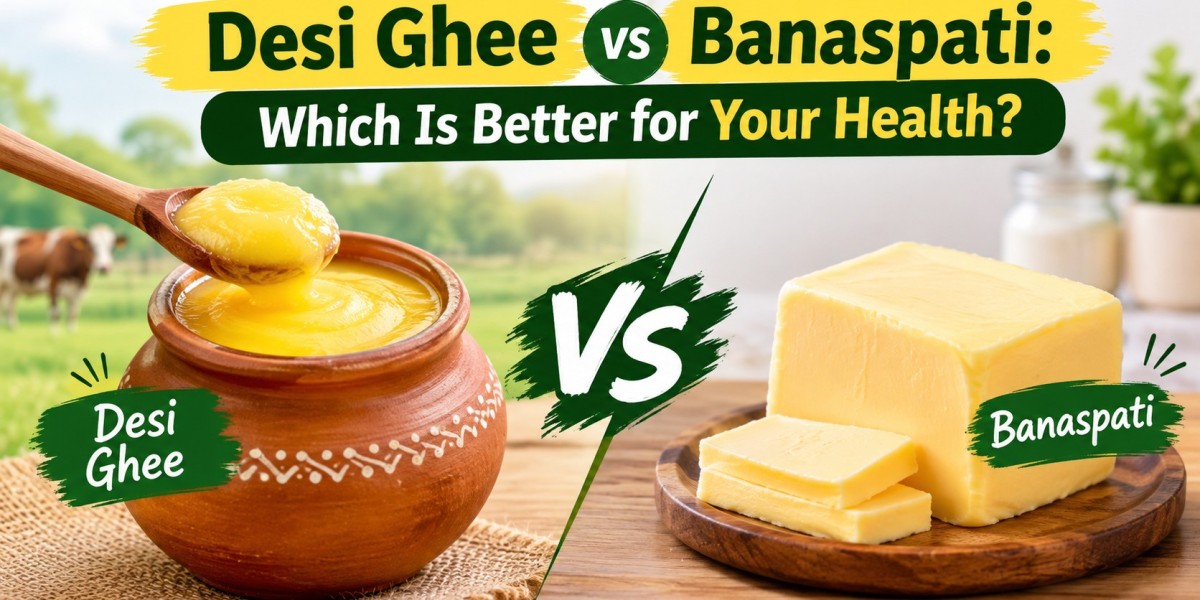

Desi ghee and banaspati are two commonly used cooking fats in Pakistani households. From preparing traditional halwa and parathas to cooking curries, biryani, and everyday meals, both ingredients have an important place in Pakistani cuisine. However, when it comes to health, nutrition, taste, and cooking performance, there are some major differences between them.
Many people believe that desi ghee is always healthy because it is natural, while others choose banaspati because it is affordable and convenient. But which one is actually better? Understanding their nutritional composition, benefits, and potential health risks can help you make a better choice for your daily diet.
In this guide, we will explore desi ghee vs banaspati, compare their nutritional values, and explain which cooking fat is a better option for your family.
1. What Is Desi Ghee?
Desi ghee is a traditional clarified butter made by heating butter or cream to remove water and milk solids. The result is a golden-yellow cooking fat with a rich aroma and distinctive flavour.
It has been used in South Asian cooking for generations and is especially popular in Pakistan and India. Desi ghee is commonly added to daal, roti, paratha, pulao, halwa, and traditional desserts.
Desi ghee contains several important nutrients, including:
Fat-soluble vitamins A, E, and K in varying amounts.
Saturated fatty acids.
Monounsaturated fatty acids.
Small amounts of other naturally occurring fatty acids.
Because most milk solids are removed during preparation, properly made ghee contains very little lactose and milk protein. However, it may not be completely free of them.
2. What Is Banaspati?
Banaspati, commonly known as vanaspati ghee, is a vegetable-based fat traditionally produced by processing vegetable oils to create a semi-solid texture similar to traditional ghee.
It is widely used in commercial food preparation, bakeries, restaurants, and households because of its relatively low cost, long shelf life, and suitability for frying.
Traditional vanaspati production often involved partial hydrogenation, a process that can produce harmful industrial trans fats.
Although many manufacturers now use alternative production methods, the nutritional composition depends on the oils and processing techniques used.
Banaspati may contain:
Saturated fats.
Monounsaturated fats.
Polyunsaturated fats.
Industrial trans fats in products made using partial hydrogenation.
Always check the ingredient list and nutrition label before purchasing.
3. Desi Ghee vs Banaspati: Nutritional Comparison
Understanding the nutritional differences is essential when choosing between these two cooking fats.
| Nutritional Factor | Desi Ghee | Banaspati |
|---|---|---|
| Source | Milk fat | Vegetable oils |
| Texture | Smooth and buttery | Semi-solid |
| Saturated fat | High | Varies |
| Trans fat | Naturally occurring trace amounts | May contain industrial trans fat |
| Vitamins | Small amounts of A, E and K | Depends on fortification |
| Flavour | Rich and aromatic | Generally mild |
| Lactose | Very little | None naturally |
| Shelf life | Good when stored properly | Generally long |
Both products are calorie-dense fats, providing approximately 9 calories per gram. Neither should be consumed in unlimited quantities.
4. Health Benefits of Desi Ghee
Desi ghee can be part of a balanced diet when consumed in moderation. Here are some potential benefits.
A. Provides Energy
Desi ghee is a concentrated source of energy. Its fat content provides calories that the body uses for various functions, including energy production and nutrient absorption.
B. Contains Fat-Soluble Vitamins
Desi ghee contains small amounts of vitamins A, E, and K. These nutrients support different body functions, including vision, immune function, and normal blood clotting.
The exact amounts depend on the milk source and production process.
C. Enhances Food Flavour
One of the biggest reasons people prefer desi ghee is its rich aroma and taste. A small quantity can improve the flavour of traditional Pakistani dishes, including daal, khichdi, halwa, and roti.
D. Supports Nutrient Absorption
Dietary fats help the body absorb fat-soluble vitamins A, D, E, and K from food. Including a moderate amount of healthy dietary fat in meals can support this process.
However, ghee itself is not a significant source of vitamin D.
5. Health Risks of Banaspati
Although banaspati is affordable and convenient, its nutritional composition deserves attention.
A. Potential Trans Fat Content
The biggest concern with traditional banaspati is industrial trans fat.
Industrial trans fats increase LDL (bad) cholesterol and reduce HDL (good) cholesterol. They are also associated with a higher risk of cardiovascular disease.
Products made using partial hydrogenation can contain these harmful fats.
B. High Saturated Fat Content
Some banaspati products contain considerable amounts of saturated fat. Excessive saturated fat consumption can increase LDL cholesterol, potentially raising the risk of heart disease.
C. Highly Processed Production
Banaspati undergoes industrial processing to achieve its desired texture, stability, and shelf life.
Processing alone does not automatically make a food unhealthy, but the type of oils and fats used during manufacturing matters.
For this reason, checking the product's nutritional information is important.
6. Which Is Better for Heart Health?
When comparing desi ghee vs banaspati, the type of fat matters more than simply whether it comes from an animal or plant source.
Traditional partially hydrogenated banaspati containing industrial trans fats is particularly concerning for heart health.
Desi ghee does not typically contain industrial trans fats, but it is high in saturated fat. Eating too much can also negatively affect LDL cholesterol levels.
For everyday heart-conscious cooking, liquid unsaturated vegetable oils, such as olive, canola, and sunflower oil, are generally better choices than regularly relying on large quantities of ghee or banaspati.
The best approach is to limit saturated fats and avoid industrial trans fats.
7. Desi Ghee vs Banaspati for Cooking
Both fats are used in Pakistani cooking, but their flavour and performance differ.
Desi Ghee:
Ideal for parathas and traditional rotis.
Adds flavour to halwa and other desserts.
Suitable for preparing many traditional curries.
Provides a rich aroma to pulao and khichdi.
Banaspati:
Commonly used in commercial bakeries.
Frequently used in biscuits and other baked products.
Provides a semi-solid texture to certain traditional sweets.
Often selected for its affordability and storage convenience.
For everyday cooking, you can also use liquid vegetable oils instead of relying on either product.
8. How Much Desi Ghee Should You Consume?
There is no single recommended daily quantity that suits everyone. Your ideal fat intake depends on your age, activity level, overall diet, and health conditions.
Here are some practical tips:
Use small quantities of desi ghee for flavour rather than making it your primary cooking fat.
Avoid combining large amounts of ghee with other high-fat ingredients.
Limit fried foods and commercially prepared bakery products.
Include nuts, seeds, fish, and other sources of unsaturated fats in your diet.
If you have high cholesterol or heart disease, discuss your saturated fat intake with a healthcare professional.
Remember that even natural fats should be consumed in moderation.
9. Tips for Choosing Quality Desi Ghee
If you prefer desi ghee, choosing a good-quality product is important.
Check the ingredients: Look for products made from milk fat or butter.
Check the label: Review the nutritional information and expiry date.
Look for proper packaging: Choose sealed containers from reliable manufacturers.
Check the aroma: Good-quality ghee generally has a pleasant, characteristic buttery smell.
Store correctly: Keep it in a clean, dry, airtight container away from direct sunlight and moisture.
Avoid products with unclear ingredients or misleading health claims.
Final Thoughts
When comparing desi ghee vs banaspati, desi ghee is generally the preferable choice over traditional partially hydrogenated banaspati, particularly because of concerns about industrial trans fats.
However, desi ghee is not a completely risk-free or unlimited-use health food. Its high saturated fat content means moderation is essential.
For a healthier everyday cooking routine, consider using unsaturated vegetable oils as your primary cooking fats. Keep desi ghee for occasional traditional dishes and avoid banaspati products containing partially hydrogenated oils.
Ultimately, a balanced diet, sensible portion sizes, and the quality of ingredients matter more than choosing a single cooking fat.
Make informed food choices, enjoy traditional flavours in moderation, and focus on building healthier eating habits for long-term well-being.




