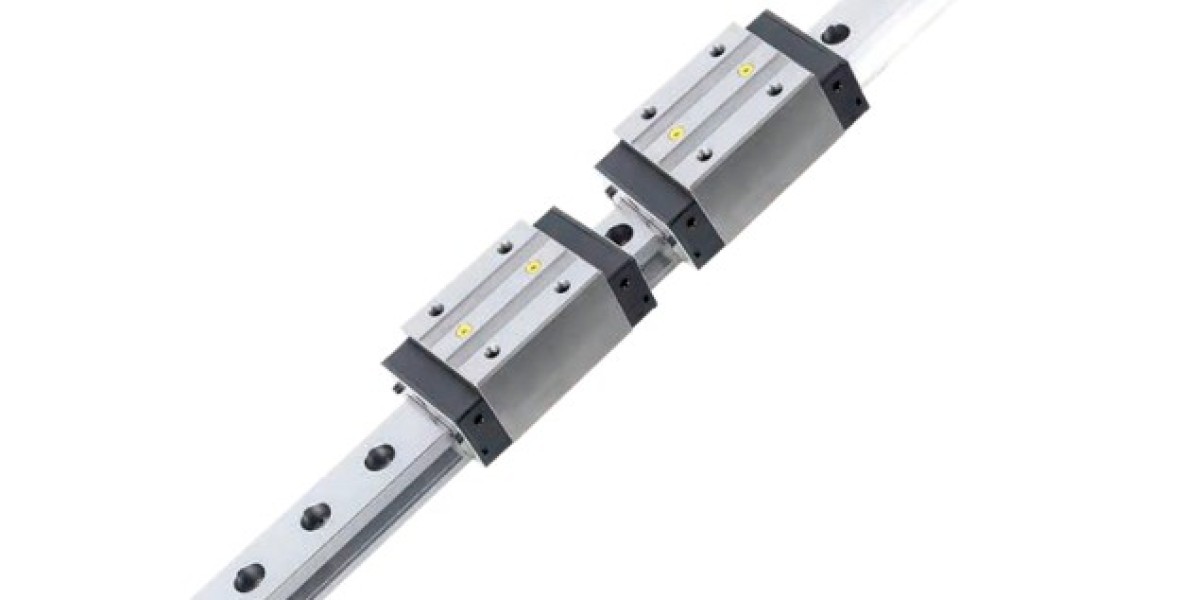

A reliable motion transmission system depends on accurate positioning, stable movement, and effective load distribution. In industrial automation and CNC equipment, the Double Nut DFU Series Ball Screw provides a practical solution for applications requiring controlled linear motion. When engineers evaluate a Double Nut DFU Series Ball Screw, they often consider preload adjustment, operational stability, installation requirements, and compatibility with the complete mechanical assembly. Its double-nut structure helps reduce axial clearance and supports consistent positioning performance, making it suitable for machinery that requires repeatable movement and dependable transmission.
Understanding the Double Nut Structure
A double-nut ball screw uses two nuts assembled on a single screw shaft. This configuration allows preload to be introduced between the nuts, helping reduce axial backlash during operation. Compared with conventional single-nut arrangements, the double-nut structure offers additional flexibility for controlling movement accuracy.
The preload mechanism is particularly useful in equipment where frequent direction changes occur. By minimizing clearance between the rolling elements and raceways, the assembly helps maintain stable contact during forward and reverse movements. This design can support smoother positioning and improve the consistency of mechanical operations.
Key Design Features for Industrial Applications
Ball screw performance depends on several interconnected components, including the screw shaft, ball circulation system, nut assembly, and supporting bearings. Each component contributes to transmission efficiency and mechanical stability.
The DFU configuration is designed for applications where controlled axial movement is important. Its double-nut arrangement helps engineers address backlash requirements while considering the load conditions and operating characteristics of their equipment.
Material selection, machining quality, surface treatment, and lubrication also influence service performance. Proper coordination of these factors helps maintain smooth rolling contact and reduces unnecessary friction during repeated movement cycles.
Selecting the Right Specifications for Your Equipment
Choosing a suitable ball screw requires more than comparing external dimensions. Engineers should first identify the equipment's positioning requirements, expected axial load, operating speed, and available installation space.
Lead selection determines how far the nut travels during each screw revolution. A suitable lead should match the required movement speed and positioning characteristics. Screw diameter and shaft length also need to correspond with the machine structure and supporting components.
Preload requirements deserve particular attention. A suitable preload can help reduce backlash, but excessive preload may increase friction and operating temperature. Therefore, the selection process should balance positioning needs, mechanical resistance, and expected operating conditions.
Wangong Ball Screw Solutions for Machinery Integration
When integrating a ball screw into an automated machine, compatibility with the surrounding transmission system is essential. Mounting dimensions, bearing arrangements, coupling connections, and lubrication methods should be considered during equipment design.
Wangong provides ball screw product options for industrial motion transmission applications. Engineers can evaluate the DFU double-nut configuration according to their machine requirements, including shaft dimensions, nut specifications, and operating conditions.
Clear technical communication between equipment manufacturers and suppliers can also simplify product selection. Sharing drawings, load requirements, and installation details helps identify suitable specifications before production and assembly begin.
Maintenance Practices for Consistent Operation
Regular maintenance helps preserve the operating condition of a double-nut ball screw. Lubrication should follow the requirements of the selected product and the working environment. Insufficient lubrication may increase friction, while unsuitable lubricants can affect rolling contact and component protection.
Operators should periodically inspect the screw shaft, nut assembly, seals, and mounting connections. Dust, metal particles, and other contaminants should be prevented from entering the rolling system. Unusual noise, vibration, or changes in positioning accuracy may indicate that inspection or maintenance is necessary.
A suitable installation environment and consistent maintenance schedule can help reduce avoidable wear and support stable machine operation. For more information about ball screw products and industrial motion transmission solutions, visit https://www.wangong.net/ to explore available options and discuss your application requirements.