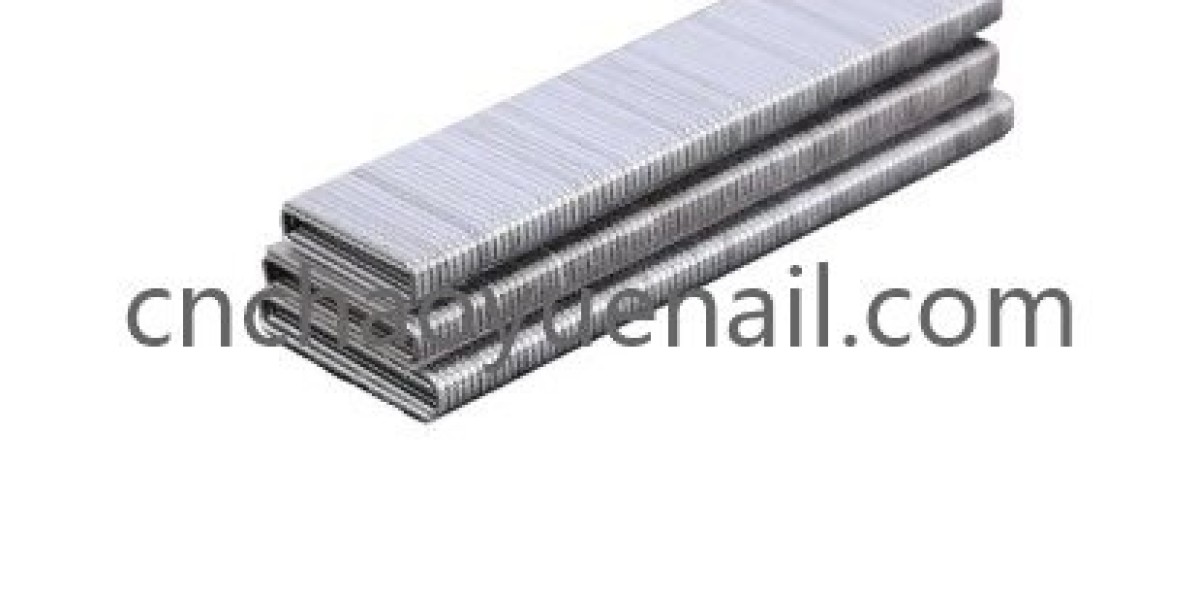

The quality of finished staples begins with the consistency of the wire used during manufacturing. Staple Wire Band is an important material category for producers of industrial staples, upholstery fasteners, packaging fasteners, and other wire-formed products. Its suitability depends on material properties, surface condition, dimensional consistency, and processing behavior. For staple manufacturers and industrial purchasing teams, selecting appropriate wire materials helps improve production stability and maintain consistent finished-product quality.
Material composition is one of the first factors to evaluate. Steel wire should provide mechanical properties suitable for the intended staple design and manufacturing process. Variations in material characteristics may affect drawing, straightening, cutting, and bending operations. Manufacturers should establish clear raw material requirements and inspect incoming supplies before production. Consistent material quality helps reduce processing problems and supports repeatable results across different manufacturing batches.
Surface condition is equally important. Rust, contamination, scratches, and other imperfections may interfere with wire processing or affect the appearance of finished fasteners. Appropriate storage and handling procedures help protect the material before it enters the production line. Suppliers should maintain suitable packaging and transportation arrangements to reduce exposure to moisture and physical damage. Incoming inspections can then verify that the material meets the buyer's established requirements.
Wire processing involves several stages that must work together. Drawing operations help achieve the required wire profile, while straightening equipment improves alignment for automated feeding. Lubrication may be used to reduce friction and support smooth movement through production machinery. Depending on the intended staple design, the wire may then be cut and formed into crowns and legs. Stable material properties help manufacturers maintain consistent forming behavior and reduce the need for frequent machine adjustments.
Processing compatibility should be considered when selecting wire for different staple production systems. The material needs to perform consistently with the drawing equipment, feeding mechanisms, cutting tools, and forming dies used by the manufacturer. Inconsistent wire behavior may lead to feeding interruptions, uneven cutting, or irregular staple geometry. Buyers should communicate their production requirements and equipment conditions to suppliers so that material selection can be evaluated according to the intended manufacturing process.
Quality control should begin with incoming inspection and continue throughout wire processing. Material checks may include evaluation of surface condition, dimensional consistency, and relevant mechanical properties. During production, operators can monitor feeding stability, forming behavior, and the condition of processing equipment. Finished staples can then be inspected for shape consistency, surface appearance, and other customer-defined characteristics. Maintaining batch records supports traceability and helps manufacturers identify the source of problems if processing variation occurs.
Packaging plays an important role in preserving wire quality. Appropriate coils, reels, or other agreed packaging formats help maintain material organization and support efficient handling. Protective wrapping can reduce contamination and moisture exposure during storage and transportation. Labels should identify material types, batch details, and relevant product information. Consistent packaging also helps production teams manage inventory and organize material movement between warehouses and manufacturing lines.
Reliable supply management is important for staple manufacturers that operate continuous or high-volume production lines. Material availability, delivery coordination, and batch consistency all influence production planning. Suppliers should communicate clearly about order requirements, packaging arrangements, and delivery schedules. Maintaining traceable batches can help buyers coordinate incoming inspections and identify material differences before they affect large production runs.
Responsible material management can also improve manufacturing efficiency. Accurate wire handling helps reduce unnecessary scrap, while recoverable steel waste can be separated for appropriate recycling. Proper storage reduces the likelihood of material damage, and preventive maintenance of processing equipment helps minimize rejected output. These practices support better resource utilization while maintaining production consistency.
For staple manufacturers, distributors, and industrial buyers, Staple Wire Band should be evaluated through material composition, surface condition, dimensional consistency, processing compatibility, and packaging quality. Providing information about the intended staple type, production equipment, and material requirements helps suppliers recommend suitable wire options. To explore available fastening materials and manufacturing products, visit https://www.cnchaoyuenail.com/product for further information.