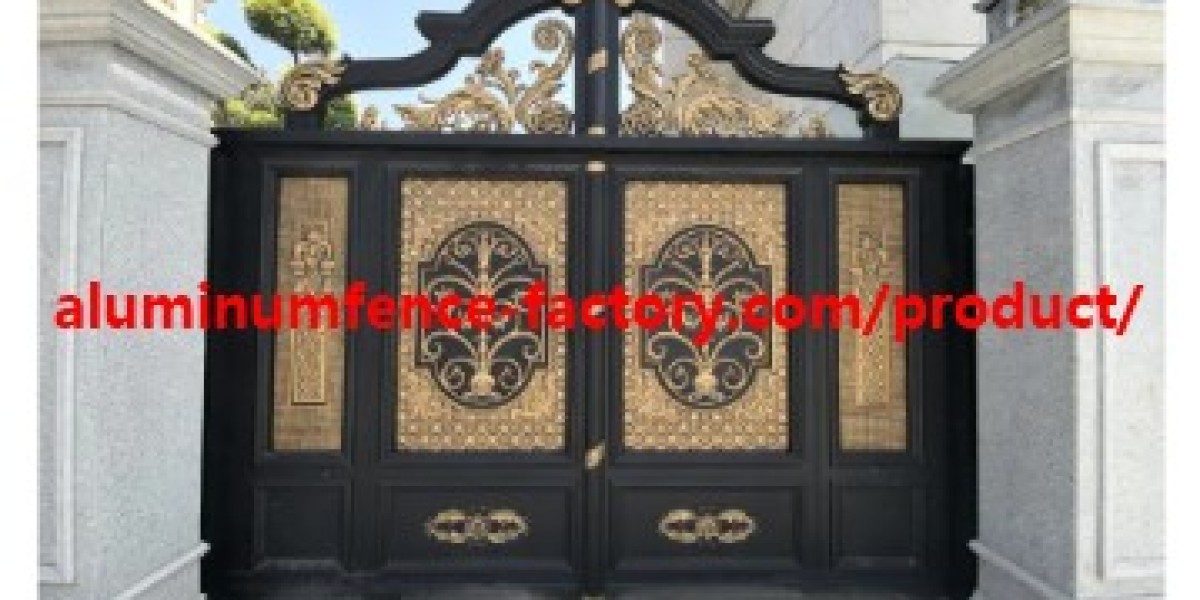

An entrance can communicate the character of a property long before visitors reach the front door. Beyond establishing a boundary, decorative metalwork introduces visual interest and creates a connection between architecture, landscaping, and personal taste. A Carved Gate offers an opportunity to combine artistic details with practical entrance functions, making it suitable for private residences, landscaped courtyards, villas, and selected commercial properties. Its appeal lies in the relationship between craftsmanship and structural design, where decorative patterns become part of the overall appearance rather than simply being added as surface decoration.
Material selection plays an important role in determining how decorative gate designs are produced and maintained. Aluminum alloy is a popular option for outdoor metalwork because it combines relatively lightweight construction with resistance to rust and environmental exposure. Its adaptability allows manufacturers to create different frame arrangements, ornamental panels, and distinctive decorative elements. This flexibility is particularly useful when a project requires visual details that coordinate with an existing architectural style. Surface coatings further influence the finished appearance by providing different colors, textures, and protective finishes.
The supporting construction deserves equal attention. A decorative gate needs a suitable frame to hold its ornamental components in place and maintain a consistent overall structure. Hinges, fasteners, connection points, and locking accessories also contribute to its practical performance. When these elements are carefully coordinated with the main material, the finished product can achieve a balance between decorative complexity and everyday usability. Buyers should therefore consider the quality of the complete construction instead of evaluating a gate only by its visible patterns.
Choosing an appropriate design begins with understanding the property's architectural character. A traditional residence may benefit from flowing lines, symmetrical ornaments, or nature-inspired motifs, while a contemporary building may look better with geometric patterns and restrained decorative details. The surrounding landscape also deserves consideration. Gates positioned near stone pathways, garden walls, wooden elements, or planted areas should complement these features rather than create visual competition. Reviewing the property's existing colors, exterior materials, and entrance arrangement can help buyers select a design that feels naturally integrated.
Purchasing decisions should also reflect the intended application. A private courtyard entrance may place greater emphasis on appearance and privacy, whereas a shared residential entrance may require convenient access and compatibility with an existing boundary system. Buyers should consider whether the gate will serve pedestrians, vehicles, or both, and examine the available opening space before selecting a suitable arrangement. Swing and sliding structures offer different installation possibilities, so the choice should reflect ground conditions, surrounding obstacles, and everyday movement patterns. Discussing these requirements with a manufacturer can help prevent design mismatches during installation.
Manufacturing techniques determine how decorative concepts are translated into finished metal products. The process may involve material cutting, shaping, forming, welding, component assembly, grinding, and surface treatment. Decorative sections require particular attention because the relationship between individual patterns influences the visual continuity of the entire panel. Consistent fabrication helps maintain balanced arrangements, while careful finishing reduces uneven edges and unwanted surface marks. For aluminum products, suitable processing methods also help manufacturers preserve the intended appearance of the material throughout production.
Technology supports both structural performance and decorative quality. Computer-assisted design can help manufacturers develop detailed patterns and review how different elements fit together before fabrication begins. Cutting and forming equipment then help translate these designs into physical components. Surface finishing adds another layer of control, allowing different decorative effects to be achieved while protecting exposed metal surfaces. These processes are valuable because ornamental gates need to satisfy visual expectations without compromising the stability of their supporting structures.
Everyday experience depends on how comfortably a gate functions after installation. Decorative details should not interfere with opening, closing, or routine cleaning. Properly aligned hinges and dependable locking components help maintain smooth operation, while a suitable frame arrangement supports repeated use. Maintenance requirements also deserve attention. Dust, leaves, and environmental residues can accumulate around decorative sections, particularly where patterns contain recessed areas or intricate connections. Regular cleaning and occasional hardware inspections help preserve the appearance and functionality of the entrance.
The visual character of decorative gates can be developed through several design elements. Floral patterns introduce a softer, nature-inspired appearance, while scrollwork can create a more traditional architectural impression. Geometric arrangements offer a different direction, emphasizing symmetry and visual order. Color selection further affects the finished design. Dark coatings can emphasize ornamental outlines, while lighter finishes may create a more subtle relationship with exterior walls and landscaping. The surrounding fence should also be considered so that the entrance and boundary system share a consistent visual language.
Customization is particularly relevant for projects where standard designs do not fully reflect the owner's preferences. Manufacturers may adapt decorative patterns, frame arrangements, surface finishes, and hardware combinations according to project requirements. Yongkang Heqi Industry & Trade Co., Ltd. provides outdoor metal products, including aluminum gates and fencing systems designed for different residential and architectural applications. Its product range offers buyers opportunities to explore entrance styles that combine decorative appearance with practical construction. For homeowners, distributors, and project planners interested in its available designs and product solutions, further information can be found at https://www.aluminumfence-factory.com/product/




