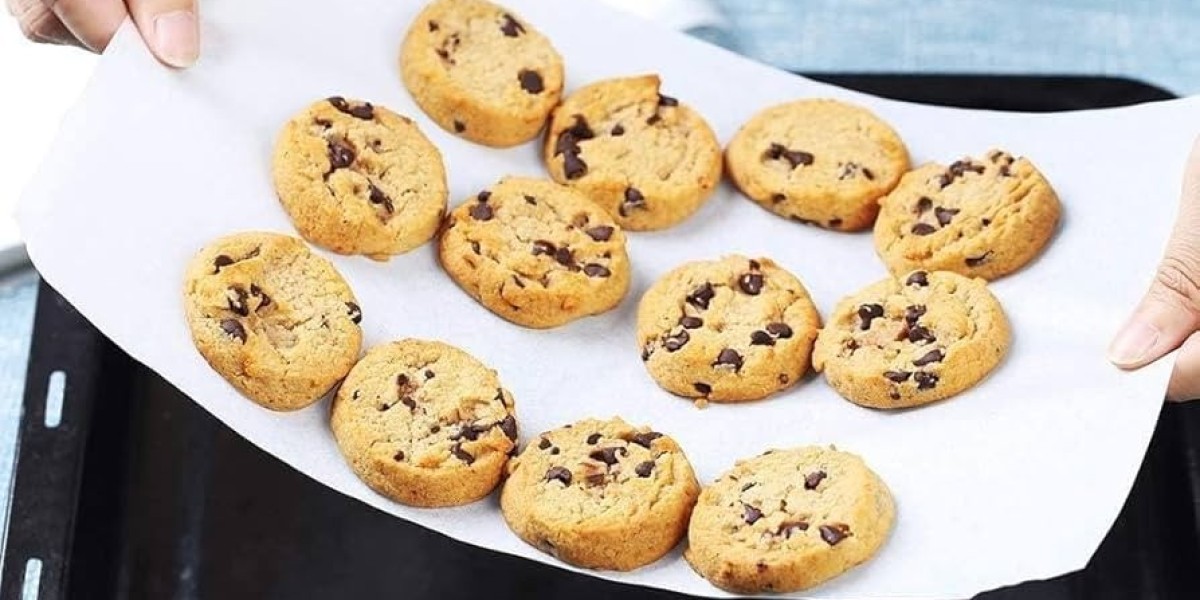

The materials used in baking can influence food release, preparation efficiency, and the daily maintenance of kitchen equipment. From home kitchens to large commercial production facilities, businesses need practical solutions that support different baking processes. Baking Paper is widely used as a lining material because it provides a convenient surface between food and baking equipment. Its performance depends on the quality of the paper base, the properties of the coating, and the format selected for the intended application.
The paper base provides the structure and flexibility of the finished product. It needs to be strong enough for normal handling while remaining flexible enough to fit different baking trays and preparation surfaces. Paper may be cut, folded, positioned, or processed through equipment, so its handling characteristics are important. Surface smoothness and material uniformity also contribute to the consistency of the finished product. Manufacturers consider these characteristics when selecting raw materials and organizing production processes.
Silicone coating is commonly used to create a non-stick surface. This treatment helps reduce adhesion between food and the paper during baking, making it easier to remove cookies, pastries, bread, and cakes after cooking. It can also help reduce food residue on trays, simplifying cleaning between batches. The coating should be distributed consistently to support predictable release behavior across the usable surface.
The relationship between the paper base and coating technology is important. The selected coating needs to be compatible with the base material and suitable for the intended application. Manufacturing conditions, coating distribution, and subsequent processing can influence surface characteristics and flexibility. Buyers should understand whether a product has single-side or double-side coating and confirm which construction is appropriate for their working process.
Different baking applications place different demands on paper products. Cookie production may require convenient tray preparation and reliable food release. Bread and pastry operations may need flexible materials that can be positioned around different shapes. Commercial food manufacturers may prioritize consistent dimensions and compatibility with automated production equipment. Selecting products according to actual working conditions helps businesses improve material usage and reduce unnecessary preparation work.
Available formats also influence convenience. Rolls provide flexibility because operators can cut the required length for different trays and applications. They are useful in facilities that prepare several types of baked goods or use different equipment. Pre-cut sheets offer a ready-to-use option for standardized trays and repetitive tasks. This can simplify preparation and help maintain consistent coverage during production. Distributors may carry several formats to serve customers with different needs.
Storage and handling should be considered throughout the product's supply chain. Paper products should generally be kept in clean, dry environments and protected from excessive moisture, dust, and physical damage. Rolls should be stored in a way that helps prevent deformation, while sheets should remain protected before use. Suitable packaging helps maintain product condition during transportation and makes warehouse handling more convenient.
For commercial buyers, product specifications should be reviewed before purchasing. Important details may include base paper type, grammage, coating construction, roll width, sheet dimensions, and packaging requirements. Temperature suitability must be confirmed with the supplier because different paper constructions and coating formulations may have different operating limitations. Food-contact documentation should also be checked according to the requirements of the intended market.
Customization can help businesses match paper products to their existing equipment and workflows. Some customers require particular roll widths or lengths, while others need pre-cut sheets in customized dimensions. Packaging may also be adjusted to suit wholesale distribution, storage, or retail requirements. Providing clear application details helps manufacturers recommend suitable configurations. Testing samples under actual working conditions is a useful way to evaluate handling, cutting, and food-release characteristics before placing a larger order.
Environmental considerations are becoming increasingly relevant to material selection. Businesses may examine paper sourcing, manufacturing practices, packaging materials, and available documentation when evaluating products. Environmental claims should be supported by product-specific information. For example, recyclability and compostability depend on the material construction and local waste management conditions. Buyers should balance these considerations with functional performance and food-contact requirements.
A suitable Baking Paper product combines an appropriate paper base, functional coating, and convenient format to support different food preparation environments. For bakeries, restaurants, food manufacturers, and distributors, the right choice depends on the actual application, equipment, and operating conditions. Businesses interested in exploring baking parchment rolls and other paper solutions can review available products at https://www.guanghepaper.com/product/baking-parchment-paper-rolls-1/.




