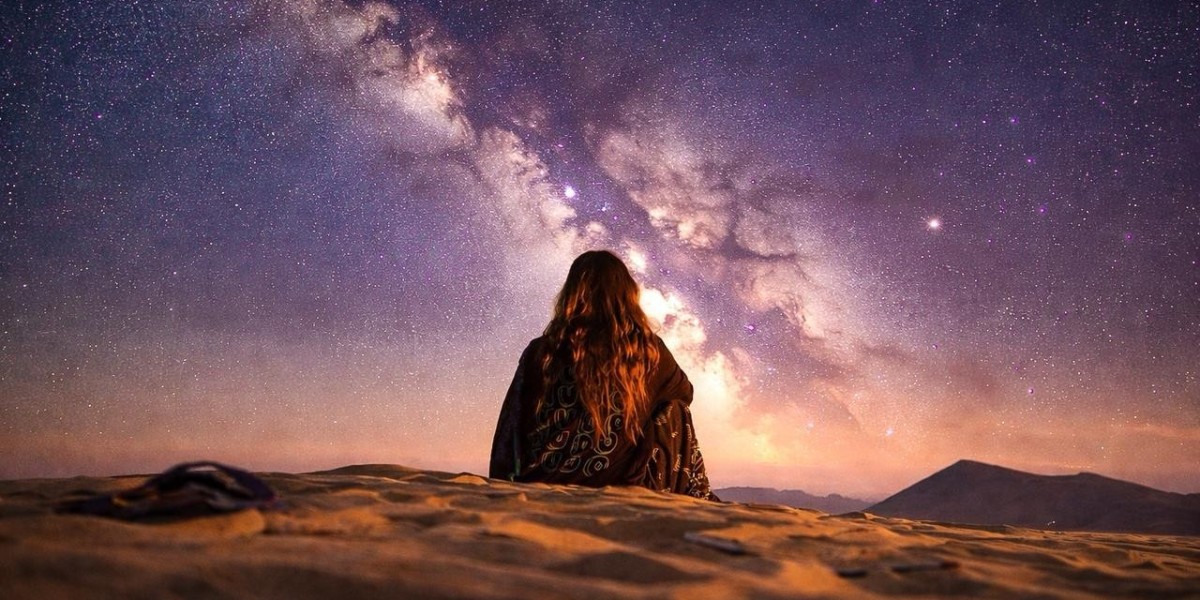

Introduction: Discover the Beauty of Milky Way Abu Dhabi
Imagine spending an evening away from the bright lights of the city, surrounded by the peaceful Abu Dhabi desert, with thousands of stars illuminating the night sky. As you look upwards, the familiar darkness gradually reveals a remarkable celestial landscape. On the right night, you may even catch sight of the Milky Way stretching across the sky.This is what makes Milky Way Abu Dhabi,particularly the Al Quaa Milky Way Spot, an interesting destination for travellers who want something different from the usual city attractions anddesert activities.
Located in a remote desert setting, Al Quaa offers an opportunity to experience the night sky away from much of the artificial lighting found in urban areas. It attracts astronomy enthusiasts, photographers, couples, families and visitors who simply want to spend time beneath the stars. However, there is one important detail that can make a considerable difference to your visit: the moon. Not every night offers the same stargazing conditions. A bright moon can make faint stars and the Milky Way harder to observe, while a darker sky around the new moon can create much better viewing conditions.That is why the Al Quaa Moon Phase & Milky Way Visibility Calendar, available through Milky Way Abu Dhabi's official website is an especially useful planning feature. Along with helping visitors choose a suitable night, the website offers three different experiences, ranging from an evening desert safari to overnight camping and a full-day exploration of nearby natural attractions. Let's explore how to plan the experience and choose the right package.
What Makes Al Quaa Milky Way Spot Special?
Al Quaa is known among stargazing enthusiasts for its remote desert surroundings and relatively dark night skies. Unlike busy urban locations, where streetlights, buildings and vehicle headlights contribute to light pollution, the desert provides a more open environment for observing celestial objects.
For visitors, this creates an opportunity to enjoy several aspects of the night sky:
· Milky Way observation: During the appropriate season and under favourable conditions, the
galaxy's bright central region can become visible.
· Star identification: Observe constellations and individual stars while learning more about
the night sky.
· Astrophotography: Capture long-exposure photographs of the stars and desert landscape.
· Quiet desert surroundings: Enjoy an evening away from the usual city atmosphere.
· Camping beneath the stars: Spend more time outdoors with an overnight desert experience.
The experience is not simply about looking at the sky. It is also about enjoying the surroundings, slowing down and discovering a different side of Abu Dhabi.
The Most Important Part of Planning: Al Quaa Moon Phase & Milky Way
Visibility Calendar
If there is one thing visitors should check before booking their Milky Way Abu Dhabi experience, it is the moon phase calendar. The moon is one of the biggest natural influences on night-sky visibility. When it is bright, its light can reduce the contrast of faint celestial objects. When the moon is absent or only a thin crescent, the sky can appear much darker.
The official Al Quaa Moon Phase & Milky Way Visibility Calendar helps visitors understand this relationship before selecting a date. Rather than choosing a tour date randomly, visitors can use the calendar to compare moon phases, illumination percentages and the corresponding Milky Way visibility ratings.
How does the Moon Phase & Milky Way Visibility Calendar work?
The calendar displays moon conditions for Al Quaa, including the moon phase, percentage of illumination and estimated Milky Way visibility. According to the website, its moon-phase visibility guide uses the following categories
Moon phase | Illumination | Milky Way visibility | Viewing conditions |
New Moon | 0–5% | Excellent | Darkest skies |
Crescent | 6–25% | Very good | Minimal moonlight |
First/Last Quarter | 26–55% | Moderate | Some moonlight interference |
Gibbous | 56–90% | Low | Brighter skies |
Full Moon | 91–100% | Poor | Least suitable for Milky Way viewing |
Al Quaa moon-phase visibility guide. The calendar displays moon phases for 10 PM Abu Dhabi time. These ratings are general guidance, not guarantees of visibility.
1. New Moon: The Best Opportunity for Dark Skies
During a new moon, but the illuminated portion of the moon is minimal or effectively absent from the night sky.This is generally by the preferred period for observing faint celestial objects, including the Milky Way. For travellers whose main objective is Milky Way photography or viewing the galaxy's central region, dates close to the new moon are worth considering.
2. Crescent Moon: Very Good Stargazing Conditions
A crescent moon produces considerably less illumination than a full moon. Depending on when it rises or sets, there may be extended periods of darkness that are suitable for observing stars. The official calendar categorises crescent phases with 6–25% illumination as very good for Milky Way visibility.
3. First and Last Quarter: Moderate Visibility
During the quarter phases, approximately half of the moon's visible disc is illuminated. Its brightness can reduce the visibility of some faint celestial objects, particularly when the moon is above the horizon. However, visitors can still enjoy general stargazing, depending on the timing and sky conditions.
4. Gibbous Moon: Limited Milky Way Visibility
A gibbous moon is brighter and more prominent than a crescent. The additional natural light can make it harder to distinguish the faint structure of the Milky Way. These dates may be less suitable for visitors whose main priority is astrophotography.
5. Full Moon: The Least Suitable Time for Milky Way Viewing
A full moon creates considerably brighter night conditions. Although the desert can still offer a memorable outdoor experience, the bright lunar illumination generally reduces the visibility of the Milky Way. If seeing the galaxy is your main objective, consider choosing a different date.
How to use the calendar before booking
Here is a simple way to plan your visit: Open the official Milky Way Abu Dhabi website. Find the Al Quaa Moon Phase & Milky Way Visibility Live Calendar. Select a potential travel date. Check the moon phase and illumination percentage. Review the estimated visibility rating. Compare a few suitable dates before selecting your preferred tour package.
A useful planning tip: The website advises choosing a night within a few days of the new moon for darker skies. Also check cloud cover, weather conditions and the seasonal visibility of the Milky Way. The calendar makes the booking process more meaningful because you are not simply choosing an available date; you are choosing a date with potentially better conditions for the experience you want.
Best Season to See the Milky Way in Abu Dhabi
The moon phase is important, but it is not the only factor that determines whether you can see the Milky Way. According to the official website, the main Milky Way viewing season in Abu Dhabi is from March to October, when the galaxy's central region is visible. General stargazing, however, is possible throughout the year.
There are two different ways to plan your visit:
· For Milky Way viewing: Prioritize the appropriate season, a new moon or thin crescent, and
clear skies.
· For comfortable desert camping: The cooler months can be more pleasant for spending extended periods
outdoors.
This distinction is particularly useful for visitors planning a trip between November and February. Although this is outside the main Milky Way core viewing season described by the website, it can still be a rewarding time for general stargazing and other celestial observations. The official website also lists special astronomy events. Its November 2026 program includes a New Moon Stargazing and Winter Constellation Trek from 7–10 November, while the December program features a Geminids Meteor Shower and Dark Sky Expedition from 12–14 December. These event dates should always be checked against the live calendar before making travel arrangements.
Upcoming Celestial Events at Al Quaa
One of the exciting aspects of visiting Al Quaa is that the night sky changes throughout the year. Depending on the astronomical calendar, visitors may have opportunities to observe meteor showers, planets, constellations and other celestial objects. The official website highlights two upcoming experiences: November New Moon Stargazing & Winter Constellation Trek