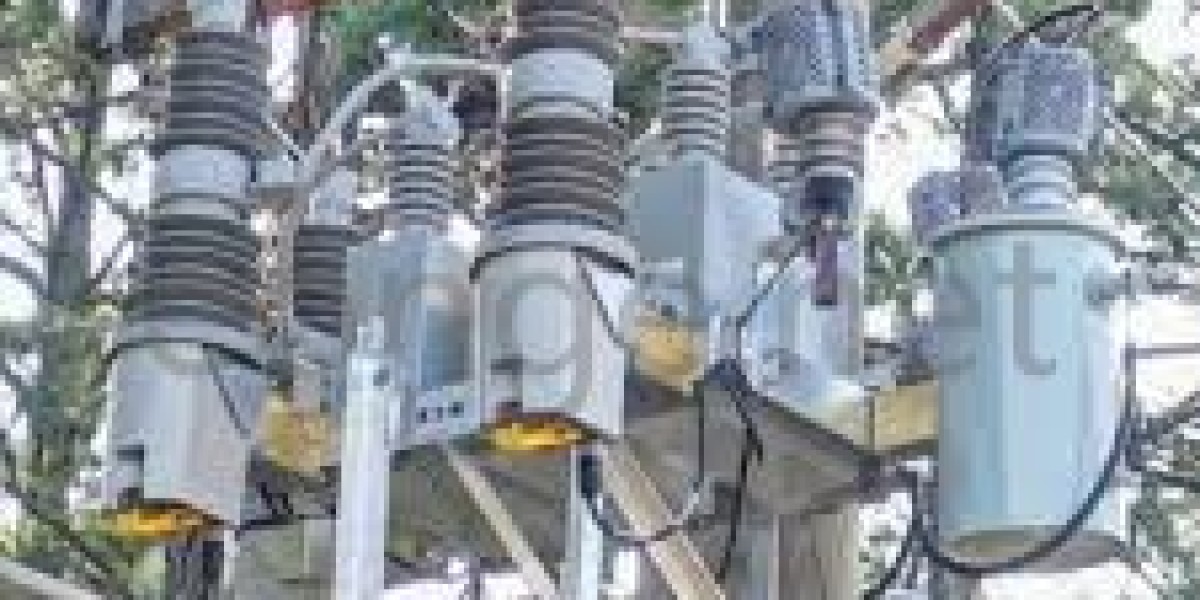

Electrical networks must balance active and reactive power to maintain stable operation and make effective use of available infrastructure. In industrial facilities, motors, transformers, pumps, and other inductive loads can create significant reactive power demand. A Reactive Power Compensation Device helps manage this demand by supplying or controlling reactive power near the point of consumption, supporting improved power factor and more efficient electrical distribution.
Reactive power does not directly produce mechanical output or useful heating, but it is necessary for establishing magnetic fields in many electrical devices. When a system draws excessive reactive power from the supply, current increases even if the active power demand remains unchanged. Higher current can place additional loading on cables, transformers, and switchgear. Compensation equipment helps reduce this burden by providing reactive power locally.
Different technologies can be used to achieve reactive power compensation. Capacitor banks are commonly applied in systems where the main requirement is to compensate for inductive loads. Reactor-based equipment may be used to absorb excess reactive power in networks with capacitive characteristics. More advanced arrangements can provide dynamic control when electrical demand changes rapidly or when voltage regulation requirements are particularly demanding.
The selection of a compensation solution begins with an assessment of the electrical installation. Engineers examine load profiles, power factor, voltage characteristics, harmonic distortion, and variations in reactive power demand. Industrial facilities with relatively stable loads may use fixed or automatically switched capacitor banks. Installations with rapidly changing loads may require more responsive compensation technologies to maintain suitable electrical conditions.
Power quality is another important consideration. Nonlinear equipment, including variable frequency drives, rectifiers, and certain electronic power supplies, can introduce harmonic currents and voltage distortion. These conditions may affect capacitor performance and create the possibility of resonance. A proper system assessment helps determine whether detuned reactors, harmonic filters, or other measures should be included in the compensation arrangement.
Reliable construction supports long-term performance. Electrical components must be selected according to their operating environment and expected duty cycle. Insulation, thermal management, enclosure protection, and connection quality all influence equipment reliability. In outdoor or industrial installations, protection against dust, moisture, and temperature changes is also important. A well-coordinated design helps ensure that the compensation equipment operates consistently with the wider distribution system.
Control and protection systems are equally important. Automatic controllers can monitor electrical conditions and switch compensation stages as required. Protective devices help isolate faults and reduce the risk of damage during abnormal operation. The control strategy should avoid unnecessary switching and should coordinate with the operating characteristics of the connected loads.
Regular inspection helps maintain system performance. Maintenance teams can review electrical measurements, inspect connections, check enclosure conditions, and identify unusual heating or signs of component deterioration. Monitoring power factor and reactive power demand over time can also help determine whether the existing compensation arrangement continues to meet the facility's needs.
As industrial automation and electricity consumption continue to evolve, effective reactive power management remains essential to reliable power distribution. A properly designed Reactive Power Compensation Device can improve power factor, support voltage stability, and help electrical infrastructure operate more efficiently. Explore related electrical equipment and solutions at https://www.eonge.net/product.




