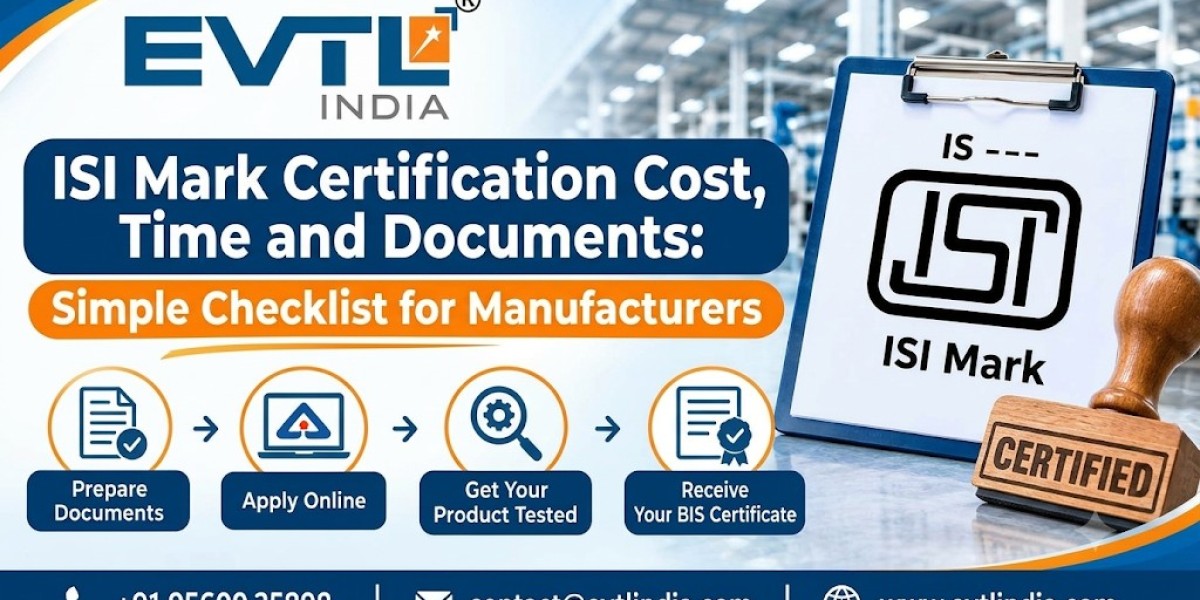

Planning to get the ISI mark for your product? Then you probably have three big questions. How much will it cost? How long will it take? And which papers do you need? This guide answers all three in simple words, so you can plan without stress.
Let us start with the basics. ISI Mark Certification is a quality approval given by the Bureau of Indian Standards (BIS). It tells buyers that your product follows an Indian Standard. For many products, it is compulsory by law. For others, it is optional but helps you win trust.
Step 1: Know Which Standard Applies to You
Every product has an IS number, which is the rulebook for that product. For example, cement, electric wires and helmets each have their own standard. Your cost, time and documents all depend on this one thing. So before anything else, find the correct standard. A wrong choice can waste weeks.
What Will It Cost?
There is no fixed price for everyone, and anyone who gives you one number without checking your product is guessing. The total usually comes from these parts:
- Application fee: Paid to BIS when you submit your form.
- Testing charges: Your product samples are tested in a lab recognised by BIS. More tests mean more charges.
- Factory inspection cost: BIS officers visit your factory. You may need to cover their inspection charges.
- Marking fee: A yearly fee is paid to BIS for using the mark on your product.
- In-house lab needs: Some products need basic testing equipment in your factory. If you do not have it, this is an extra cost.
- Consultant fee: If you take expert help, their service charge is added.
Fee amounts can change, so always check the latest fee list on the official BIS website before you plan your budget.
How Much Time Does It Take?
Most cases take a few weeks to a few months. The exact time depends on how ready you are. Here is a rough idea of the journey:
- Preparing documents: A few days to a couple of weeks, if you start organised.
- Application and review: BIS checks your form and may ask questions.
- Factory inspection: An officer visits and checks your process and quality records.
- Sample testing: The lab tests your samples and gives reports.
- Final decision: If all is fine, you get your license.
The biggest cause of delay is not BIS. It is incomplete papers and test failures. Fix these two things and you save a lot of time.
Documents Checklist
Keep these ready before you apply:
- Proof of business registration (like company or firm registration)
- Address proof of the factory
- Factory layout or plan
- List of machines used in making the product
- List of testing equipment you have
- Your quality control plan, which explains how you check quality at each stage
- ID and authority letter of the person who will deal with BIS
- Test reports, if already available from a recognised lab
The exact list can change from product to product. Confirm it for your standard before you apply.
Who Must Apply?
If you run a factory in India and your product is on the government list, you must get the license before selling. This is exactly why ISI certification for Indian manufacturer units is such an important topic. The rule is the same for a small workshop and a big plant. Selling a listed product without a license can bring penalties, so do not delay.
Easy Ways to Save Time and Money
- Start early. Do not wait until you have a big order.
- Keep your factory records neat. Officers love clear records.
- Make sure your machines and testing tools are working before the visit.
- Test your product in-house first. If it fails there, fix it before sending samples.
- Reply to BIS questions quickly. Late replies slow the file.
Common Mistakes to Avoid
- Picking the wrong Indian Standard
- Sending documents with spelling or address mismatches
- Ignoring the testing equipment requirement
- Forgetting to renew the license before it ends
- Changing the product design after approval without informing BIS
Why Many Factory Owners Take Expert Help
Many business owners are great at making products but new to government paperwork. Each form and rule has small details. A single mistake can send the file back and cost you weeks. An experienced consultant checks your papers first, guides you on the factory visit and follows up with BIS. This is why BIS ISI certification often goes faster with expert support.
Conclusion
The cost, time and documents may look heavy at first, but they become easy when you take one step at a time. Find your standard, collect your papers, keep your factory ready and apply with care. If you want a smooth journey, work with a trusted BIS consultant in India who can handle the process from start to finish.
Contact EVTL India:
? +91 95609 35898
? contact@evtlindia.com
? www.evtlindia.com