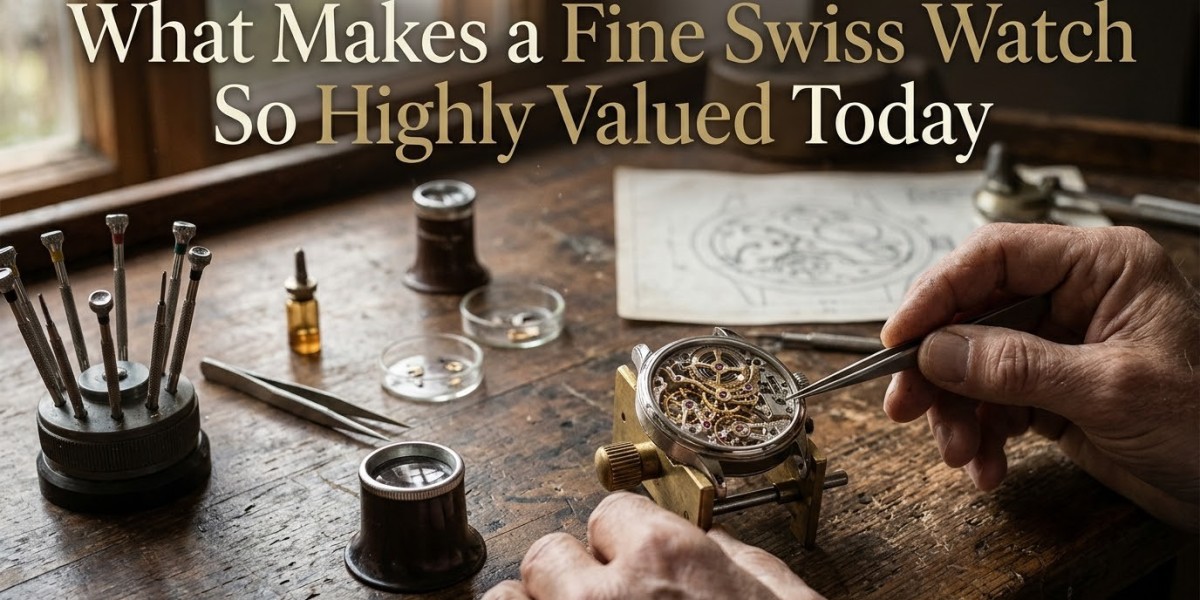

Pick up a mechanical watch, hold it to your ear, and you can hear it working. That sound is not digital. It has no battery. It runs because someone, somewhere, wound a mainspring by hand, set a balance wheel oscillating, and fitted hundreds of tiny components together with the kind of care that takes years to learn and minutes to destroy. That is not mysticism—it is manufacturing at a level most industries abandoned decades ago. A fine Swiss watch commands its price due to the meticulous craftsmanship and tradition behind it. In 2024, the global export value of mechanical Swiss timepieces reached roughly 21.24 billion Swiss francs, and that number belongs to an industry that never once had to invent a reason for people to want its products.
The History Behind a Swiss Watch Is Not a Story: It Is a System
Swiss watchmaking goes back to the 16th century, when exiled Huguenots somehow brought advanced horological know-how into Geneva. That is worth sitting with for a moment, honestly. The craft behind a watch you can buy today was being refined before the Industrial Revolution even existed, like it hadn’t happened yet. What that kind of ongoing thread produces is not just charm or some brand story you tell over coffee—more like compounding know-how, in a very plain way. Heritage in Swiss watchmaking goes beyond a simple date on a brochure. It represents accumulated intelligence, built layer by layer. Decisions made two hundred years ago regarding the finishing of a movement surface or the cutting of a gear tooth inform the decisions made fifty years ago, which in turn influence what is decided today. You cannot really shortcut that. You can copy the appearance, the mood, and the “feel” of it, but the actual depth does not transfer, not at all.
The Label Means Something Specific
One reason buyers trust the category is that the category is regulated. At least 60% of manufacturing costs must be generated in Switzerland, the movement must be Swiss, the case must be in Switzerland, and the final inspection must occur there, with movement components, assembly, and testing all highly regulated. That is a legal standard enforced by the Swiss government, not a promise made in an advertisement. It matters because the market for high-end watches is full of products that look the part without being the part. The “Swiss Made” label cuts through that. Swiss-made watches are considered the gold standard because they represent the balance of heritage, regulation, craftsmanship, and innovation. When a buyer in Tokyo or Dubai or Johannesburg reads those two words on a dial, they are receiving a verifiable guarantee, not a lifestyle suggestion.
What “Hand-Assembled” Actually Involves
The phrase gets used so often in watch marketing that it has started to blur. It is worth being specific. Behind every luxury Swiss watch is a team of highly skilled watchmakers who hand-assemble movements, adjust tolerances within microns, and test for precision over days or weeks. A movement can contain upward of 200 individual components. Some of them are thinner than a human hair. Each one has to be placed, fitted, adjusted, and tested by someone whose hands have done this thousands of times. Each timepiece is a product of years of expertise, often involving hundreds of hours of skilled labor. No factory floor running automated production can replicate the judgment involved in that work. A trained watchmaker will feel when something is slightly off before any instrument confirms it. That skill is in the watch.
The Details Nobody Will Ever See
A finishing technique called "anglage" involves bevelling the edge of a movement component by hand, polishing it to a mirror surface, then brushing adjacent surfaces to create a visual contrast that catches light at a specific angle. The person wearing the watch will almost certainly never look inside the case. The watchmaker does it anyway. In Swiss watchmaking, the movement remains the heart of the matter. A mechanical caliber is valued not only for what it does but also for how it does it. The movement, dial, crystal, crown, lugs, strap, and clasp must speak the same language. That coherence—every part held to the same standard regardless of visibility—is the difference between a fine watch and an expensive one. It also explains why you cannot fake it convincingly at close range. Shortcuts show, eventually, to anyone who knows where to look.
Scarcity That Is Earned, Not Manufactured
Some brands kind of artificially restrict supply to make them feel more desirable. It’s essentially a marketing strategy, you know. But the scarcity in fine watchmaking is a separate story, more like a by-product of doing the work properly, not some clever trick. The time-intensive nature of fine craftsmanship inherently limits production, resulting in these pieces being rare and highly sought after. A complicated movement like a perpetual calendar that handles leap years or a minute repeater that chimes the time in an acoustic way can take thousands of development hours before a single example actually ships. Some manufacturers produce fewer than a thousand pieces of a specific reference each year, not to “create urgency,” but simply because that is the maximum they can produce while maintaining their high standards. Limited editions usually get wildly coveted by collectors too, which then bumps up their investment vibe. When the constraint is real, the value that follows is real as well.
Why They Hold Value When Almost Nothing Else Does
Most luxury stuff loses its shine the moment you step outside the store. Fine watches often don’t do that, and some actually appreciate over time. Unlike many luxury goods that lose their appeal after just one season, Swiss watches tend to maintain their relevance due to their strong ties to craftsmanship and rich history. On the secondary market, the more desirable references from well-regarded houses can deliver returns that look pretty good compared with more traditional asset classes. The phenomenon isn’t coincidental; it results from a combination of limited production, global collector demand, and materials that possess genuine intrinsic value. Plus, the whole category is structurally resistant to those endless trend cycles. Timepieces that are famous for craftsmanship, rarity, brand heritage, and innovation are more likely to grow in value even if the market is doing its thing, volatile and unpredictable. The buyers who get it treat the purchase like any other informed buy, carefully, with a long horizon.
Mechanical Watches in a World That Stopped Needing Them
Nobody really needs a mechanical watch to tell time. That particular ship already sailed once everyone started carrying a phone. Still, demand for fine mechanical pieces hasn’t collapsed; it’s actually grown among people who know exactly what they’re buying. In an era of smart devices and trends that pop in and then vanish, mechanical luxury watches stay respected globally. Not because of connectivity, but because they have permanence, craftsmanship, and this quiet confidence. There’s something genuinely interesting about an object that runs on physics alone—no software, no updates, no little “planned obsolescence” baked in by a product team trying to sell you next year’s version. A well-built mechanical movement can keep going for a century with periodic servicing. The independence from technology is the core essence, not a drawback.
Why People Actually Buy Them
The underlying reason is quite simple if you remove all the marketing jargon. A fine Swiss watch is one of the few things you can own that was made by someone who cared—someone trained for years, working inside a tradition that goes back centuries, and held to standards they didn’t invent and cannot casually lower. Swiss watches stand for more than timekeeping; they stand for a legacy of excellence. Most of what we buy is designed to be replaced. These weren’t. That’s the value. The significance lies not in the name on the dial, the resale value, or even the status it conveys—it's solely about the craftsmanship behind it, created by someone who understood that you likely won't ever examine the inner workings.




