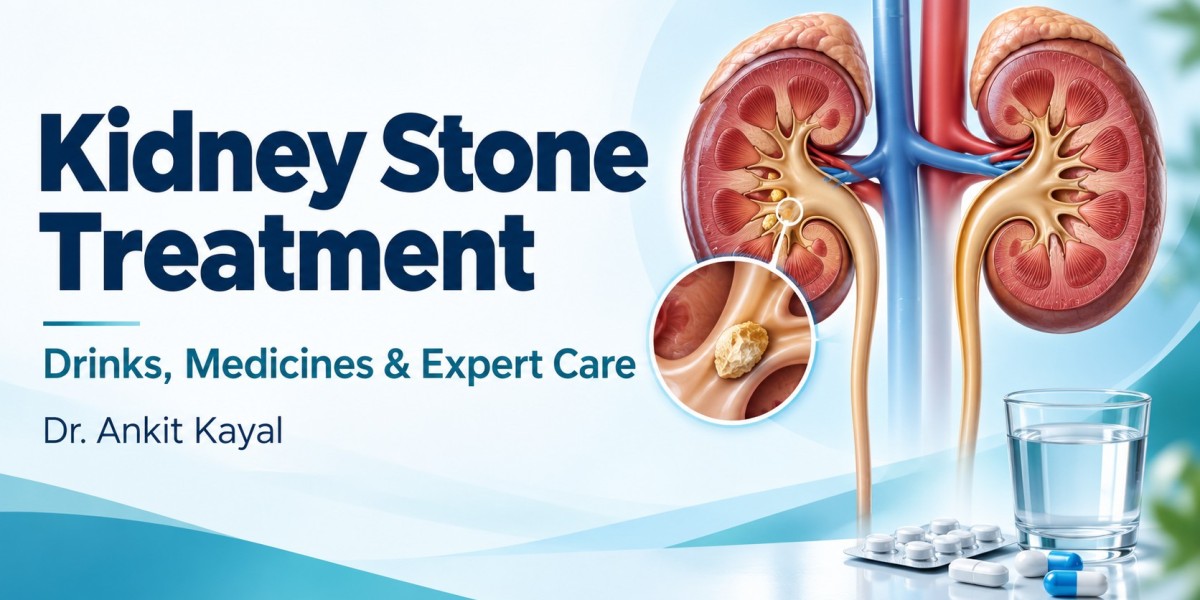

Can kidney stones pass with drinks and medicines? Some small stones pass naturally with symptom control and medical monitoring, while others need a procedure. The right approach depends on the stone’s size, location, composition, and whether it causes blockage, infection, or reduced kidney function.
Drinking more water or taking a tablet does not guarantee that a stone will disappear. Treatment begins with confirming the diagnosis and understanding whether waiting for natural passage is appropriate.
If you have persistent pain or a scan showing a stone, consulting a urologist in Jaipur, such as Dr. Ankit Kayal, can help you understand your options. Your plan should reflect your symptoms and reports, rather than which medicine helped someone else.
Seek urgent medical care for fever or chills with stone symptoms, severe uncontrolled pain, inability to pass urine, or persistent vomiting. An infected, blocked kidney can require emergency treatment.
Which Kidney Stones Can Pass Naturally?
Smaller stones generally have a better chance of passing than larger ones. Location also matters: a stone travelling through the ureter—the tube connecting the kidney to the bladder—behaves differently from one remaining inside the kidney.
A small stone near the bladder may pass more easily than a larger stone higher in the urinary tract. However, size alone cannot determine whether observation is suitable.
Before recommending a trial of natural passage, a clinician considers:
- Whether pain can be controlled.
- Whether there are signs of infection.
- Whether urine flow is obstructed.
- Whether kidney function is affected.
- Whether follow-up can be arranged.
Some stones pass over several days or weeks. Others remain in place or cause repeated symptoms. Observation therefore needs a review plan, including instructions about when to seek help. Small, symptom-free stones within the kidney may sometimes be monitored rather than immediately removed.
Can Drinks Help You Pass Kidney Stones?
Water supports hydration and dilutes urine, making it important for preventing many types of stones. However, preventing new stones and treating an existing stone are different goals.
Many people search for kidney detox drinks hoping to flush stones out quickly. A “detox” label does not establish that a drink can dissolve a stone or clear a urinary blockage.
Water is generally the main drink to prioritise. For prevention, NICE advises adults to drink around 2.5–3 litres of water daily, although people with fluid restrictions need an individual recommendation. Requirements can also vary with medical conditions and fluid losses. NICE
Does Lemon Water Dissolve Kidney Stones?
Lemon water should not be presented as a guaranteed treatment for an existing stone. Fresh lemon juice is included in NICE’s prevention advice, but this does not mean it can reliably dissolve stones already present.
Adding lemon to water may make regular hydration easier. It does not replace prescribed treatment or follow-up.
Avoid forcing large quantities of fluid during severe pain or vomiting. If you cannot keep fluids down, arrange assessment rather than repeatedly trying home remedies.
Which Medicines Are Used for Kidney Stones?
There is no single medicine that suits every kidney stone. When discussing tablets for kidney stones, it helps to separate symptom relief, assistance with passage, and treatment directed at stone composition.
| Treatment | Main purpose |
|---|---|
| Pain-relieving medicines | Control pain while the stone is assessed or treated |
| Anti-sickness medicines | Reduce nausea and vomiting |
| Alpha-blockers | Help selected ureteric stones pass |
| Urine-alkalising medicines | Dissolve certain uric acid stones under supervision |
| Antibiotics | Treat an associated bacterial infection |
Pain relief can make symptoms manageable, but improvement does not prove that the stone has cleared. Antibiotics treat infection; they do not dissolve stones. Medicines should be selected with your medical history, kidney function, and other treatments in mind.
When Might a Doctor Prescribe Tamsulosin?
A doctor may prescribe tamsulosin tablets as medical expulsive therapy for selected ureteric stones. It relaxes smooth muscle in the urinary tract and may make passage easier. It does not dissolve the stone.
European Association of Urology guidance supports alpha-blockers as an option for selected lower-ureter stones measuring 5–10 mm. This does not mean every stone in that range should be treated with tablets. Persistent obstruction, infection, or uncontrolled pain can change the plan. Use for stone passage may be off-label.
Tamsulosin can cause dizziness, particularly when standing, and changes in ejaculation. Take it only as prescribed and discuss troublesome side effects with your clinician.
Can Medicines Dissolve Kidney Stones?
Certain uric acid stones can dissolve through medically supervised treatment that makes urine more alkaline. A clinician may prescribe an alkalising medicine and monitor urine pH and stone response.
This approach depends on identifying the likely stone composition. Common calcium stones generally do not dissolve with the same treatment. Taking alkalising products without guidance can be inappropriate, particularly when kidney function or other medicines affect their suitability.
Even a potentially dissolvable stone may need additional treatment if it causes a significant blockage.
What Should You Know About Cystone Tablets and Syrup?
People researching Cystone tablet uses or Cystone syrup uses often want to know whether these products can remove a stone without a procedure.
A product’s description or popularity should not be treated as proof that it will clear your particular stone. The relevant questions remain the same: how large is the stone, where is it, and is it causing complications?
Before using a herbal formulation, discuss its ingredients, your other medicines, and your scan findings with a qualified clinician. Do not assume a syrup works faster than a tablet or substitute formulations without checking advice.
Most importantly, symptom improvement after taking any product does not confirm stone passage. Persistent symptoms require reassessment rather than repeated changes between over-the-counter products.
When Are Drinks and Medicines Not Enough?
Further kidney stone treatment may be needed when a stone is unlikely to pass, causes continuing pain or blockage, affects kidney function, or occurs with infection.
A procedure may also become appropriate when an agreed period of observation has not resulted in passage. The decision should consider both the scan and your experience of symptoms.
Common treatment options include:
Shockwave Lithotripsy
Shockwave lithotripsy uses externally generated shock waves to break a stone into smaller fragments that can pass in urine. Its suitability depends on factors such as stone size, position, and how effectively fragments are likely to clear. Some people need more than one session.
Ureteroscopy
Ureteroscopy involves passing a thin instrument through the urinary passage to reach the stone. The stone can then be removed or broken into smaller pieces, often using a laser.
Percutaneous Nephrolithotomy
Percutaneous nephrolithotomy, or PCNL, accesses the kidney through a small opening in the back. It is commonly considered for larger or more complex kidney stones.
Your urologist should explain the expected benefits, recovery, risks, and possibility of additional treatment before recommending a procedure.
When Is a Kidney Stone an Emergency?
A kidney stone accompanied by infection and obstruction is an emergency. Treatment may require urgent drainage through a ureteric stent or nephrostomy tube, together with antibiotics. Definitive stone removal is generally addressed after the infection is controlled. Waiting for drinks or tablets to work can delay necessary care.
Seek urgent assessment for:
- Fever or chills with stone symptoms.
- Severe pain that prescribed medicine does not control.
- Inability to pass urine.
- Repeated vomiting or inability to keep fluids down.
People with a single functioning kidney or known kidney impairment should seek prompt advice about new stone symptoms. These circumstances can reduce the margin for safely waiting at home.
Why Is Follow-Up Important After Pain Improves?
Pain settling does not always establish that a stone has passed. Follow-up helps your clinician decide whether treatment has worked and whether further checks are needed.
Before leaving your appointment, clarify when your next review should happen, whether repeat imaging is planned, and which symptoms should bring you back sooner.
If your clinician asks you to collect a passed stone, follow their instructions. Analysis can help identify its composition and guide future prevention.
Choose Treatment Based on Your Diagnosis
The most useful question is: “What treatment suits this stone?”
Drinks support hydration, medicines have specific roles, and procedures address stones that need active treatment. None should be chosen solely from online recommendations or another person’s experience.
Dr. Ankit Kayal can assess your symptoms and reports to discuss an appropriate plan. Bring previous scans, test results, and a list of medicines or supplements you take. A clear diagnosis and follow-up plan can help you make informed decisions about stone passage, treatment, and prevention.